

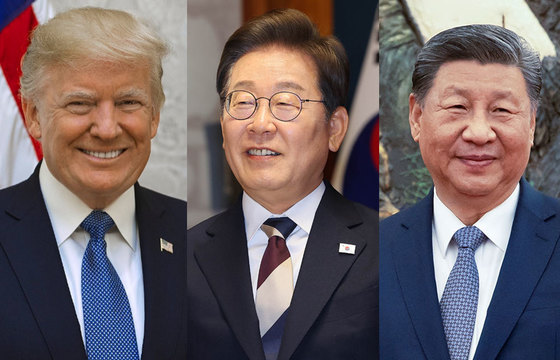
The Asia-Pacific Economic Cooperation (APEC) summit in Gyeongju is just a week away. Leaders from the U.S., China, Japan, and other nations will converge on Gyeongju for this year’s most significant multilateral diplomatic event. As anticipated on Monday, intense diplomatic maneuvering is expected among South Korea, the U.S., China, Japan, and even North Korea, each pursuing its own strategic interests.
Trump’s Visit Kicks Off the Big Event: U.S.-China Summit and Potential North Korea Engagement Take Center Stage
The Leaders’ Week begins on October 27 with a series of high-level meetings. These include the Concluding Senior Officials’ Meeting (CSOM) from October 27-28, the APEC Ministerial Meeting (AMM) from October 29-30, and the APEC Economic Leaders’ Meeting (AELM) from October 31 to November 1. The AELM, spanning the final two days, serves as the ‘main event’ with heads of state in attendance.
However, the spotlight of Leaders’ Week will shine earlier with President Donald Trump’s arrival on October 29. As a state guest, Trump is preparing for a crucial summit with Chinese President Xi Jinping, who is also expected to visit as a state guest. The U.S.-China summit is poised to be a global spectacle, capturing worldwide attention.
For South Korea, the meeting between President Trump and President Lee Jae Myung represents a critical juncture in maximizing national interests. Analysts suggest that ongoing challenges in tariff negotiations could influence the tone of the U.S.-South Korea summit. Simultaneously, there is a school of thought advocating for a face-to-face, top-down agreement between the two leaders as a more effective approach.
President Trump’s interests may extend beyond the Korean Demilitarized Zone (DMZ). While the current status of preliminary contacts between North Korea and the U.S. remains unclear, Trump is expected to signal his interest in North Korea in some capacity. Should North Korea respond favorably, there is potential for significant U.S.-North Korea engagement on the Korean Peninsula.
Major U.S. news network CNN is focusing its coverage preparations near the Panmunjom area. Adding to the intrigue, the United Nations Command (UNC), which oversees the Joint Security Area (JSA), has decided to suspend special tours of Panmunjom during the APEC period. These developments have heightened speculation about a potential U.S.-North Korea meeting at Panmunjom.
Xi’s Visit to South Korea After 11 Years: Seeking an Exit from U.S.-China Power Competition
President Xi is scheduled to arrive in South Korea on October 30, staying until November 1. Given China’s significant investment in its rivalry with the U.S., Xi is likely to seek a constructive agreement with President Trump during APEC to alleviate excessive tensions.
However, reports indicate that President Trump’s unpredictable actions and statements could be the wild card in the summit. If the two leaders engage in a power struggle rather than seeking common ground, the APEC forum could devolve into a diplomatic battlefield instead of fostering harmony. From South Korea’s perspective, a grand compromise between the U.S. and China could position South Korea as a key mediator.
In his talks with Xi, President Lee is expected to prioritize stabilizing South Korea–China relations, with a focus on civilian and economic cooperation. This summit—the first between the two leaders in 11 years—offers South Korean diplomacy an opportunity to address long-standing issues.
China is closely monitoring discussions on the modernization of the U.S.–South Korea alliance, a response to the U.S. strategy to counter China, as well as growing anti-China sentiment within South Korea. However, these topics are unlikely to be directly addressed during the summit, as China seeks to expand its influence over the Korean Peninsula amid a strong U.S. presence. Instead, China may attempt to leverage its influence over North Korea as a diplomatic tool in its dealings with South Korea.
Japan’s New Prime Minister Expected to Visit: More Concern Than Hope for Japan–South Korea Relations
Japan is set to effectively elect a new Prime Minister through a parliamentary vote on Tuesday. Sanae Takaichi, recently elected as the new leader of the ruling Liberal Democratic Party, is poised to assume office, bolstered by her successful formation of a new coalition with the Japan Innovation Party.
Following her appointment as Prime Minister, Takaichi plans to visit Gyeongju for a two-night, three-day trip from October 30 to November 1. Given her right-wing leanings and the coalition with the far-right party, concerns are mounting that the future-oriented South Korea–Japan relations established by President Lee and former Prime Minister Shigeru Ishiba may be compromised as the two leaders meet for the first time.
Takaichi, who has long advocated for visits to the controversial Yasukuni Shrine—where World War II war criminals are enshrined— notably refrained from visiting during the recent autumn festival. This change in stance has drawn attention, with observers keenly awaiting her first message regarding South Korea–Japan relations.
Immediately after her appointment, Takaichi emphasized the importance of addressing enhanced cooperation among North Korea, China, and Russia, as well as the significance of trilateral defense and security cooperation between the U.S., South Korea, and Japan. This cautious approach suggests an awareness of the potential drawbacks of deteriorating South Korea–Japan relations in the current geopolitical climate. If she maintains this stance during the upcoming summit, South Korea–Japan relations are likely to remain stable without major disruptions.