

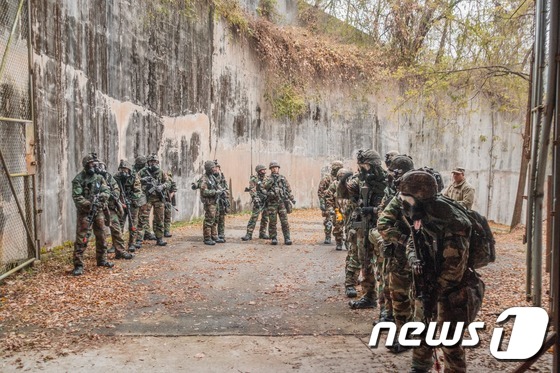
North Korea’s apparent strategic weaponization of chemical weapons (CW) is raising concerns among defense analysts. Experts suggest these weapons are more likely to be used for gray zone provocations, such as creating social panic or leveraging negotiation terms during conflicts, rather than in full-scale warfare.
In a report titled “Reassessing North Korea’s Chemical Weapons Threat and Operational Capabilities,” Jin Yi Rim, a researcher at the Korea Institute for Defense Analysis (KIDA), revealed that these topics were discussed during an October workshop on North Korean chemical weapons. The event brought together KIDA researchers and military security experts from think tanks across the U.S., U.K., and Europe.
The Royal United Services Institute (RUSI) in the U.K. reports that North Korea has developed foundational chemical expertise, operational capabilities, and precursor-production facilities, primarily centered on research institutions and fertilizer plants in Hamhung, South Hamgyong Province. According to the defense white paper, North Korea is estimated to possess between 2,500 and 5,000 tons of chemical weapons, a stockpile that has remained relatively stable for decades.
North Korea’s stockpiles of ammonia, nitric acid, and chlorine-based substances can all be used in chemical weapons synthesis. This suggests a high likelihood that they possess basic chemical agents such as mustard gas and nitrogen mustard, as well as advanced nerve agents including sarin (GB), soman (GD), and VX.
Recent reports indicate a consistent trend in North Korea’s efforts to weaponize its chemical arsenal. The U.S. State Department’s annual report, released in April, noted that North Korea has maintained biological weapons capabilities since at least the 1960s and continues to enhance its program through international cooperation and equipment acquisition.
In October, the North Korea-focused outlet 38 North reported indications that Pyongyang is expanding its weapons of mass destruction (WMD) focus from nuclear to chemical and biological weapons. Evidence includes the deployment of chemical weapons to frontline units and the completion of ballistic missile tests equipped with chemical payloads.
During the workshop, experts highlighted a potential loophole in international response mechanisms. While Chemical Weapons Convention (CWC) signatories would involve the Organization for the Prohibition of Chemical Weapons (OPCW) to identify aggressors in case of chemical weapons use, North Korea’s non-member status could delay international sanctions and investigations, potentially benefiting the regime.
In a wartime scenario, analysts assess that North Korea is more likely to employ non-lethal chemical agents against air force bases. Such attacks could impede runway operations and maintenance procedures, disrupting allied support capabilities.
For peacetime provocations, experts outlined several potential tactics: dispersing low-toxicity industrial chemicals or pesticides as fake white powder threats, spreading rumors of water and food contamination, conducting small-scale dispersals via drones or balloons, and integrating these actions with cyber operations and disinformation campaigns.