

Pyongyang, Nampo, Hamhung, Chongjin, Wonsan — most Americans are familiar with none of North Korea’s cities beyond Pyongyang. While propaganda images frequently show the capital, glimpses of life elsewhere remain rare. To better understand North Korea, one writer has shifted focus to its smaller cities.
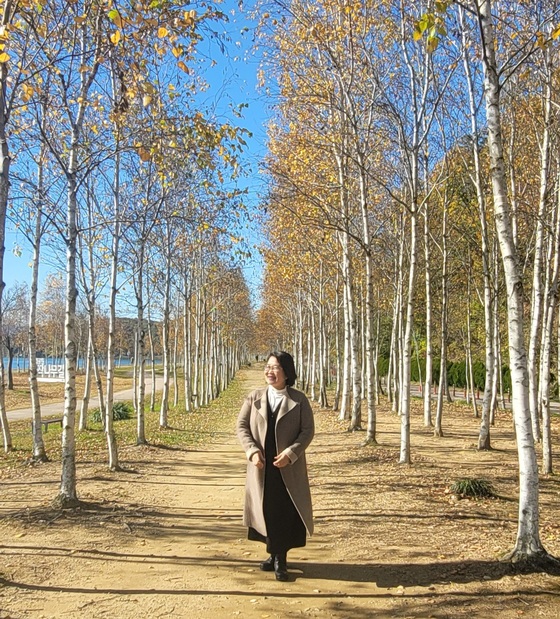
On November 14, I met with Seol Song Ah, a pen name used by Choi Seol, 56, a North Korean economist and IT researcher who defected from the country. Her recent book, Production City Suncheon, offers an economic perspective grounded in local realities rather than centralized state narratives. Seol said her goal is to move beyond ideology and human rights debates to reveal daily life inside North Korea.
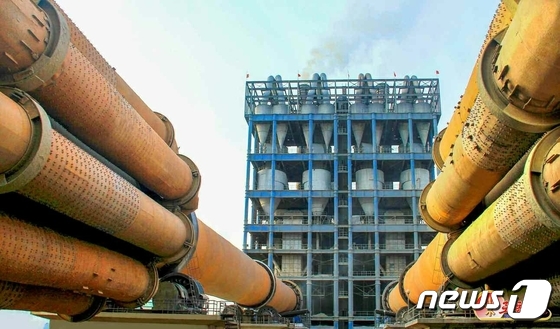
Her book highlights Suncheon in South Pyongan Province, a city that has developed into a major heavy-industry hub since the Korean War.
To Seol, Suncheon is essential to understanding North Korea’s economic resilience, calling it a symbol of self-reliance. Her account goes beyond numbers and includes stories from everyday life. She traces how small-scale pig farming helped fuel a local moonshine market, reflecting the gradual shift toward a market economy from the 1990s through the 2010s. North Korea categorized major regional enterprises as central industries and smaller ones as local industries to prioritize heavy-industry development. Under this dual system, the State Council managed central industries while local people’s committees oversaw smaller ones.
The economic crisis of the 1990s forced a shift. The government began pushing enterprises to operate independently, thereby advancing marketization across both the central and local sectors and laying the foundation for a new regional economic model.
Seol’s research on Suncheon, built on rigorous triple verification, has earned respect in North Korean academic circles for its real-world insights and data accuracy.
She continues to gather real-time information on market prices and currency exchange rates from relatives and contacts still in North Korea. Using informal remittance connections linked to South Korea, she tracks daily life, from basic goods to new trends.
Her industrial intelligence covers everything from taxi fares to the soaring prices of subway-adjacent apartments. She even tracks where shoes from the Suncheon factory end up on the black market. Seol begins with grassroots trend analysis, then cross-references her findings against official data, like Chinese customs reports on imports and exports.
She also consults reports from South Korean research institutions, including the Korea Institute for National Unification, the Korea Development Institute (KDI), and the Korea Institute for International Economic Policy (KIEP), which use satellite imagery to assess economic activity. Seol cross-references her field intel with these sources to compile her own reports.
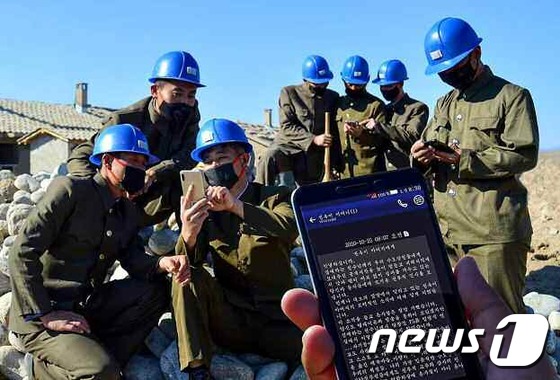
Seol points to Golden Fruit, an agricultural app, as evidence of North Korea’s changing economic model. On November 12, Rodong Sinmun reported a 60 percent year-over-year increase in user numbers.
Golden Fruit offers real-time farming guidance and troubleshooting, and state media claims more than 10,000 user inquiries so far.
Seol noted that the app isn’t free, saying each information unit costs 2,000 to 3,000 North Korean won (about 1.50 to 2.25 USD). She sees the structure as a shift away from heavy taxation toward incentivized digital micro-transactions. She added that with rice priced at roughly 30,000 won per kilogram (about 22.50 USD), the fees are manageable for many workers.
Since 2023, North Korea has established nationwide grain markets, formalizing a long-standing informal trade system. This triggered a wage increase — average salaries now sit at about 50,000 won per month (about 37.50 USD) for factory workers and 100,000 to 200,000 won (75 to 150 USD) for teachers and medical professionals. But rising wages have been followed by steep price inflation.
Seol argues that North Korea’s recent hospital construction indicates strategic preparation for potential US negotiations.
In late December 2023, Kim Jong Un outlined plans to strengthen healthcare infrastructure during a major party meeting. This followed his acknowledgment of COVID-19 cases in May 2022 and his criticism of pharmaceutical shortages, which led to a push for standardized pharmacies.
The new 24-hour pharmacies are expected to open in early 2024 in areas including Pyongyang and Jagang Province. They will charge market prices for medicine. Seol said this marks a policy shift: instead of promoting free care, North Korea is signaling a move toward fee-based healthcare.
She noted that modern medical equipment will require import channels — something limited by sanctions — meaning sanctions relief becomes central to policy planning. She said that while North Korea is now charging for pharmacy services, genuine modernization in healthcare and local industries will inevitably run into sanctions barriers.
US sanctions were imposed in response to North Korea’s nuclear program, cyber activities, weapons proliferation, and human rights violations. After North Korea’s first atomic test in 2006, the UN Security Council implemented sanctions targeting individuals and organizations tied to its program and restricting illegal trade channels, including arms and counterfeit currency.
Throughout the 2010s, sanctions expanded to cover nearly all North Korean institutions, trade, and transportation, forcing international banks to avoid transactions tied to the country. Additional sanctions from individual nations further tightened access to global finance.
Seol advocates beginning inter-Korean agricultural cooperation, especially through pig farming, which is already widespread in North Korea.
She believes addressing food security from the ground up could create meaningful engagement, even if broader cooperation remains difficult.
She said pig farming is well-suited because it is familiar, inexpensive to start, yields quick returns, and supports fertilizer production. In her view, agricultural improvements in rural regions would naturally support urban markets due to North Korea’s regional economic structure.
She added that progress does not depend on symbolic gestures but rather on creating shared industries that benefit both sides.