

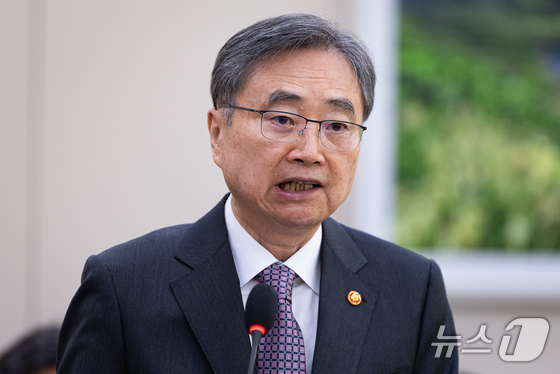
Foreign Minister Cho Hyun announced on December 12 that South Korea is pursuing the acquisition of nuclear-powered submarines to bolster its future security capabilities.
Speaking at the opening ceremony of the Korean Association of International Studies’ general meeting, Minister Cho emphasized that it must view this initiative through the lens of enhancing the national power. He stressed that as North Korea continues to advance its nuclear and missile capabilities, potentially including nuclear-armed submarines, it must maintain a nuclear-conventional power balance with Pyongyang through our own nuclear-powered submarines carrying conventional weapons.
The minister cautioned that if it fails to maintain this equilibrium due to capability gaps, it risks fueling domestic sentiment for nuclear armament.
Cho also highlighted that South Korea’s nuclear submarine program would strengthen its ability to contribute to global maritime security, an international public good.
He assured that it will rigorously adhere to international non-proliferation norms throughout the acquisition process. By bolstering our defense capabilities while upholding these norms, it becomes a more capable ally, less dependent on the U.S., ultimately reinforcing the Republic of Korea (ROK)-U.S. alliance.
Addressing the need for commercial uranium enrichment and spent fuel reprocessing, Cho stated that as it aims to become a top-three artificial intelligence (AI) power, securing a stable nuclear fuel supply for the power plants is crucial to meet the energy demands of expanding data centers.
He added that as one of the world’s top five nuclear energy nations, relying solely on imported low-enriched uranium compromises our energy security. With its spent fuel storage facilities nearing capacity, reprocessing has become essential.
Minister Cho reiterated that uranium enrichment and spent fuel reprocessing would serve purely commercial and peaceful purposes and are unrelated to developing nuclear potential.
The Foreign Minister also highlighted diplomatic achievements since the new administration took office, including South Korea’s return to global democracy through participation in G7, United Naions (UN), Association of Southeast Asian Nations (ASEAN), Asia-Pacific Economic Cooperation (APEC), and G20 forums; record-breaking reciprocal presidential visits with the U.S.; renewed Japan-ROK shuttle diplomacy; a successful state visit by Chinese President Xi Jinping; and expanded cooperation with Global South nations.
Cho outlined war prevention diplomacy as South Korea’s top foreign policy priority, aimed at preventing the Korean Peninsula from becoming a new conflict flashpoint. He pledged to make 2026 the year to restart inter-Korean dialogue and accelerate the establishment of a peace regime on the peninsula.