On Monday, President Donald Trump declared that the South Korean National Assembly is failing to implement a trade agreement, threatening to raise tariffs on mutual goods, including automobiles, from 15% to 25%. This announcement has sparked interest in the underlying reasons behind his statement.
Trump’s concerns appear to focus on the National Assembly and the delay in approving the trade agreement, specifically referring to the legislative process within the assembly. If this is indeed a pressure tactic related to deeper trade friction issues, resolving the situation could become even more challenging.
In a post on the social media platform Truth Social, Trump expressed frustration, stating that President Lee Jae Myung and him signed an excellent trade agreement benefiting both countries on July 30, 2025, and he reaffirmed the details of this agreement during my visit to Korea on October 29, 2025. So why hasn’t the South Korean National Assembly approved this agreement?
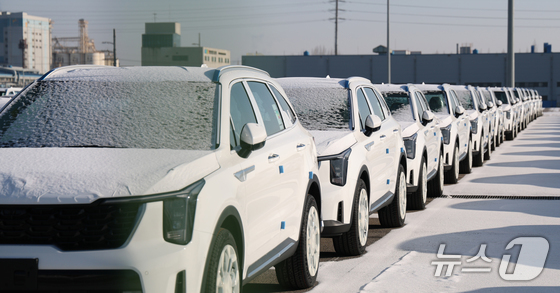
Trump continued that as a result, he’s raising tariffs on automobiles, timber, pharmaceuticals, and all mutual goods from 15% to 25% because the South Korean National Assembly has not enacted the historic trade agreement. Trump did not specify when these tariffs would take effect.
The Wall Street Journal (WSJ) reported that it remains unclear when the tariff increase will take effect, and the White House has not officially announced any changes to the tariff rates, raising doubts about the actual enforceability of the tariffs. The Financial Times emphasized that tariffs cannot be raised solely through a post on Truth Social, indicating that legal procedures, such as an executive order, are necessary for such actions.
Trump’s recent statements on Truth Social highlight that the trade agreement signed last year between the two countries has yet to be processed by the South Korean National Assembly. This issue is closely tied to foreign investment in the U.S., suggesting that Trump’s frustration reflects broader concerns about the speed of investment implementation.
Last July, South Korea agreed to lower mutual tariffs and automobile tariffs to 15% in exchange for a total investment of 350 billion USD in U.S. strategic industries during the October summit between the two leaders. Of this amount, 200 billion USD will be invested in installments of 20 billion USD per year.
The Special Law for Strategic Investment Management between Korea and the U.S. (Special Law for U.S. Investment), which contains the details of this investment agreement, is currently pending in the National Assembly. This law aims to establish the necessary legal and institutional frameworks for implementing U.S. investments, including the creation of a strategic investment fund and a strategic investment corporation.
As the processing of this legislation faces delays, recent concerns about the weakening of the won and instability in the foreign exchange market may have provoked dissatisfaction from the Trump administration, especially after the South Korean government indicated it could flexibly adjust the timing of the 20 billion USD annual investment.
Earlier this month, Deputy Prime Minister and Minister of Economy and Finance, Koo Yun-cheol, stated that due to the weakening won, the likelihood of starting the 350 billion USD investment in the first half of this year is low.
Josh Lipsky, director of the Atlantic Council’s International Economic Program, analyzed that this move reflects President Trump’s dissatisfaction with the pace of the South Korean trade agreement’s implementation.
Some interpret Trump’s recent concerns about the National Assembly’s passage of a revised telecommunications law, which he claims limits freedom of expression and discriminates against American tech companies, as a way to apply pressure through tariffs in light of separate criticisms from U.S. lawmakers regarding the Coupang data breach incident.
Indeed, Vice President J.D. Vance recently inquired about the background of Coupang’s data breach when meeting with South Korean Prime Minister Kim Min-seok, indicating that high-level officials in the Trump administration are closely monitoring this issue.
The fact sheet detailing the agreement between the two leaders includes not only the 350 billion USD investment in the U.S. but also mentions various regulations related to American tech companies in Korea. This suggests that there may be a broader demand for legislative regulatory relief based on the agreement, in addition to the pending Special Law for U.S. Investment.
The joint fact sheet established in November states that Korea and the U.S. promise to ensure that American companies do not face discrimination or unnecessary barriers in digital services, including network usage fees and online platform regulations. They also commit to facilitating the cross-border transfer of information, including location, reinsurance, and personal data.
Some foreign media outlets speculate that President Trump may be entering a final pressure tactic to secure benefits before the Supreme Court issues a ruling on mutual tariffs, anticipating a potential loss. In this scenario, additional pressure for concessions could extend not only to Korea but also to other countries.
Certain experts point out that the very nature of the Korea-U.S. trade agreement, which was not formalized as an official treaty but rather as a summary of facts and a memorandum of understanding, has contributed to the confusion surrounding the matter.
Mason Rich, a professor of international politics at Hankuk University of Foreign Studies, remarked to the Financial Times that it cannot blame the South Korean National Assembly for not ratifying a poorly constructed summary of facts in the form of a tariff agreement.
The South Korean government is currently analyzing the background of Trump’s tariff increase and preparing a response.
The Blue House stated that it has not yet received any official notification or detailed explanation from the U.S. government regarding the tariff increases.
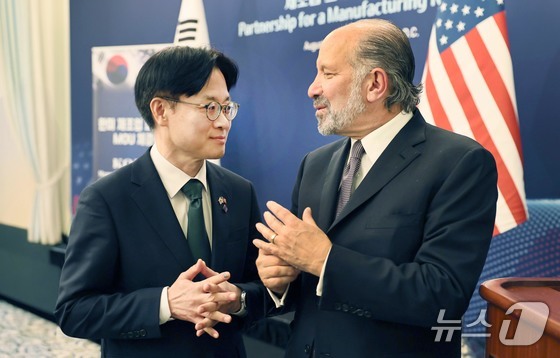
The Blue House plans to hold a meeting with relevant ministries to discuss the matter, and Minister of Trade, Industry and Energy Kim Jung-kwan intends to visit the U.S. as soon as possible to discuss the issue with U.S. Secretary of Commerce Howard Lutnick.