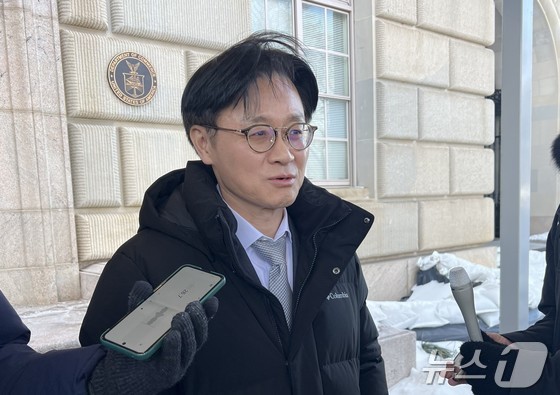
Despite efforts by South Korean officials, including the Trade Minister and Foreign Minister, to persuade the U.S. to withdraw proposed tariff increases during recent visits, no agreement has been reached.
Fears are growing that President Donald Trump’s declared intention to raise tariffs on South Korea from 15% to 25% may soon become a reality.
On Wednesday, the South Korean Foreign Ministry reported that Foreign Minister Park Jin met with U.S. Secretary of State Marco Rubio in Washington, D.C., to discuss the implementation of tariff agreements and explain South Korea’s domestic efforts.
Minister Park likely urged the U.S. to withdraw or postpone its plan to raise tariffs while providing an update on discussions in the National Assembly regarding special legislation for U.S. investments.
The Foreign Ministry stated that Minister Park requested continued diplomatic cooperation to ensure smooth communication between trade authorities, but did not disclose whether any common ground was found on tariff issues.
Notably, the U.S. State Department’s post-meeting statement conspicuously omitted any mention of tariffs, highlighting a significant difference in priorities.
The State Department reported that Secretary Rubio and Minister Park discussed strengthening the U.S.-South Korea alliance, with a focus on forward-looking agendas. They agreed to continue close cooperation to expand South Korean investments in key U.S. industries, including civilian nuclear power, nuclear submarines, and shipbuilding.
The statement also reaffirmed both countries’ commitment to North Korea’s complete denuclearization and emphasized the importance of U.S.-South Korea-Japan trilateral cooperation in maintaining a free and open Indo-Pacific, largely sidestepping the tariff issue.
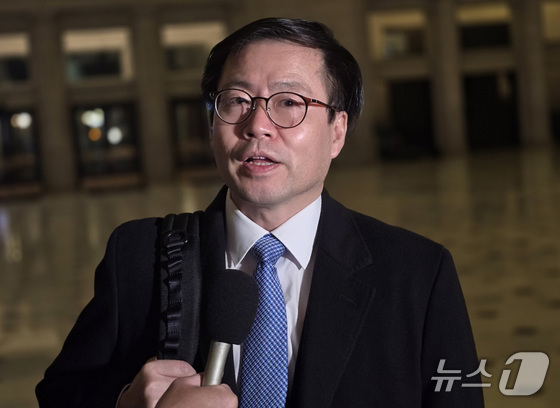
South Korea’s industrial and trade negotiators have also struggled to make headway in talks with the U.S.
Yeo Han Ku, head of the Trade Negotiation Headquarters, spent five days in Washington, D.C., from Friday, but failed to make significant progress in halting the U.S. tariff increase plans.
Notably, Yeo was unable to secure a meeting with his U.S. counterpart, U.S. Trade Representative Jamieson Greer.
Before departing for New York, Ye told South Korean reporters in Washington, D.C., “Our job is to explain our position, communicate progress, and prevent tariff increases,” but only outlined a general response strategy.
Before departing for New York, Yeo told South Korean reporters in Washington, D.C., that their job was to explain their position, communicate progress, and prevent tariff increases, but he outlined only a broad response strategy.
After the second day of meetings, Minister Kim acknowledged that no conclusion had been reached and that differences of opinion remained regarding the U.S. tariff increase policy.
The overall chilly reception to South Korea’s diplomatic efforts suggests that an immediate U.S. retraction of its tariff increase policy is unlikely.
On January 26, President Trump unexpectedly announced on Truth Social his intention to raise tariffs on South Korea, expressing frustration that the South Korean National Assembly had not approved the trade agreement between him and President Lee Jae Myung.
The tariff threat is expected to persist until the U.S. sees significant progress in South Korea’s implementation of its promised 350 billion USD investment, which was offered in exchange for mutual tariff reductions.