

ABL Bio has successfully leveraged its blood-brain barrier (BBB) penetration platform technology, Grabody-B, to effectively deliver next-generation short interfering ribonucleic acid (siRNA) therapeutic agents to both brain and systemic tissues.
Industry experts hail this research breakthrough as evidence that Grabody-B can transcend existing antibody drug delivery technologies, encompassing next-generation modalities such as RNA therapeutics.
Grabody-B Proves Effective in Delivering siRNA, Breaching the Brain Barrier and Demonstrating Efficacy Throughout the Body
According to industry sources on Thursday, ABL Bio and U.S.-based oligonucleotide specialist Ionis recently published their collaborative research findings utilizing Grabody-B on bioRxiv, a preprint server for biology. BioRxiv serves as an online repository where researchers can share their findings prior to formal peer review and publication.
ABL Bio and Ionis employed Grabody-B, which targets IGF1R, as a drug delivery technology. Through this approach, they developed an antibody-siRNA conjugate (ARC) that combines siRNA designed to suppress disease-causing genes and verified its efficacy.
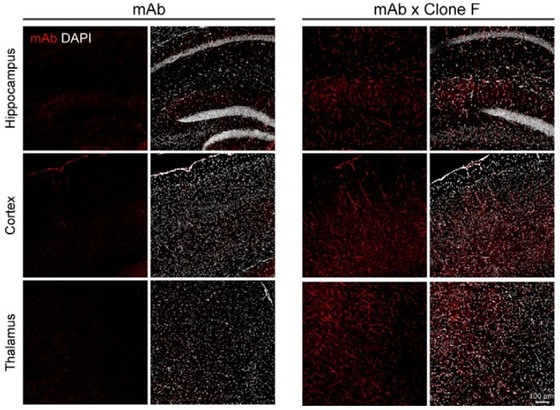
The study results revealed that the ARC administered intravenously using Grabody-B penetrated deep brain regions, including the cerebral cortex and hypothalamus, effectively suppressing genes that trigger diseases.
In the biopharmaceutical market, gene-regulating substances like siRNA are considered promising next-generation drugs due to their ability to fundamentally block the production of disease-causing proteins. However, their inherent properties have posed significant challenges in developing treatments for brain diseases, as they struggle to cross the BBB.
This research demonstrates that Grabody-B binds to receptors on brain endothelial cells, facilitating drug transport into brain tissues. Visual analysis showed that Arthrogryposis, Renal Dysfunction, Cholestasis (ARC) using Grabody-B exhibited distinct distribution around brain microvessels and neurons, indicating enhanced delivery efficiency.
Further analysis revealed that ARC using Grabody-B displayed significantly higher gene suppression effects in major peripheral tissues, including the liver, lungs, heart, and skeletal muscles, compared to standard siRNA when administered systemically. In skeletal muscle, even low doses achieved approximately 50% gene suppression, demonstrating high sensitivity to muscle tissue.
In liver tissues, combining the antibody shuttle resulted in drug accumulation approximately 170 times greater than that of standard siRNA alone. This suggests that ABL Bio’s Grabody-B could serve as a versatile platform capable of expanding its applications beyond brain diseases to systemic muscle disorders and metabolic diseases.
A Leap Forward in the Next-Generation Therapeutics Market
ABL Bio’s Grabody-B is being recognized as a promising alternative that addresses the limitations of the transferrin receptor (TfR) method, which has been the primary focus of industry research.
TfR is associated with iron metabolism and can potentially affect red blood cells. Grabody-B, on the other hand, is reported to offer improved safety and maintain balanced expression within brain tissues.
Based on these findings, Grabody-B is poised to solidify its position as a next-generation platform technology capable of delivering not only siRNA but also oligonucleotides and messenger RNA (mRNA) among various gene-regulating drugs.
With mounting evidence supporting Grabody-B’s potential application across various next-generation modalities, expectations are rising for additional technology transfers and partnerships. This development suggests that ABL Bio can broaden its business development targets to include not only antibody drug developers but also RNA therapeutic companies.
An industry insider commented that while siRNA therapeutics demonstrate excellent efficacy, the delivery technology for targeting tissues beyond the liver has been the biggest hurdle. ABL Bio has provided compelling scientific evidence that Grabody-B could overcome this challenge, significantly increasing the likelihood of further technology transfers with global pharmaceutical companies.