

As the United States initiates procedures to increase mutual tariffs and item-specific tariffs, including those on automobiles, for South Korea, the National Assembly has belatedly begun legislating a special law for U.S. investment. However, observers note that even if the bill passes, it remains uncertain whether the 25% tariff imposition will be withdrawn.
Initially, President Donald Trump cited the pace of South Korea’s investment in the U.S. as the reason for the tariff increase. However, the agreement between the U.S. and South Korea is now in jeopardy, as the U.S. side has raised concerns about platform regulations and the Korean government’s response to the Coupang incident. There are concerns that the tariff conflict could also impact U.S.-South Korea security negotiations.
According to the Blue House on Friday, the government, believing it cannot avoid the U.S. publishing the tariff increase in the Federal Register, is focusing on negotiations to prevent an immediate increase. Given the time required to legislate the special law for U.S. investment, they are requesting a grace period.
After President Trump’s message about increasing tariffs, the government urgently dispatched Minister of Trade, Industry and Energy Kim Jung Kwan, Chief Trade Negotiator Yeo Han Koo, and Foreign Minister Cho Hyun to the United States, but reportedly made little progress. The U.S. side is preparing to increase tariffs on South Korea by publishing a notice in the Federal Register.
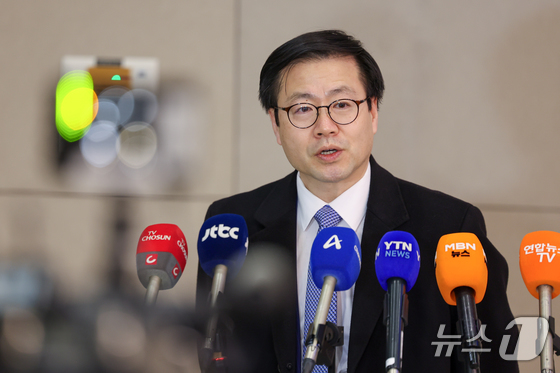
Chief Trade Negotiator Yeo, who returned to Korea on Thursday after visiting Washington D.C., stated that even if the tariff increase measure is published in the U.S. Federal Register, what’s crucial is whether the increase will be immediate or if there will be a 1-2 month grace period. This suggests they accept the Federal Register publication as inevitable and are in ongoing dialogue to prevent an immediate increase.
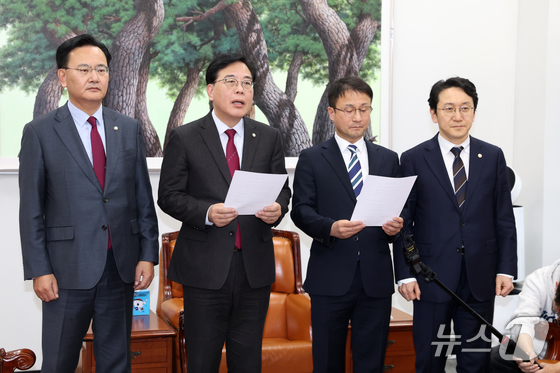
As the ruling and opposition parties have formed a special committee to legislate the special law for U.S. investment and have presented a schedule to pass the bill by early next month, the Blue House and the government’s strategy is to secure a grace period and try to persuade the U.S. side before the tariff increase becomes a reality.
However, it remains uncertain whether the tariff increase measure will be withdrawn even if the special law passes the National Assembly. While President Trump raised the issue of enactment, his underlying intention is to see actual results in U.S. investment.
National Security Advisor Wi Sung Lac said the United States would proceed regardless of whether the special law is processed, and warned that it was overly optimistic to think there was no possibility of publication in the Federal Register. He added that while the situation may improve slightly once legislation is in place, they would need to reassess whether the tariff increase will be fully resolved.
He emphasized that the core issue was not the presence or absence of legislation, but whether there is actual progress in investment, adding that the United States expects such progress.
This suggests that even if the National Assembly passes the special law for U.S. investment, the subsequent pace of investment execution could still be a stumbling block.
The Blue House plans to negotiate specific investment amounts after the enactment of the special law to induce the U.S. to withdraw the tariff increase. It’s reported that discussions are underway about the scale of initial investment the U.S. seeks. Previously, President Lee Jae Myung instructed relevant departments to begin preliminary reviews of the business feasibility of U.S. investment projects.
National Security Advisor Wi said they needed to discuss how much execution would be needed to meet U.S. requirements.
While the U.S. tariff increase was triggered by delays in legislating the special law for U.S. investment, analysis suggests that South Korea’s platform regulation legislation and the investigation into the Coupang incident have also had a significant influence.
Notable examples include the recently passed “False Information Eradication Act” (a revised Information and Communications Network Act) and the government’s pursuit of the Online Platform Act. These laws could affect U.S. Big Tech companies like Google and Meta, leading to speculation that the U.S. administration’s dissatisfaction has erupted, using the delay in the special law for U.S. investment as a trigger. The U.S. is also taking issue with the Korean government’s sanctions related to Coupang’s personal information leak.
The Blue House official reported that the U.S. is raising various issues, including the Network Act and Coupang.
As the conflict over implementing the U.S.-South Korea Joint Fact Sheet leads to tariff reinstatement, security negotiations between the two countries are also facing setbacks, including the deployment of nuclear-powered submarines, revisions to the nuclear agreement, and the transfer of wartime operational control.
In a media interview the previous day, National Security Advisor Wi said the fallout from the collapse of tariff negotiations with the U.S. was affecting subsequent discussions in the security sector, including nuclear-powered submarines, uranium enrichment, and spent nuclear fuel reprocessing. He added that the U.S. security negotiation team should already be in Korea for consultations, but that the visit was being delayed.
Last year, the U.S. and South Korea formed a task force (TF) to follow up on security discussions, with plans to begin full-fledged dialogue with the U.S. delegation’s visit to Korea in January this year. However, the delegation’s visit has been postponed, causing setbacks in related discussions.
As the impact of the Trump administration’s tariff increase extends to U.S.-South Korea security negotiations, concerns are growing within and outside the Blue House about potential conflicts between the policy office and the security office, and between economic ministries and the foreign ministry, regarding response strategies and leadership.
A government insider said he understood that Advisor Wi had recognized signs of increasing tension from the United States and tried to communicate this internally, but added that the atmosphere was not receptive. He also said diplomacy and security are specialized fields that require unique sensibilities, but argued that this is not recognized within the Blue House, adding that it becomes problematic when just anyone tries to handle diplomatic and security matters.
The insider added that economic ministries are currently handling tariff negotiations, but noted that there were suggestions that the diplomatic and security lines should take the lead because it is an external negotiation matter.