

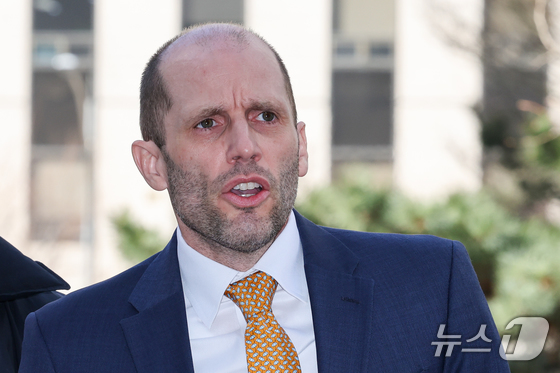
On February 8, Politico reported that Coupang, a company largely unfamiliar to American consumers, is exerting significant influence in Washington.
The publication highlighted Coupang’s strategic moves: relocating its headquarters to the U.S., listing on Nasdaq, hiring individuals with ties to the Donald Trump administration and the Republican Party, and investing heavily in lobbying to position itself as an American company.
Politico assessed that this strategy enabled Coupang to successfully prompt U.S. government intervention by framing the South Korean government’s investigation into a major data breach last year as discriminatory regulation against American firms.
In an unprecedented move, the U.S. House Judiciary Committee recently issued a subpoena to the representative of Coupang’s South Korean subsidiary, questioning South Korea’s digital policies.
The committee announced an official investigation, alleging unfair treatment of U.S. companies like Coupang by South Korean regulators. This case starkly illustrates how Coupang, a service most Americans have never used, is leveraging Washington to pressure the U.S. ally, South Korea.
Coupang’s lobbying efforts in Washington have been notably aggressive. In 2024 alone, the company allocated 3.3 million USD for lobbying. It also donated 1 million USD to President Trump’s inaugural committee and 100,000 USD to the Kennedy Center.
The company contributed 15,000 USD to Rep. Jason Smith (R-MO), chairman of the Ways and Means Committee, which handles trade issues.
An anonymous source who previously consulted for Coupang described this to Politico as a comprehensive strategy targeting every possible avenue to influence Washington’s discourse.
These lobbying efforts intensified following a November data breach affecting approximately 33 million users. Coupang has consistently framed the South Korean government’s thorough investigation as an indiscriminate attack on American companies and digital discrimination.
Wendy Cutler, vice president of the Asia Society Policy Institute, observed that Coupang appears to have successfully garnered support from U.S. policymakers by focusing solely on the issue of digital discrimination in Korea, a strategy distinct from other American companies.
The Coupang issue has emerged as a potential flashpoint in U.S.-Korea trade relations. When President Trump announced an increase in tariffs on Korea from 15% to 25%, Republican members of the House Judiciary Committee explicitly supported Coupang, stating on their official X account that this is the consequence of unfairly targeting American companies like Coupang.
Jamieson Greer, the U.S. Trade Representative (USTR), echoed these sentiments in a Fox Business interview on January 27, claiming that Korea is violating agreements by introducing new digital services laws.
As the South Korean police investigation into Coupang continues, an anonymous trade attorney told Politico that if the U.S. government bases its foreign policy on the treatment of specific companies, executives who fail to respond effectively in Washington could face accusations of dereliction of duty.