

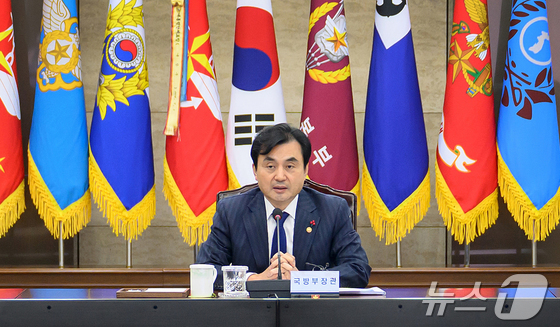
On Tuesday, Defense Minister Ahn Gyu-back convened a situation assessment meeting at the Joint Chiefs of Staff (JCS) operations command center to analyze the Middle East geopolitical landscape following U.S. and Israeli airstrikes on Iran.
The briefing brought together over 40 key personnel, including commanders from overseas deployment units such as the Dongmyeong Unit (Lebanon), Cheonghae Unit (Somalia), Akh Unit (United Arab Emirates), and Hanbit Unit (South Sudan), as well as senior JCS officials.
Minister Ahn began by evaluating the Middle East situation and North Korean developments, then checked in with the overseas unit commanders on their current status.
The meeting follows U.S. and Israeli airstrikes on Iranian territory on February 28, which reportedly resulted in the deaths of Iran’s Supreme Leader Ayatollah Ali Khamenei and several high-ranking officials.
Tensions escalated further when Hezbollah, a pro-Iranian militant group in Lebanon, announced missile attacks against northern Israel on Tuesday.
In response to the airstrikes, the Defense Ministry immediately bolstered protective measures for South Korean troops deployed overseas. As of now, no casualties have been reported among these units.
Minister Ahn stressed that its top priority is ensuring the safety of the personnel in the region. Limit external activities and maintain high readiness to respond to any contingency. Uphold military preparedness within the areas of operation. He added to maintain a 24/7 crisis response system and be prepared to deploy military assets swiftly if called upon to assist in evacuating South Korean nationals.
The Defense Minister also directed all military leaders to maintain field-focused readiness, thoroughly prepare for joint defense posture and the upcoming Freedom Shield (FS) exercises, and enforce strict military discipline across all ranks.