

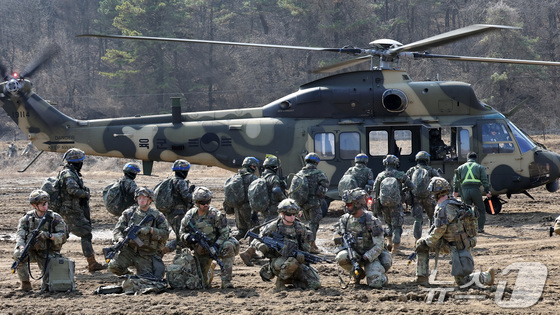
South Korea and the U.S. are set to conduct their biannual joint military exercise, Freedom Shield (FS), from March 9 to March 19.
Freedom Shield is a command post exercise (CPX) designed to enhance interoperability and joint readiness between U.S. and South Korean forces in response to potential North Korean aggression. While FS doesn’t include field training exercises (FTX), both nations typically conduct separate outdoor drills during their spring and fall training cycles to maintain combat readiness.
In conjunction with FS, the allied forces will execute Warrior Shield (WS), an FTX that will test their capabilities across all domains: land, sea, air, cyber, and space.
The exercise will incorporate scenarios reflecting recent geopolitical shifts, including North Korea’s tactical changes following its troop deployment to Russia and its ongoing nuclear threat. The joint FTX will comprise 22 events: six at the brigade level, ten at the battalion level, and six at the company level.
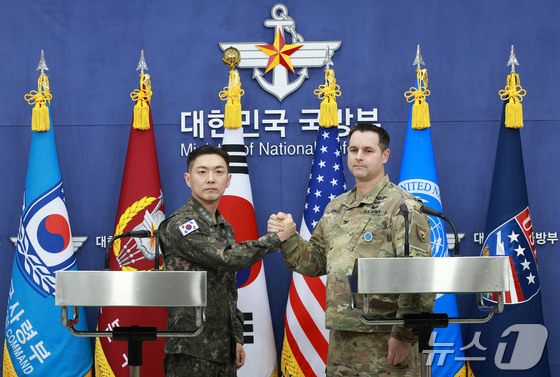
Sources indicate that U.S. and South Korean officials encountered difficulties in finalizing the scale and content of the joint FTX. The disagreement stemmed from South Korea’s preference to spread FTX events throughout the year, contrasting with the U.S. approach. Seoul reportedly proposed minimizing joint FTX activities during this exercise period, focusing instead on training essential for the transfer of wartime operational control.
Consequently, on February 27, just ten days before the start of the exercise, both nations announced a scaled-back FTX plan. The 22 planned events represent roughly half of the 51 joint FTX activities conducted during last spring’s FS exercise.
All eyes are now on North Korea’s potential response. Historically, Pyongyang has denounced FS exercises as invasion drills and often responded with military provocations, heightening regional tensions.
Some analysts speculate that North Korea might attempt to exploit the U.S. focus on Middle East conflicts by launching high-profile provocations, such as intercontinental ballistic missile (ICBM) tests, to disrupt U.S. readiness postures.
This concern is underscored by Kim Jong Un’s recent directive, issued during the 9th Congress of the Workers’ Party of Korea, to bolster ICBM systems capable of both land and submarine launches.
Experts also suggest that, in light of recent events in Iran, Kim may prioritize demonstrations of North Korea’s air defense and retaliatory strike capabilities, aiming to signal to Washington that Pyongyang is a different strategic challenge than Tehran.