

The Donald Trump administration has initiated a Section 301 investigation targeting South Korea and 15 other major trading partners. This move comes after the invalidation of mutual tariffs and the so-called fentanyl tariffs under the International Emergency Economic Powers Act (IEEPA). It’s seen as a follow-up measure to establish grounds for imposing additional tariffs.
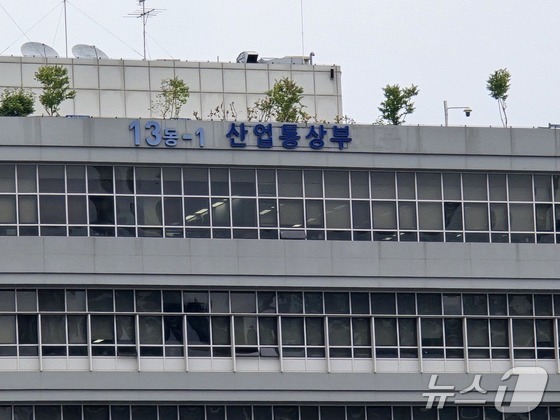
The South Korean government plans to maintain the agreements made during U.S.-Korea tariff negotiations while working closely with U.S. officials to prevent any disadvantageous situations compared to other key trading partners.
On Thursday, the Ministry of Trade, Industry, and Energy reported that the U.S. Trade Representative (USTR) announced on Wednesday through the Federal Register the launch of a Section 301 investigation. This probe, based on the Trade Act of 1974, targets 16 trading partners, including South Korea, China, the European Union (EU), and Japan, focusing on actions, policies, and practices related to structural overproduction in the manufacturing sector.
According to the Federal Register, the USTR will investigate whether the actions, policies, and practices of these trading partners concerning structural overproduction in manufacturing are unreasonable or discriminatory, and if they burden or restrict U.S. commerce. The countries under scrutiny include China, the EU, Singapore, Switzerland, Norway, Indonesia, Malaysia, Cambodia, Thailand, South Korea, Vietnam, Taiwan, Bangladesh, Mexico, Japan, and India.
To proceed with the Section 301 investigation, the USTR has requested consultations with these nations. Stakeholders must submit written comments from April 17 to April 15, and the USTR plans to hold public hearings starting May 5.
The U.S. government has previously indicated its intention to restore tariffs to pre-IEEPA ruling levels through Sections 122 and 301 of the Trade Act.
The South Korean government stated it will engage in close consultations with the U.S. during the USTR investigation process. The aim is to preserve the benefits balance from existing U.S.-Korea tariff agreements and ensure that export conditions for South Korean companies to the U.S. remain competitive with other major countries.