

The establishment of public hospitals in northeastern Gyeonggi Province is gaining momentum as economic feasibility studies yield positive results.
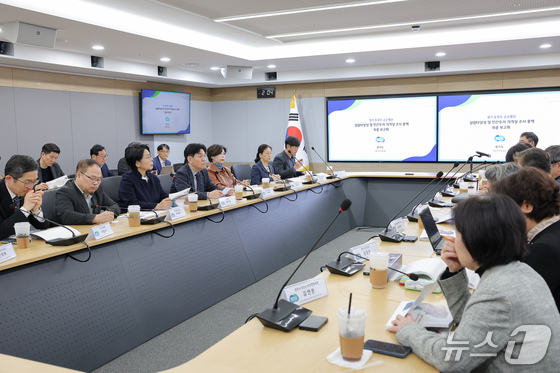
On Wednesday, Gyeonggi Province held a final report meeting to discuss the feasibility and eligibility for private investment in these new public hospitals. Officials shared the study results and outlined plans.
The Korea Health Industry Development Institute reported that the cost-benefit ratio (B/C) for the Namyangju public hospital is 1.02, while the Yangju public hospital boasts a ratio of 1.20. In economic terms, any B/C value above 1.0 indicates a viable project.
With these encouraging figures, the province aims to submit a preliminary feasibility study in the first half of the year and fast-track construction after consulting with the central government.
Both hospitals will be substantial facilities, each with 400 beds. The Namyangju hospital will house 15 medical departments and 14 specialized centers, including emergency care, cardiovascular treatment, maternal and child health, and rehabilitation services.
Meanwhile, the Yangju hospital will feature 18 medical departments and 16 specialized centers, including a psychiatric emergency unit and an eye health clinic. It’s designed to be a regional hub, linking essential medical care with community support services.
Each hospital will cover about 414,000 square feet and require an investment of about $214 million. The projects will be developed under a Build-Transfer-Lease (BTL) private investment model.
These facilities are being designed as innovative public hospitals that integrate emergency, critical care, rehabilitation, and long-term care services. They’ll also incorporate cutting-edge AI-based smart hospital systems. The plan includes AI sensors and intelligent CCTV for patient monitoring, real-time biometric analysis, and automation of routine medical tasks to boost efficiency and safety.
The broader goal is to create a comprehensive healthcare system. This involves recruiting specialized staff for essential medical services and fostering collaboration with local healthcare providers to ensure residents can receive full-spectrum care within their region.
Provincial officials have been methodically reviewing medical needs, bed capacities, and operational models through various meetings. They’ve also been laying the groundwork for these projects in consultation with the Ministry of Health and Welfare.
Yu Young Cheol, Director of Gyeonggi Province’s Health and Welfare Bureau, said the study confirmed both the need for the hospitals and their economic feasibility, adding that the province plans to move forward with construction based on the findings.