


Pets are increasingly seen as integral members of the family, and national research efforts are expanding beyond livestock disease control to include pet health and public health. The government is taking the initiative to establish fundamental infrastructure that’s challenging for the private sector to develop.
In a recent interview with News1, Choi Jeong Rok, director of South Korea’s Animal and Plant Quarantine Agency, explained the significance of the newly established Pet Disease Research Laboratory.
Launched in January, the lab represents more than just a new department; it signals a shift in South Korea’s pet health policy from an economic focus to one centered on welfare and safety.
Broadening research and development from livestock to companion animals
The laboratory’s mission includes enhancing scientific data collection on pet infectious diseases and diagnostics, supporting veterinary drug development through the accumulation of biological resources, systematizing stem cell and regenerative medicine research, providing foundational data for future policy, and expanding research into non-infectious diseases such as cancer and metabolic disorders in pets.
Choi highlighted the public importance of pet disease research, noting the previous emphasis on livestock-centric R&D.
He pointed out that individuals, small businesses, and veterinary clinics face significant barriers in developing treatments or new drugs for zoonotic infections due to high initial costs and limited resources, stressing that the public sector needs to step in to monitor diseases and build a comprehensive data system.
The agency plans to expand research on zoonotic diseases such as rabies and tick-borne illnesses like severe fever with thrombocytopenia syndrome (SFTS), as well as diseases that commonly affect veterinary practices, including canine parvovirus and feline panleukopenia.
It also aims to establish a data-driven diagnostic framework for non-infectious diseases increasingly affecting older pets, including cancer, obesity, heart disease, and kidney disorders.

Advancing regenerative medicine… Striving to elevate pet disease research
Choi also expressed a strong commitment to advancing stem cell and regenerative medicine research, which is critical for treating complex diseases.
He noted that while use of stem cell therapy is growing, a clear legal framework is still lacking, and said the agency plans to establish a scientific basis for regulation. He added that it will develop a system to collect non-infectious biological samples domestically, rather than relying on imports, and distribute them to researchers.
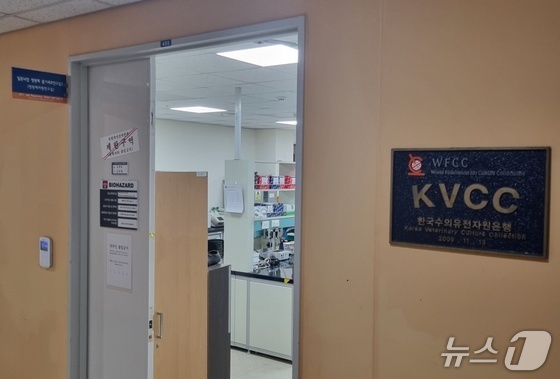
To achieve this, the agency plans to expand domestic production of biopharmaceutical resources, including organoids and cell lines, through the Korean Veterinary Life Resource Bank (KVCC).
Choi also shared his vision of elevating the new laboratory into a Pet Disease Division, aligning with the World Organisation for Animal Health (WOAH) and its emphasis on animal health and welfare standards.
He emphasized that conducting risk assessments, carrying out epidemiological investigations to predict disease patterns, and providing scientific data to the private sector are key public-sector responsibilities.
Choi said this marks a first step toward a society that prioritizes a One Health approach, adding that the government will lead efforts in areas the private sector finds difficult to address while supporting growth in the pet healthcare industry.