

Military analysts suggest North Korea is likely to view the U.S. military’s strategic flexibility doctrine not as a security gap for South Korea, but as an increased threat to its own national security.
A report titled, North Korea’s Perspective on the Strategic Flexibility of U.S. Forces in Korea, authored by Han Bong-soo, director of the Korea Institute for Defense Analyses (KIDA) Peninsula Security Research Center, reveals that North Korea has been acutely aware of this concept since May 21, 2005. The Bush administration first introduced strategic flexibility as part of its post-Cold War and post-9/11 defense strategy.
North Korea’s rhetoric on strategic flexibility peaked in 2006, with sporadic mentions continuing until 2017. The topic resurfaced in official statements about three times since 2025. Despite the two-decade span, Han’s analysis indicates that North Korea’s stance has remained largely consistent.
In 2005-2006, Pyongyang interpreted U.S. strategic flexibility more as a force multiplier than a drawdown, focusing on the potential rapid deployment of U.S. troops to the Korean Peninsula during a crisis. Han notes that North Korea viewed the restructuring of the U.S. 2nd Infantry Division as evidence of America using South Korea as a springboard for Asian aggression, urging Seoul to push for U.S. troop withdrawal.
From 2011 to 2017, North Korea’s concerns centered on U.S. force levels and reinforcement capabilities in South Korea, maintaining calls for U.S. troop withdrawal. Pyongyang argued that the relocation of U.S. bases to Pyeongtaek facilitated the influx of advanced military hardware through nearby ports and airfields. It also cited the U.S. Marine Corps’ distributed laydown in the Asia-Pacific and the formation of a combined U.S.-Republic of Korea (ROK) division as examples of strategic flexibility in action.
Post-2025 references shifted focus from specific weapons systems to broader U.S. strategic objectives. North Korea emphasized that U.S. strategic flexibility poses a threat not only to itself but also to China, as it expands American operational reach across the region.
A June statement by Kim Yong-bok, first deputy chief of the Korean People’s Army General Staff, characterized U.S. strategic flexibility as increasingly aggressive. Kim maintained that the U.S. aims to use South Korea as its primary forward base to reassert hegemony in Asia.
Han argues that these insights challenge the notion that enhanced U.S. strategic flexibility might create a security vacuum on the Korean Peninsula, leading to North Korean miscalculation. Instead, his analysis suggests that Pyongyang is more concerned about the potential concentration of U.S. forces on the peninsula during regional conflicts.
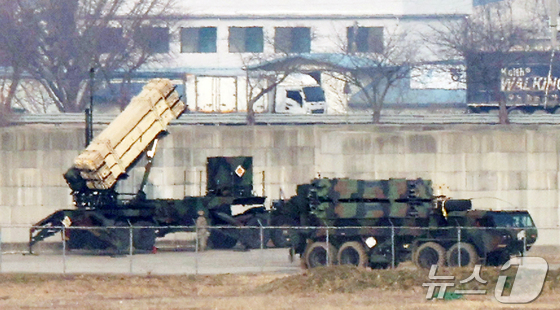
Han explains that for instance, North Korea is unlikely to view the recent redeployment of U.S. air defense assets like Terminal High Altitude Area Defense (THAAD) and Patriot systems to the Middle East as an opportunity to strike South Korea. On the contrary, seeing U.S. weapons systems in action may heighten their threat perception and underscore American military agility.
Han concludes that while it must prepare for worst-case scenarios and cannot dismiss the possibility of North Korean miscalculation, South Korea should adopt a more open stance towards U.S. strategic flexibility to maximize its benefits. The focus should be on establishing clear procedures and criteria for implementing this strategy in ways that enhance the mutual security interests.