

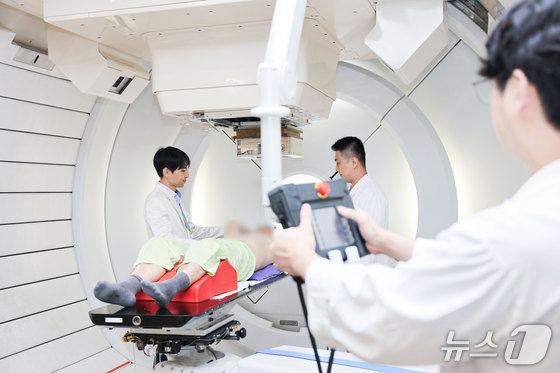
Samsung Medical Center has demonstrated the effectiveness of proton therapy for liver cancer patients with difficult-to-treat cases.
Proton therapy accelerates hydrogen nuclei to nearly 60% of light speed, targeting and destroying cancerous tissue in patients. This breakthrough is being hailed as a new milestone in liver cancer treatment.
On Wednesday, Samsung Medical Center announced that a research team led by Drs. Park Hee-cheol and Yoo Jung-il from the Department of Radiation Oncology, along with resident Jeong-ha Lee, analyzed 2,000 cases of proton-treated liver cancer. Their findings were published in a recent issue of the European Journal of Cancer.
The hospital introduced proton therapy equipment in late 2015 and surpassed 2,000 liver cancer proton therapy cases in September 2024, a first in the country. This study represents a decade of proton therapy treatment for liver cancer patients.
The 1,823 patients in this study, including those with multiple treatments, were considered to be in a treatment gap.
These patients were unsuitable for standard treatments like surgery or radiofrequency ablation due to tumor location, liver function, underlying conditions, or advanced age, according to international liver cancer treatment guidelines.
The analysis showed remarkably high rates of tumor non-recurrence or progression-free survival after two years of proton therapy: 95.5% for stage 0, 93.9% for stage A, 98.5% for stage B, and 87.6% for stage C.
At three years, the rates remained impressive: 91.1% for stage 0, 91.3% for stage A, 95% for stage B, and 83.3% for stage C. Overall survival rates were comparable to existing standard treatments, with 81.1% for stage 0, 65.5% for stage A, 45.5% for stage B, and 37.2% for stage C after three years.
The research team credits their success to careful patient selection based on a multidisciplinary approach and decades of experience in liver cancer radiation therapy.
Protons can target cancer cells while minimizing damage to healthy tissue, especially in the liver. However, high precision is crucial for maximizing effectiveness.
The medical team employed advanced techniques, including respiratory synchronization and four dimensional (4D) computed tomography (CT) scans, to track tumor and organ movement. They also made real-time adjustments to account for patients’ breathing, ensuring high-precision proton therapy.
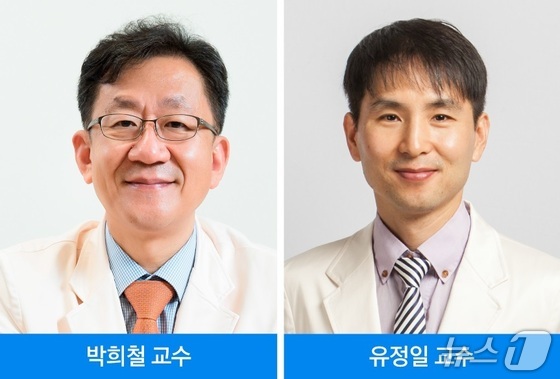
Dr. Yoo stated that this study established the largest single-center cohort, thanks to the standardized multidisciplinary approach and proton therapy protocols. Proton therapy will be key to improving patient outcomes by addressing their specific needs.
Dr. Park, head of the Proton Therapy Center, added that proton therapy has become a definitive alternative for liver cancer patients unsuitable for existing treatments, offering high rates of local control and survival. It expects future studies to further expand its role.
As of 2025, the hospital’s Proton Therapy Center has treated over 8,183 patients, with treatments exceeding 100,000. Of the 7,908 patients treated through September last year, liver cancer cases were the most common at 2,403 (30.4%).
Proton therapy is the only particle radiation treatment that has been continuously validated for effectiveness and safety worldwide, including in the U.S., for decades. In South Korea, it’s the only such treatment covered by health insurance.