

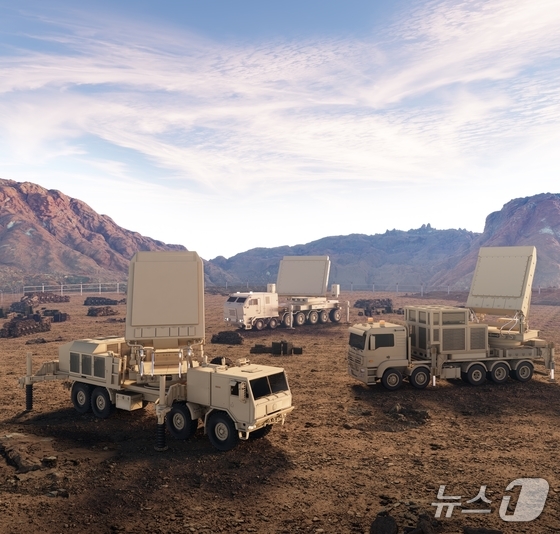
On April 3, the Defense Acquisition Program Administration (DAPA) approved an implementation plan to accelerate the deployment of the Long-Range Artillery Interception System (LAMD) to counter North Korea’s long-range artillery threat.
The decision was made during the 174th Defense Acquisition Promotion Committee meeting at the Ministry of National Defense. The committee reviewed and approved four key items: the revised LAMD project strategy and development plan, an updated strategy for the joint maritime tactical data link (Link-22), a procurement plan for Standard Missile-3 (SM-3) interceptors, and a five-year defense industry development blueprint for 2026-2030.
The LAMD project, spearheaded by the Agency for Defense Development, aims to bolster air defense capabilities for critical national and military assets against enemy long-range artillery. It forms part of South Korea’s three-axis defense system against North Korean nuclear and missile threats, alongside the Kill Chain and Korea Massive Punishment and Retaliation (KMPR) strategies.
Launched last year, the LAMD project has a total budget of approximately $559 million through 2030.
The committee previously expedited LAMD’s operational timeline from 2031-2033 to 2029-2033, approving revised plans in 2024.
The push for LAMD’s early deployment comes in response to North Korea’s enhanced long-range artillery capabilities, particularly its upgraded multiple rocket launcher systems threatening the Seoul metropolitan area.
Intelligence reports indicate that North Korea has deployed more than 1,000 artillery systems and rocket launchers with ranges exceeding 25 miles along the Demilitarized Zone (DMZ). These weapons could potentially unleash up to 16,000 rounds per hour on South Korean territory, including Seoul.
Of particular concern are North Korea’s technological advancements, such as the 2024 upgrade of its 240 mm multiple rocket launchers with guidance systems, weapons typically aimed at the capital region.
To address this escalating threat, DAPA plans to prioritize the maintenance and deployment of LAMD prototypes currently undergoing flight testing.
Dubbed the K-Iron Dome, LAMD differs from Israel’s Iron Dome by focusing on simultaneous interception of multiple incoming artillery rounds, rather than sporadic rocket attacks.
The SM-3 acquisition aims to equip the King Jeongjo-class Aegis destroyers (KDX-III Batch-II) with mid-course ballistic missile defense capabilities. The $500 million program will procure the interceptors through Foreign Military Sales (FMS) by 2031. The committee had previously green-lit the SM-3 procurement strategy in 2024.

With a range of approximately 435 miles, the SM-3 can engage enemy ballistic missiles at altitudes around 310 miles. This complements the already-approved SM-6 missile, which can intercept threats at ranges of 150-286 miles and altitudes up to 21 miles.
The combination of SM-3 and SM-6 interceptors will provide South Korea’s naval forces with a layered defense against ballistic missiles in both mid-course and terminal phases.
The Link-22 program aims to replace the aging Link-11 tactical data link to enhance information sharing during combined maritime operations. The committee approved a revised strategy, adjusting the project’s budget and timeline based on a recent feasibility reassessment.
The transition to Link-22 is expected to significantly improve the speed, capacity, and range of tactical data transmission during joint operations. It will also enhance jam-resistance, boosting interoperability between South Korean and U.S. forces. The $392 million project is slated for completion by 2031.
The committee also approved the Basic Plan for Defense Industry Development, outlining support and growth strategies for the sector from 2025 to 2030. DAPA will implement three core policy directions and ten key initiatives under this comprehensive plan.