

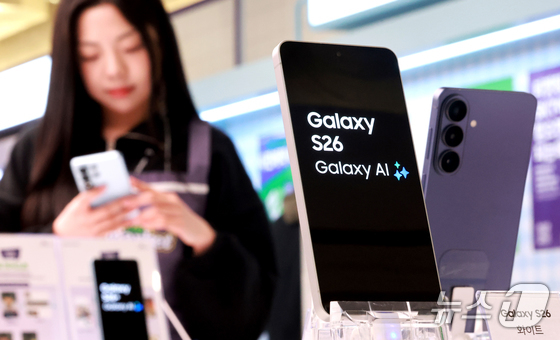
Samsung Electronics (005930) announced that it applied aluminum materials across the Galaxy S26 series to achieve product unity.
During a media briefing on April 9, Samsung unveiled the design concept and development process behind its latest flagship smartphone, the Galaxy S26 series, and its wireless earbuds, the Buds4.
Ji Young Lee, Senior Vice President of Samsung’s MX Division Design Team, addressed the shift to aluminum for the Galaxy S26 series, similar to Apple’s iPhone 17 series. She emphasized that the primary focus was on creating a seamless feel between the back and sides of the device. Lee added that durability was carefully considered to ensure the material delivers the level of quality expected of a premium device.
Samsung had previously used titanium in its Galaxy S24 Ultra model. However, after Apple’s decision to opt for aluminum instead of titanium in the iPhone 17 series last year, Samsung also adopted an aluminum body in the Galaxy S26 Ultra. This move has sparked some debate, with critics questioning whether it signifies a shift from premium to more cost-effective materials.
Samsung emphasized that the design philosophy for this new product line is centered on a human-first design approach.
Il Hwan Lee, Head of the MX Division Design Team, said that while Galaxy has consistently led technological innovation, the true value of technology lies in how seamlessly it integrates into everyday life. He added that the company remains focused on placing users at the center of its design philosophy.
Lee described Galaxy’s new design direction as modern aesthetics infused with emotion. This approach aims to create designs that feel both comfortable and refined, enhancing users’ everyday experiences.
In line with this design philosophy, the Galaxy S26 series features refined corner curvatures. For the first time, Samsung has unified the curvature across all models, including the Ultra, standard, and plus versions, while also introducing a new curvature profile.
Lee explained that the team arrived at an optimal corner curvature of 7R (radius) by balancing Galaxy’s signature design language with ergonomic grip and overall form harmony. He added that the 7R curvature is applied consistently throughout the device, extending even to the asymmetrical curve of the S Pen tip.
The S26 series also introduces an ambient island design, which minimizes the protrusion of the high-performance camera while allowing for a slimmer overall profile.
Lee added that the design also considered the interplay of light and shadow to create a softer visual impression around the camera module. He noted that the goal was to ensure technical elements blend naturally into the overall design, rather than standing out as purely decorative features.

For the Galaxy Buds4, the design team focused on enhancing user comfort, leveraging technology and data-driven insights.
Jun Yong Song, Group Leader of the MX Division Design Team, said the team moved beyond designing for an “average” user by analyzing data from diverse demographics to optimize comfort across a broad range of users.
Samsung also emphasized that the Buds 4 feature an ergonomic design, based on over 100 million ear data points collected worldwide through a collaboration with the University of Michigan starting in 2024, and after running over 10,000 wear simulations.
The team expressed strong confidence in the designs of both the Galaxy S26 series and the Galaxy Buds4, saying that they would give the designs perfect scores.
Lee said that each year the company strives to deliver designs with clear intent and purpose, and that the S26 reflects this commitment.
Song added that teams across technology, design, and user experience worked together to create the best possible product, a project which he poured his heart and soul into.