

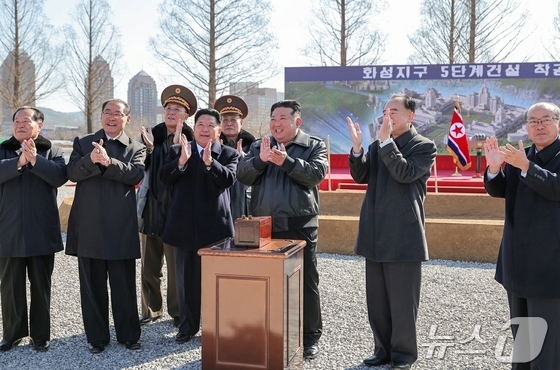
When covering North Korea, one of the most striking changes in General Secretary Kim Jong Un’s public activities has been the shift in their nature. In the past, particularly during Kim Jong Il’s era and the early years of Kim’s leadership, military-related events dominated his public appearances. These included inspections of military units, observations of weapons development, and guidance on military training. However, recently, there has been a noticeable increase in visits to construction sites, including housing complexes, factories, cultural facilities, and memorials. Notable examples include the Hwasong area construction project, the 20×10 local development policy, the establishment of the Combat Achievement Memorial Hall, and the development of local industrial plants across various regions.
Experts on North Korea interpret this trend as more than just a penchant for construction; it signifies a fundamental shift in Kim’s governance style. One source noted that Kim appears to be focusing more on cultivating an image as a national manager rather than just a revolutionary leader. They added that to leave a lasting legacy, he needs tangible results, and in North Korea, that means buildings. This suggests that construction serves as the most effective means to showcase regime accomplishments, especially when it’s challenging to achieve economic results that residents can tangibly feel.
In reality, North Korea faces significant hurdles in generating substantial economic improvements that could dramatically enhance residents’ living standards. This is due to chronic economic difficulties, international sanctions, and structural industrial stagnation. While metrics like increased production or improved industrial efficiency have limited propaganda value, large-scale apartment complexes, new streets, and cultural facilities offer residents visible and experiential evidence of progress. From Pyongyang’s perspective, concentrating limited resources on creating these visible achievements represents the most efficient governance strategy.
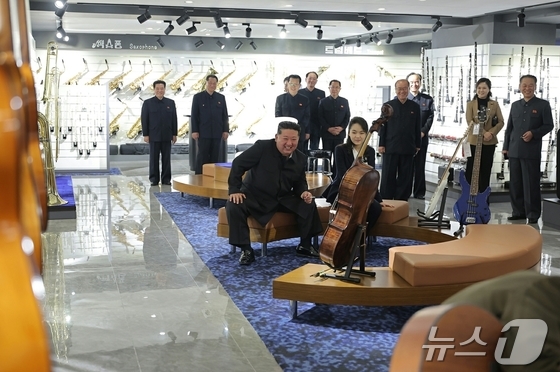
Notably, Kim has gone beyond merely approving construction projects; he has repeatedly visited sites and paid attention to minute details. During a recent inspection of the Hwasong area’s service facilities, he specifically mentioned amenities such as pet-related facilities, auto repair shops, and music stores, demonstrating his hands-on interest. This marks a shift from past supreme leaders who focused on emphasizing military might and revolutionary ideals. Recent assessments suggest that Kim aims to portray himself as a people-oriented leader who carefully considers the living standards and conveniences of ordinary citizens.
Analysts interpret North Korea’s recent institutional reforms within this same context. The country has revised its constitution, removing the term socialist constitution and replacing it with Constitution of the Democratic People’s Republic of Korea through the Supreme People’s Assembly. Additionally, North Korea is establishing a police system and restructuring its state apparatus. Unlike the past, which emphasized revolutionary symbolism, these moves are seen as efforts to construct an image of a normal state with formal institutional and administrative systems.
Ultimately, North Korea’s recent construction drive is more than just urban development; it symbolizes the governance strategy of the Kim era. Kim is positioning himself as a national manager who attends to state operations and public welfare, choosing construction as the most effective way to engrain his achievements in the public consciousness. A North Korea expert remarked that for Kim, construction is not just an economic policy but a political act to visually imprint his governance achievements. They concluded that the legacies of the Kim era will likely be etched in concrete rather than recorded in history books.