

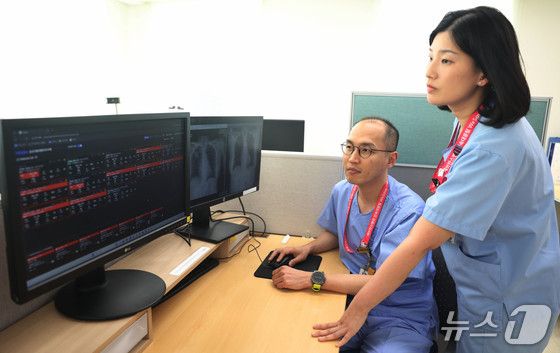
Yonsei University Severance Hospital has unveiled a groundbreaking medical system called Patient Real-time Integrated Status Monitor (PRISM), which continuously monitors key health indicators for all patients across all wards. The system, announced on Tuesday, immediately alerts medical staff when it detects any abnormal signs.
PRISM was co-developed with medical solution provider ACK.
Previously, healthcare providers had to check each patient’s vital signs individually through separate monitors for various medical devices. PRISM, however, standardizes data output from different device manufacturers, allowing staff to view all information on a single, unified screen.
The most significant innovation is the shift from periodic checks to continuous monitoring. Instead of staff checking on patients every eight hours at most, PRISM now collects vital data without interruption, instantly notifying medical personnel of any concerning changes.
The hospital describes this as a paradigm shift in healthcare, transitioning from reactive care to proactive management. This approach is particularly effective for patients at risk of severe deterioration.
By continuously analyzing patients’ conditions, PRISM can detect risk signals much faster than traditional methods. For example, if a patient’s heart rate spikes or blood pressure drops beyond certain thresholds, the system immediately alerts staff, enabling rapid response.
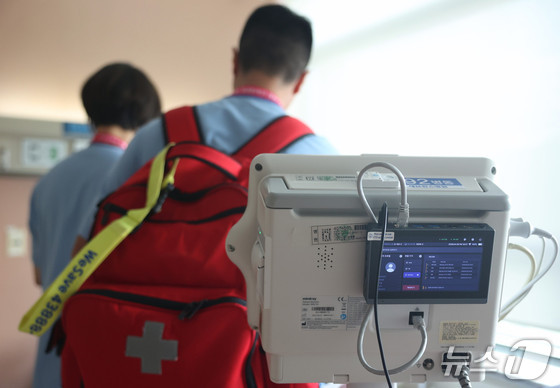
To complement this system, the hospital operates a rapid response team called ‘WeSave,’ consisting of seven specialists and 15 nurses working in three shifts. This team collaborates with ward nurses and attending physicians, monitoring data around the clock and deploying immediately when abnormal signals are detected.
The system’s effectiveness was demonstrated on March 21, when a patient in their 70s experienced a sudden drop in oxygen saturation. The rapid response team arrived within three minutes, quickly initiating artificial ventilation to prevent further respiratory failure.
In another instance, a patient in their 50s in the cardiology ward showed real-time decreases in blood pressure and heart rate. Medical staff responded within five minutes, conducting on-site tests and administering medication to stabilize the patient’s condition.
PRISM’s automated data recording and sharing capabilities significantly reduce manual entry tasks and minimize data errors. It also enables all medical staff to access the same information simultaneously, enhancing the speed and accuracy of collaborative care.
The hospital plans to further enhance PRISM by integrating artificial intelligence (AI)-based predictive technologies, aiming to forecast potential deterioration in patients’ conditions based on accumulated data.
Hospital Director Dr. Lee Kang-young emphasized that this integration of medical device data represents a fundamental shift in patient safety, underscoring Severance’s commitment to swift response to even subtle warning signs.
Severance Hospital is also actively fostering an AI innovation ecosystem. In January, they hosted the 2026 Yonsei Digital Health Symposium, exploring interdisciplinary collaboration and innovation in digital health.
Since establishing the Digital Healthcare Innovation Research Institute in 2022, which encompasses medical, dental, and nursing schools, Severance has been creating an environment for digital healthcare innovation. Their goal is to manage the entire cycle of digital health research, from development to practical implementation, ensuring tangible benefits for both medical staff and patients.