

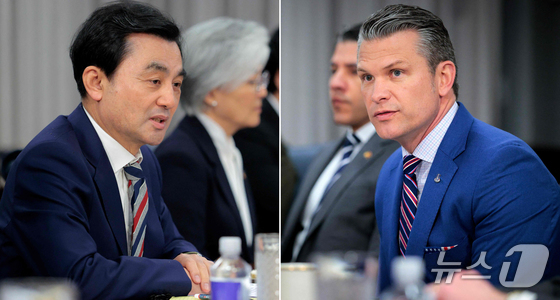
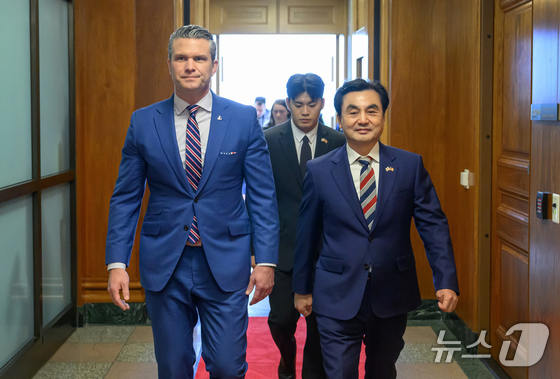
After a six-month hiatus, the defense ministers of South Korea and the U.S. reconvened, but failed to make substantial progress on key issues such as the transfer of wartime operational control (OPCON) and the acquisition of nuclear-powered submarines. Analysts on Wednesday characterized the meeting as a parallel line discussion, where both sides merely reaffirmed their existing positions.
Following the ministerial talks, the U.S. and South Korea are set to hold the Korea-U.S. Integrated Defense Dialogue (KIDD) on Wednesday to further discuss related matters. However, despite the face-to-face meeting between the two ministers, experts suggest that both nations continue to struggle in bridging their differences on major defense issues.
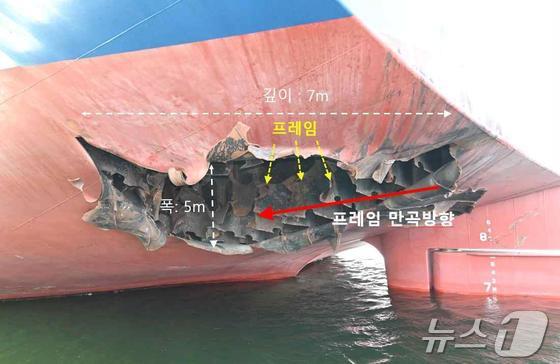
The meeting took place shortly after confirming the attack on the HMM Namu, a South Korean-operated vessel, in the Strait of Hormuz on May 4. This raised concerns that the U.S. would intensify pressure on South Korea to join Washington-led efforts to secure the strategic waterway.
President Donald Trump asserted that Iran was responsible for the explosion and fire aboard the HMM Namu, using the incident to push for South Korea’s participation in the ongoing U.S. military operation in the Strait of Hormuz, known as Project Freedom. Defense Secretary Pete Hegseth echoed Trump’s message during the meeting.
In his opening remarks, Secretary Hegseth stated that President Trump’s historic decision to approve Operation Epic Fury clearly demonstrates this administration’s unwavering commitment to countering threats and defending the interests with resolute strength. In today’s global threat environment, the power of the alliance is crucial, and it expects the partners to stand shoulder to shoulder with them.
The U.S. views the Namu attack as likely perpetrated by Iran and has noted the growing domestic sentiment in South Korea for a robust response. Washington appears to be leveraging this situation to encourage Seoul’s active participation in the U.S.-led restructuring of the Middle East order. However, South Korean Defense Minister Ahn Gyu-back reiterated that immediate participation would be challenging, citing domestic legal considerations.
Following his meeting with Secretary Hegseth, Minister Ahn told reporters in Washington, D.C. that the Ministry of National Defense will comprehensively evaluate and gradually consider ways to contribute, while adhering to international and domestic legal procedures. He added that although there were no specific requests regarding South Korea’s role in the Strait of Hormuz, it did discuss various possibilities, such as information sharing and military asset support. Ahn emphasized that South Korea has not yet decided on participation, noting that any contribution to U.S.-led multilateral efforts would prioritize limited support over deploying combat troops.
Minister Ahn further clarified that while it had extensive discussions about the Strait of Hormuz and the Namu incident, it didn’t delve into specific U.S. demands. It was more of a common-sense dialogue. He added that there are significant constraints on disclosing specific details of the conversation.
When questioned about South Korea’s military response to the Namu incident, Minister Ahn replied that it needs the results of the government’s joint investigation to determine the level of response. Various technical analyses are underway, and it’s premature to take action until it has an accurate assessment.
The issue of transferring wartime operational control remains unresolved. Minister Ahn stated that Secretary Hegseth fully agrees that the OPCON transfer should be conditions-based and hopes for a swift transition. He acknowledged that while the gap in understanding is not significant, there are some differing perspectives from the U.S. side on this matter.
South Korea and the U.S. are working toward the OPCON transfer based on a three-phase evaluation and verification process: Initial Operational Capability (IOC), Full Operational Capability (FOC), and Full Mission Capability (FMC). The IOC evaluations were completed in 2019 and 2020, with the FOC evaluation concluding in 2022. The South Korean government aims to complete the FOC verification by year-end, targeting the final transfer no later than 2028.
However, U.S. Forces Korea Commander Gen. Xavier Brunson revealed during a House Armed Services Committee hearing last month that he had submitted a roadmap to the Department of Defense for achieving the conditions for the transfer by the second quarter of fiscal year 2029 (first quarter of 2029 in Korea). This statement highlighted the differences between the two countries regarding the timing of the transfer.
Minister Ahn commented on Brunson’s remarks, saying that he believes that is Commander Brunson’s perspective. He added that the two defense ministers should make recommendations to the respective presidents through the Security Consultative Meeting (SCM) to decide on the transfer. While it may need to seek further understanding and persuasion, its stance on the necessity of an early transfer remains unwavering.
Minister Ahn was cautious in elaborating on the differences with the U.S. regarding the transfer, stating that there are conditions to be met and capabilities to be demonstrated, but there seems to be a difference in perception. He implied that the U.S. still harbors doubts about the South Korean military’s capabilities rather than the timing of the transfer.
The issue of introducing nuclear-powered submarines stems from an agreement between President Lee Jae Myung and President Donald Trump in a joint fact sheet last November, promising cooperation between South Korea and the U.S. A government-wide consultative body was established in January, but progress has stalled due to various factors, including U.S. hesitancy linked to investment delays and opposition from some Democratic lawmakers to South Korea’s nuclear submarine acquisition.
Regarding this, Minister Ahn stated that tiven the complex geopolitical and trade issues involved, this is not something that can be resolved quickly. He added that it shares the understanding that practical discussions need to be held as soon as possible, considering our relationships with China and North Korea, but he did not mention any specific plans.
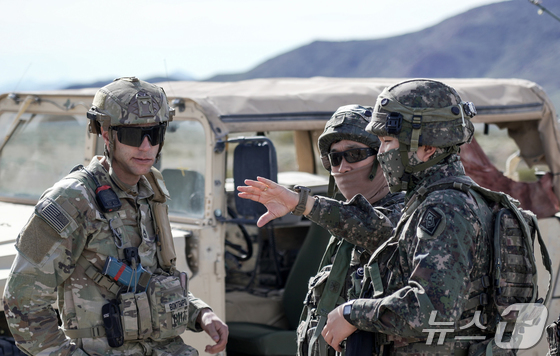
Following the ministerial meeting, the 28th session of the KIDD will convene on Wednesday. The meeting will focus on practical discussions and detailed coordination of key defense and security issues, including the OPCON transfer and the introduction of nuclear-powered submarines, as discussed by Ministers Ahn and Hegseth.
The agenda will also cover strengthening the combined defense posture, maintenance, repair, and operations (MRO) in the shipbuilding sector, and defense industry cooperation.
Additionally, the meeting will likely address the shipbuilding cooperation plans that the Biden administration is considering as part of its efforts to revitalize the U.S. domestic shipbuilding industry. The two countries previously signed a memorandum of understanding (MOU) outlining South Korea’s commitment to invest 350 billion USD in the U.S., with about 150 billion USD allocated to the shipbuilding sector. This includes plans for maintenance and repair of U.S. Navy vessels and joint construction projects.