

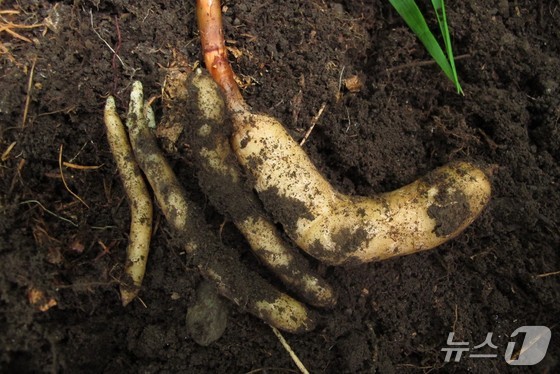
On Wednesday, the National Institute of Forest Science announced groundbreaking research findings on gastrodia elata, commonly known as tianma. The study reveals that salicin, a natural compound found in tianma, effectively improves insulin resistance caused by obesity and aids in diabetes prevention.
Obesity often leads to insulin resistance, a condition where the body’s response to insulin diminishes, significantly increasing the risk of developing type 2 diabetes.
In a collaborative study, researchers from the National Institute of Forest Science and Chung-Ang University conducted cell experiments simulating an obese environment. They discovered that excessive fat damages intestinal cells and reduces the secretion of GLP-1, a crucial hormone for blood sugar regulation. GLP-1 plays a vital role in stimulating insulin secretion and lowering blood sugar levels.
When the research team administered salicin, the key component of tianma, they observed a remarkable reduction in stress on the damaged intestinal cells. This led to an increase in autophagy, the cellular process of waste removal, resulting in the recovery of previously diminished GLP-1 secretion.
Salicin, also known as salicyl alcohol, is a natural phenolic compound found in tianma and select other plants.
In a world-first, the study also uncovered a novel treatment mechanism. When secretions from salicin-treated intestinal cells were introduced to muscle cells, the insulin responsiveness of these muscle cells significantly improved, and glucose absorption rates markedly increased. This groundbreaking research has been published in the prestigious international journal Tissue & Cell, garnering academic recognition.
This study provides scientific evidence for tianma’s potential in diabetes prevention and demonstrates salicin’s ability to contribute to intestinal health restoration and blood sugar regulation. However, the researchers emphasize the need for further studies to confirm these effects in the human body.
Dr. Lee Kyung-tae from the Forest Microbiology Research Division at the National Institute of Forest Science highlighted the significance of elucidating how tianma, a valuable forest resource, can help prevent metabolic diseases like obesity and diabetes that pose serious threats to public health. He added that they’re committed to validating the findings through additional animal studies. The goal is to establish tianma’s value as a functional food or pharmaceutical ingredient and expedite its commercialization by transferring the related technologies to industry partners.