

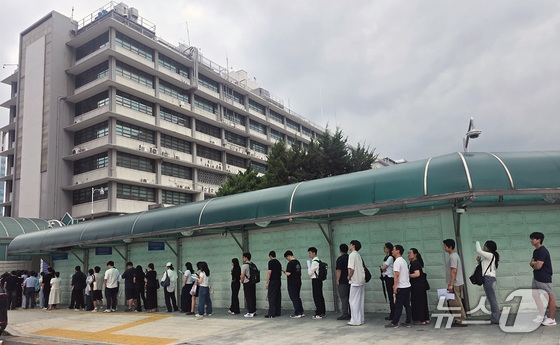
The Donald Trump administration’s decision to limit international students’ stay in the U.S. to four years has sparked widespread concern among the student community. This policy change is particularly worrisome for doctoral candidates, whose programs often extend beyond four years, and for male students facing mandatory military service in their home countries.
On July 16, the Department of Homeland Security (DHS) unveiled final regulations that significantly alter visa rules for international students, exchange visitors, and foreign journalists.
Under the new guidelines, F-1 student visas will only permit a maximum stay of four years. Previously, students could remain in the U.S. for the duration of their academic or employment programs. Now, those needing to stay beyond the four-year limit must apply for an extension with the DHS, subjecting themselves to a more rigorous review process implemented since the Trump administration took office.
These changes will apply retroactively to current visa holders, leaving many international students uncertain about their ability to complete ongoing studies.
Graduate students, particularly those in master’s and doctoral programs that typically exceed four years, are especially apprehensive about the possibility of being forced to return home prematurely if their visa extensions are denied.
A 30-year-old doctoral student, identified as Ms. A, told News1 on July 19 that while the full implications are still unclear, this will undoubtedly have a massive impact on international students. Many programs inherently take longer than four years, a fact this regulation fails to consider.
For example, psychology doctoral students usually require an additional year of clinical practice beyond their four-year coursework. Under the new rules, these students must apply for extensions, risking the loss of years of academic progress if denied.
The policy change also makes it nearly impossible for international students to pursue job offers or internships alongside their studies. Taking a leave of absence becomes unfeasible for those aiming to complete their programs within the four-year window.
Mr. B, an international student at a U.S. university, expressed his concerns: This effectively eliminates the option of taking time off for international students if they want to graduate within four years. For graduate students, especially those in doctoral programs, it’s already challenging to complete degrees in four years when it typically takes over five. The visa situation adds another layer of stress.
Male students face an additional hurdle, as those required to fulfill military service during their studies will inevitably exceed the four-year limit, necessitating visa extensions.
A representative from a study abroad agency explained that many male students complete one or two years of study before returning home for military service, then resume their education. This common practice is now jeopardized by the new regulations.
In an online community of about 400,000 international students, anxiety is palpable. Posts express confusion and worry: How will this affect current doctoral students starting in September? and doctoral programs inherently take more than four years; what is it supposed to do? Even applying for extensions seems uncertain.
As student concerns mount, some U.S. universities are taking proactive steps to provide accurate visa information and support.
A public university recently emailed students, stating that it recognizes the numerous questions the international students have and are committed to providing information as swiftly as possible. It’s developing a dedicated website to outline the major changes and will email a comprehensive overview to all students and researchers.
While some believe that students with solid academic plans may face fewer difficulties in extending their visas, the stringent renewal policies still place considerable pressure on international students. Many view this change as part of the broader anti-immigration stance of the current administration.
Shin Hyun-sook, president of the Korean Study Abroad Association, offered a critical perspective: While the U.S. government claims it will extend visas through reviews, the underlying intent seems to be filtering out international students and limiting their entry. If a student fails to complete their degree within four years, perhaps due to thesis review challenges, the government might deem them incapable and deny their extension, forcing a return home.
The study abroad industry is closely monitoring these developments, as the policy affects all international students, from early study abroad programs to those pursuing undergraduate, graduate, and doctoral degrees.
Shin added that for students planning early study abroad, this throws into disarray their long-term plans for four-year university education, graduate studies, and even permanent residency. Moreover, for those aspiring to become professors after completing doctoral studies in the U.S., the limited options for transferring to other countries pose significant challenges.