

The South Korean government evaluated the impact of the Federal Reserve’s decision to maintain interest rates and the ongoing Middle East conflict on domestic and international financial markets. Officials noted that with inflation remaining elevated in the U.S. and Europe, coupled with geopolitical tensions in the Middle East, uncertainty surrounding future monetary policy decisions in major economies could persist.
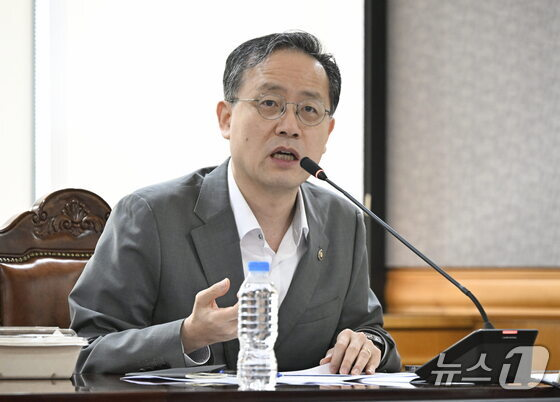
On Thursday, Deputy Finance Minister Lee Hyung-il chaired a joint macroeconomic and financial meeting at the Korea Federation of Banks in downtown Seoul. The gathering aimed to assess global market trends following the Federal Open Market Committee’s (FOMC) decision to hold rates steady and examine the repercussions of the Middle East conflict on financial and currency markets.
The meeting was attended by Bank of Korea Deputy Governor Yoo Sang-dae, Financial Services Commission Vice Chairman Kwon Dae-young, and Financial Supervisory Service Capital Markets Division Head Hwang Seon-o.
Attendees highlighted that despite the Fed’s pause in rate hikes, the U.S. economy continues to show resilience. They noted particularly strong growth in corporate investments, especially in the artificial intelligence (AI) sector.
However, the officials acknowledged that inflation remains stubbornly high in the U.S. and Europe. Combined with ongoing instability in the Middle East, this could prolong uncertainty about the future trajectory of policy interest rates.
In response, the government and relevant agencies resolved to closely monitor international monetary policies, global oil prices, and capital flows. They committed to carefully assessing trends in global financial markets and their potential impacts on the domestic economy and financial sector.