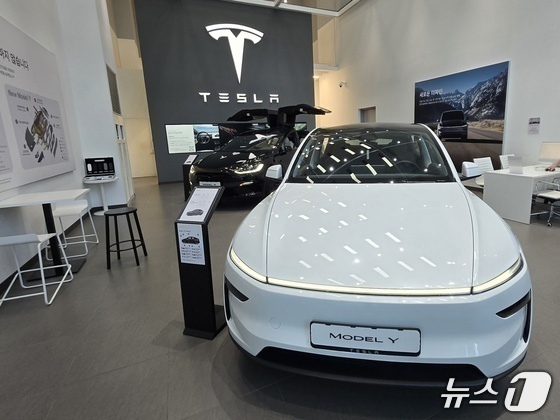
Tesla has introduced a new subscription service that allows customers to access its Full Self-Driving (FSD) feature for 150,000 KRW (about 100 USD) per month, down from the previous one-time fee of 9 million KRW (about 6,024 USD). This move comes on the heels of a significant price hike of up to 7 million KRW (about 4,685 USD) on key models, seemingly aimed at mitigating consumer pushback against the increased costs.
Industry analysts view this strategy as a two-pronged approach: easing growing customer discontent following the price increases while simultaneously expanding Tesla’s subscription-based software revenue model.
According to automotive industry sources, Tesla Korea plans to transition the FSD purchase option to a monthly subscription model starting August 10. Until August 9, customers can still opt for the one-time payment of 9,043,000 KRW (about 6,052 USD), after which new buyers will only have access to FSD through the monthly subscription plan of 150,000 KRW (about 100 USD).
Earlier, Tesla raised prices on its popular models, including the Model 3 and Model Y, by nearly 7 million KRW (about 4,685 USD) following changes in government electric vehicle subsidies. This move sparked criticism, with many arguing that the price hikes, implemented immediately after subsidy eligibility was confirmed, significantly increased the real cost of ownership. Online forums buzzed with complaints that the price increases outweighed the benefits of the subsidies.
In response to this backlash, Tesla has lowered the entry barrier for FSD by switching from a lump-sum purchase to a monthly subscription model.
The company has also expanded FSD availability. Tesla Korea announced a phased rollout of FSD V14 Lite for U.S.-made Model 3 and Model Y vehicles. This extends FSD capabilities to Tesla’s mid-range lineup, joining the existing Model S, Model X, and Cybertruck. The V14 Lite version is optimized to run on the current HW3 hardware, rather than requiring the latest HW4 autonomous driving computer.
This move appears to be Tesla’s attempt to placate consumers by improving access to its flagship FSD technology, following the recent price hikes.
However, critics point out that the FSD service’s focus on U.S.-made vehicles limits its accessibility. Given that a substantial portion of Tesla vehicles sold in South Korea are manufactured at the Shanghai Gigafactory, many local consumers may still find the service out of reach. Some also argue that the subscription model could end up being more expensive than the one-time purchase for long-term users, potentially limiting consumer choice.
These factors have led to industry insiders and consumers questioning whether Tesla is simply offsetting vehicle price increases by introducing a new recurring cost through software subscriptions.
The automotive industry sees this move as more than just a service expansion; it signals a shift in Tesla’s revenue structure. As the industry rapidly evolves towards software-defined vehicles (SDVs), automakers are increasingly focusing on generating recurring revenue through software, even after the initial vehicle sale.
By transitioning FSD from a one-time purchase to a subscription service, Tesla aims to secure a steady stream of recurring revenue and create a lock-in effect, keeping users within its ecosystem. This subscription model aligns with the software-centric business strategy of Tesla’s U.S. headquarters.
An industry expert commented that launching the FSD subscription service when consumer dissatisfaction is peaking due to price increases serves a dual purpose. It not only improves accessibility but also reinforces Tesla’s subscription-based business model, ensuring continued revenue streams post-vehicle sale.