
The International Maritime Organization’s (IMO) discussions on implementing a shipping carbon tax have been delayed by a year, leading industry experts to conclude that the Trump risk has become a reality for South Korea’s shipbuilding industry. With ongoing concerns about a shipping industry downturn due to global trade tensions, there are fears that the absence of demand for eco-friendly vessel replacements could significantly impact South Korean shipbuilders.
57 Nations Backed the One-Year Postponement of Shipping Carbon Tax Talks, While 49 Opposed
According to international media and industry sources on Monday, the IMO convened a Marine Environment Protection Committee (MEPC) meeting in London on October 17 to discuss specific mid-term implementation measures for the net-zero framework. However, the committee failed to reach a consensus.
Saudi Arabia proposed a one-year delay, which gained support from 57 member countries, confirming the postponement. Meanwhile, 49 countries opposed the delay, and 21 abstained.
The net-zero framework primarily involves a shipping carbon tax that would impose a fee of 100 USD to 380 USD per ton (about 2,000 pounds) of carbon emitted above a certain threshold for large vessels exceeding 5,000 tons (about 11 million pounds). It also includes a fuel standard system designed to gradually restrict the greenhouse gas intensity of ship fuel, aiming to reduce fossil fuel consumption.
In April, the IMO MEPC approved the net-zero framework with 63 votes in favor, 16 against, and 24 abstentions. This month’s MEPC meeting aimed to establish specific implementation measures, but ultimately failed to reach an agreement.
Donald Trump administration’s explicit opposition played a significant role in this outcome. The U.S. government had previously withdrawn from the MEPC discussions in April and hinted at potential retaliatory measures against supportive member countries, such as restricting U.S. port access, imposing visa limitations, or levying fees, prior to this meeting.
Reuters reported that countries including South Korea, Japan, Greece, and Cyprus, which had supported the carbon tax in April, abstained this time. Similarly, China, which had also backed the carbon tax in April, aligned with the proposal for postponement.
Initially, the shipping carbon tax was set to take effect in 2027. However, the delay in voting on specific implementation measures has cast doubt on the timeline for its introduction. Lee Na-ye, an analyst at Korea Investment & Securities, predicted that the next MEPC is expected to convene next spring. Given the delay in the official adoption timeline, it’s likely that implementation will be pushed back from 2027 to 2028.
Some experts even suggest that implementing the tax during the entire Trump administration may prove challenging. Choi Kwang-sik, an analyst at Daol Investment & Securities, agreed with market concerns that this one-year delay could potentially lead to a 3-4 year postponement throughout Trump’s term, describing it as a setback for the shipbuilding industry.
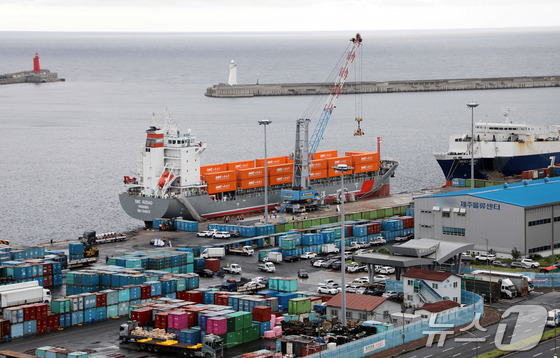
The European Union (EU), which has been spearheading the carbon neutrality agenda, is also facing internal discord, leaving the Korean shipbuilding industry in a precarious position.
The South Korean shipbuilding sector, which had anticipated the likelihood of a carbon tax, now finds itself in a state of uncertainty. The IMO’s carbon neutrality roadmap had been a key factor in the domestic industry’s ability to maintain its competitive edge despite aggressive competition from China. If the shipping sector’s push for eco-friendly vessels loses momentum, the shipbuilding industry will inevitably need to reassess its strategies.
The emerging division within Europe, which has led the carbon neutrality discussions, is also cause for concern. Traditionally, EU member states have voted as a bloc in IMO votes, but this time Greece and Cyprus abstained, breaking that long-standing practice.
Last month, EU member states discussed postponing the implementation of a carbon tax for ships and aviation fuel, originally planned for 2025, to 2035 – a decade later. This decision stemmed from pushback from member states with significant shipping and tourism industries. Nevertheless, the EU currently enforces measures such as the EU Emissions Trading System (EU ETS), which caps total greenhouse gas emissions and facilitates trading of emission allowances among companies.
Yang Jong-seok, a senior researcher at the Korea Export-Import Bank’s Economic Research Institute, observed that from the shipping industry’s perspective, aside from EU regulations, there are currently no regulations that directly increase costs. As the U.S. imposes tariffs that disrupt global trade, the industry outlook is deteriorating. If eco-friendly ship regulations are further delayed, the incentive to place orders for new vessels will decrease, potentially worsening the shipbuilding market conditions.


