

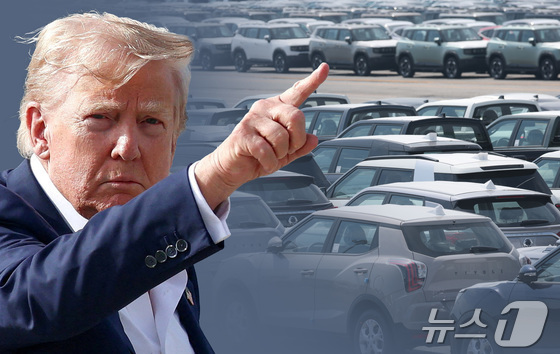
The fate of the reciprocal tariffs imposed globally by Donald Trump administration will likely be decided on Wednesday. The U.S. Supreme Court is set to issue a final ruling on the legality of these tariffs, and regardless of the outcome, it’s expected to have far-reaching implications for U.S. tariff policy.
South Korean businesses, heavily dependent on exports to the U.S., are closely watching the situation. The concern is that even if the tariffs are ruled unconstitutional, refunds may be minimal, and tariffs on specific items could actually increase. For companies, the prospect of renewed tariff uncertainty is a daunting scenario.
Supreme Court to Rule on Reciprocal Tariffs January 14; Unconstitutional Verdict Likely
According to business sources and foreign media reports on Tuesday, the U.S. Supreme Court is expected to rule on the constitutionality of the Trump administration’s tariff policy as early as Wednesday. The court concluded hearings on November 5 last year and has been deliberating since. While a decision was initially expected on January 9, the delay has made January 14 the most probable date for the ruling.
The central issue is whether tariffs imposed under the International Emergency Economic Powers Act (IEEPA) were lawful. Enacted in 1977, the IEEPA allows the president to declare a national emergency and regulate foreign economic transactions when facing unusual and extraordinary threats to U.S. security, foreign policy, or economy.
The business community anticipates the Supreme Court will likely rule the tariffs unconstitutional. Both lower courts – the Court of International Trade and the Federal Circuit Court of Appeals – ruled that the IEEPA doesn’t grant the president unlimited tariff-imposing authority. Even the conservative-leaning Supreme Court has shown skepticism towards the Trump administration’s arguments.
However, the possibility of a politically motivated decision can’t be ruled out. The Trump administration has collected approximately 150 billion USD from reciprocal tariffs imposed on 185 countries since April last year. If the court nullifies these tariffs, it would create a massive financial burden and significantly weaken the administration’s policy momentum.
On Monday, President Trump ramped up pressure via Truth Social, stating that if the Supreme Court rules against the administration on tariffs for any reason, it could owe hundreds of billions in refunds. Factor in investments made by countries and companies in factories and equipment, and it’s talking trillions. U.S. be screwed.
Second Tariff Storm Looms; South Korean Businesses Face Complex Calculations
The crux of the matter is that regardless of the ruling, a second wave of tariff uncertainty is on the horizon. A win for the Trump administration would cement the use of tariffs as a diplomatic and trade pressure tool. Even in defeat, they’re likely to pivot to a Plan B, potentially invoking Section 232 of the Trade Expansion Act to impose broader, more stringent tariffs.
The Supreme Court’s focus on reciprocal tariffs doesn’t bode well for South Korea. Key export sectors like automobiles, steel, and home appliances already face tariffs under Section 232 of the Trade Expansion Act. An unconstitutional ruling may yield minimal refunds while potentially increasing risks.
Han Ah-reum, a senior researcher at the Korea International Trade Association, explains that given the export structure, autos and steel are subject to Section 232 tariffs. Home appliances are only eligible for refunds on portions not covered by steel and aluminum derivative tariffs (50%). Even with an unconstitutional ruling, refunds may be insignificant.
An unconstitutional verdict could accelerate new tariffs on sectors like semiconductors and biotechnology. Han adds that if reciprocal tariffs are nullified, the Trump administration’s likely recourse is Section 232. The Commerce Department has been investigating tariffs on semiconductors, pharmaceuticals, critical minerals, wind turbines, and industrial machinery since last year. It could see a rapid succession of new tariffs.
Yeo Han-koo, head of South Korea’s Trade Negotiation Office, currently in the U.S., commented on January 11 about the government’s response to the impending ruling that there are numerous variables at play. It’s premature to make predictions. This U.S. visit aims to gather insights from the government, law firms, and trade experts. It is preparing for various scenarios to ensure a thorough response.