Last year, South Korea’s automotive exports hit a record high of 71.99 billion USD.
Despite a 10% drop in exports to the United States due to tariffs, increased shipments to Europe and Asia, rising by 20-30%, offset the decline.
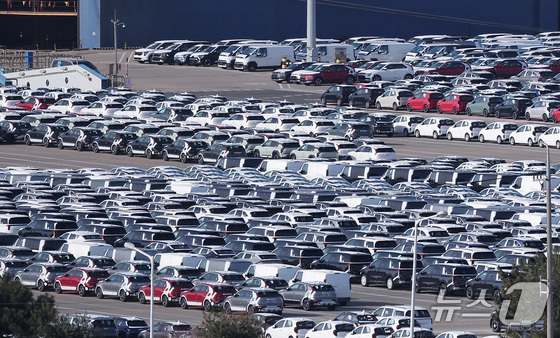
The Ministry of Trade, Industry and Energy’s automotive industry report, released on Thursday, shows that annual auto exports for 2025 are projected to reach 71.99 billion USD (2,733,608 units), up 1.7% from the previous year. This marks an all-time high.
Industry experts attribute this record-breaking performance to robust sales of eco-friendly vehicles and used cars.
Eco-friendly vehicle exports surged to 25.8 billion USD, an 11% increase from 2024, with hybrid vehicles achieving a record 14.8 billion USD in exports (up 30.0%).
Used car exports also set a new record at 8.87 billion USD (up 75.1%), boosted by an improved reputation for Korean cars and enhanced price competitiveness due to favorable exchange rates.
Auto production in Korea reached 4.1 million units last year, surpassing the 4 million mark for the third consecutive year.
The production rankings by model were: Trax (308,000 units), Kona (270,000 units), Elantra (269,000 units), Sportage (226,000 units), Tucson (201,000 units), and Carnival (181,000 units). Notably, 67% of these vehicles were exported.
In the Korean market, sales totaled 1.36 million units for Korean brands and 320,000 units for imported vehicles.
Eco-friendly vehicle sales in the Korean market are expected to reach 810,000 units in 2025 (up 25%), accounting for 48% of total domestic sales. Electric vehicle sales showed particularly strong growth, reaching 216,375 units, a 52% increase year-over-year.
The Ministry acknowledged that while 2025 presented challenges for the auto industry due to U.S. tariffs, the government’s strategic measures and successful tariff negotiations helped resolve uncertainties, enabling the industry to achieve record exports of 72 billion USD. Looking ahead to 2026, the Ministry anticipates continued challenges, including increased local production due to global protectionism and intensified competition. However, they remain committed to implementing the K-Mobility Leading Strategy to enhance future competitiveness and bolster export momentum.