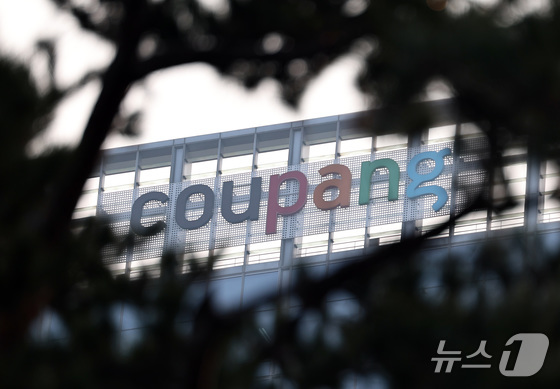
The Coupang crisis, which originated from a massive data breach, has escalated into a U.S.-Korea trade dispute involving potential retaliatory tariffs. As a result, the ongoing class-action lawsuit against Coupang in the U.S. has become a critical focal point. Observers are particularly interested in whether the National Pension Service will join the lawsuit, as this could significantly influence its outcome.
Industry sources reported on Friday that U.S. investors Greenox and Altimeter recently filed a complaint with the Office of the United States Trade Representative (USTR), alleging that the South Korean government has unfairly treated Coupang. They also submitted a letter of intent to initiate an international investment dispute (ISDS) arbitration against South Korea.
These investors argue that the South Korean government’s undue pressure on Coupang has caused a drop in stock prices, resulting in substantial losses. Coupang’s stock price, which stood at $28.16 on November 28 last year, has steadily declined since the data breach incident, falling to $19.95 on January 22 —a 29% decrease ($8.21). Based on this decline, they claim their total losses amount to $514.41 million.
U.S. USTR and courts likely to reach similar conclusions; Class-action lawsuit could impact U.S. tariff decisions
Analysts suggest that the outcome of the class-action lawsuits currently underway in U.S. courts could be pivotal. The People’s Law Group filed a class-action suit in the U.S. District Court for the Western District of Washington on January 6 against Coupang Inc. on behalf of Korean shareholders. Simultaneously, another class-action lawsuit is ongoing in the Northern District of California, initiated by U.S. Coupang shareholders.
The plaintiffs in these lawsuits argue that they suffered losses due to Coupang’s data breach and alleged shareholder deception, which caused the stock price to plummet. In contrast, investors like Green Ox maintain that Coupang’s stock price fell under pressure from the South Korean government. Thus, both groups attribute the same stock decline to entirely different causes.
Legal experts predict that the USTR’s investigation into the South Korean government and the U.S. courts handling the class-action lawsuits will likely reach similar conclusions. Divergent findings on the same issue would create a logical inconsistency, implying that one side’s judgment must be flawed.
The investors who requested the USTR investigation and the Coupang shareholders who filed the class-action lawsuits are in a zero-sum situation. If one side prevails, the other must lose.
The outcome of the class-action lawsuit could also influence the retaliatory tariffs President Donald Trump announced on Monday, which include a proposed 25% increase on Korean products.
U.S. investors have petitioned the USTR to investigate the South Korean government and impose retaliatory tariffs under Section 301 of the Trade Act. Legal analysts suggest that if Coupang shareholders win the class-action lawsuit, it would undermine claims that the South Korean government unfairly pressured Coupang, making retaliatory tariffs against South Korea less likely.
Attention is also focused on whether the National Pension Service will participate in the lawsuit, as its involvement could be interpreted as the government exerting pressure on Coupang.
The National Pension Service holds approximately 218.1 billion KRW (approximately $163.58 million) worth of Coupang shares, representing about a 1% stake as of December 2024, making it a potential participant in the lawsuit.
If the National Pension Service joins the class-action lawsuit, it would signal that domestic pension funds are stepping in, potentially strengthening the lawsuit’s position. Given their substantial holdings, proving damages from the stock price drop would be easier than for smaller shareholders. However, the U.S. government might view this as pressure from the South Korean government on Coupang, which could complicate matters.
The National Pension Service is reportedly planning to send a letter to Coupang soon and is looking to engage in private discussions with Coupang’s management. The letter is expected to urge the company to fulfill its social responsibilities by enhancing information security and expanding consumer compensation.
Lee Yong Ki, a lawyer at the People’s Law Group, said that if participation in the class-action lawsuit were limited, claims by U.S. investors that the South Korean government repressed Coupang could gain traction and potentially lead to significant damages being paid with taxpayer money. He argued that the National Pension Service should actively participate in the class-action lawsuit to substantiate the damages, rather than merely sending a passive letter.