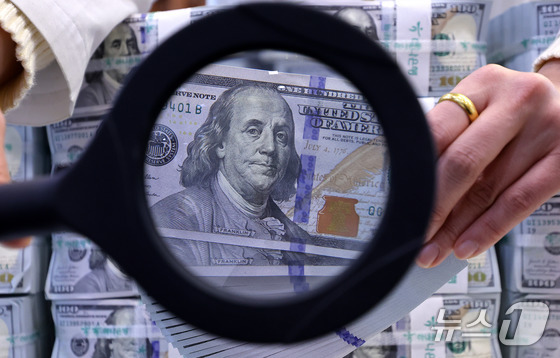
The U.S. Treasury Department has designated South Korea as a currency watchlist country, emphasizing that the current dollar-won exchange rate is excessively high relative to South Korea’s economic stature. This has drawn significant attention.
Analysts believe these repeated mentions stem from concerns about increased uncertainty surrounding South Korean investments in the U.S. amid rapid exchange-rate fluctuations. As the U.S. consistently communicates its stance on the dollar-won exchange rate, it raises the possibility of exerting downward pressure in the future.
On Thursday, the U.S. Treasury released its report on the Macroeconomic and Exchange Rate Policies of Major Trading Partners, designating South Korea as a currency watchlist country and addressing the recent depreciation of the won.
The Treasury assessed that further weakening of the won in the second half of 2025 would not align with South Korea’s strong economic fundamentals.
The Treasury noted that government interventions in the foreign exchange market have been generally symmetrical, stating that authorities have intervened to prevent sharp fluctuations in both depreciation and appreciation pressures.
It also commended South Korea’s shift from a consistent intervention pattern to a generally symmetrical approach to curb won appreciation from 2009 to 2016.
This evaluation appears to reaffirm recent comments made by Treasury Secretary Scott Bessent.
Earlier, on January 12, Secretary Bessent stated that excessive volatility in the foreign exchange market is undesirable, adding that the won’s decline does not align with South Korea’s strong economic fundamentals.
The U.S. consistently expresses concerns that increased dollar-won exchange rate volatility may heighten uncertainty about last year’s agreed-upon investments. It also reflects caution against market concentration while implicitly suggesting that resolving the won’s depreciation is necessary to reduce the U.S. trade deficit.
The South Korean Ministry of Economy and Finance interpreted this as indicating the U.S. Treasury’s recognition that the one-sided depreciation of the won since the second half of last year has been excessive.
Analysts forecast that the U.S.’s reiteration may constrain future rises in the dollar-won exchange rate.
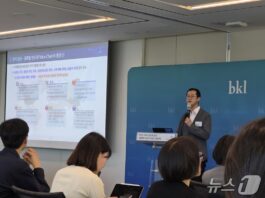
Park Sang Hyun, a researcher at iM Securities, stated that ultimately, to attract U.S. investments, the U.S. also needs exchange rate stability. Psychologically, this may somewhat constrain the won’s depreciation.
While the U.S. has re-designated South Korea as a currency watch list country, the impact on the exchange rate is likely to be limited. Given South Korea’s trade surplus with the U.S. and its current account surplus, this re-designation was anticipated.
The U.S. Treasury evaluates countries based on three criteria: a trade surplus with the U.S. exceeding $15 billion, a current account surplus exceeding 3% of GDP, and net U.S. dollar purchases exceeding 2% of GDP for more than eight months. Countries that meet at least two criteria are classified as watch-list countries, while those that meet all three are designated as currency manipulators.
South Korea has met two of the three criteria—its trade surplus with the U.S. and its current account surplus—leading to its classification as a watch-list country for three consecutive periods since the second half of 2024.
Market analysts view the redesignation as unlikely to significantly increase exchange rate volatility.
Notably, the U.S. Treasury has recently indicated no major concerns with the National Pension Service’s foreign exchange strategy, supporting this view.
The Treasury stated that the National Pension Service’s foreign currency purchases aim to diversify overseas investments, adding that the currency swap between the National Pension Service and the Bank of Korea helped alleviate downward pressure on the won during increased volatility in the fourth quarter of 2024.
The Treasury also assessed that these measures likely helped reduce foreign exchange market volatility and alleviate excessive depreciation pressure.
Min Kyung Won, a researcher at Woori Bank, explained that the U.S. reaffirmed that the National Pension’s adherence to quantitative criteria is not problematic. The U.S. is not overly concerned about the pension fund’s plans to sell, but advises against mobilizing the National Pension for future buying interventions.
He added that the notion that the won’s depreciation is excessive compared to South Korea’s fundamentals has been consistently mentioned by Bank of Korea Governor Lee Chang Yong and the Ministry of Finance. This confirms that the U.S. shares this perspective, but the impact on the market remains limited.