The government is expanding support for small and medium-sized enterprises (SMEs) grappling with regulations and tariffs from major countries, including the U.S. The plan is to bolster a comprehensive support system covering the entire export process, from certification cost assistance to tariff response and policy finance connections.
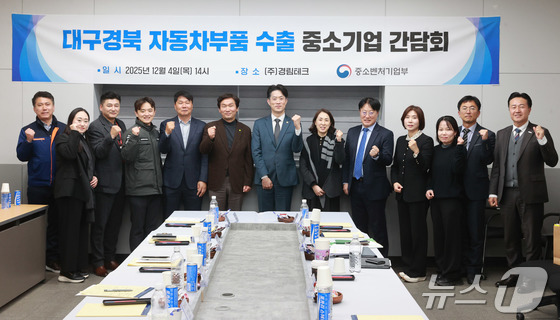
On Thursday, according to industry sources, the Ministry of SMEs and Startups held a meeting at the Korea Chamber of Commerce and Industry in Seoul’s Jung-gu district with the Ministry of Trade, Industry and Energy and the Ministry of Foreign Affairs. The meeting aimed to address challenges faced by companies entering the U.S. market.
Participating companies voiced concerns about visa issuance delays for staff deployed overseas due to increased U.S. investments, uncertainties in immigration procedures, and suggested improvements. The government stated it would continue discussions with U.S. counterparts based on this feedback.
Notably, the government plans to actively engage and support not only large investors but also their partner companies, ensuring a broad range of industry perspectives are considered.
Implementing Overseas Export Regulation Response… Supporting SME Certification Costs
The Ministry of SMEs and Startups has finalized its 2026 Overseas Export Regulation Response Support Plan. Through the overseas standards certification acquisition support program, it will assist approximately 600 companies annually preparing for U.S. exports by covering certification testing and evaluation costs.
Entering the U.S. market requires various industry-specific certifications. These include the Food and Drug Administration (FDA) for food, pharmaceuticals, and cosmetics, the Federal Communications Commission (FCC) for electronic products, and Underwriters Laboratories (UL) for electrical and electronic safety. The costs associated with certification testing, evaluations, and consulting have been significant barriers for SMEs.
To address this, the Ministry will expand support by covering a portion of certification costs and providing expert consulting, enabling companies to prepare for certification more systematically.
Expanding Tariff Response with Additional Funding, New Export Vouchers
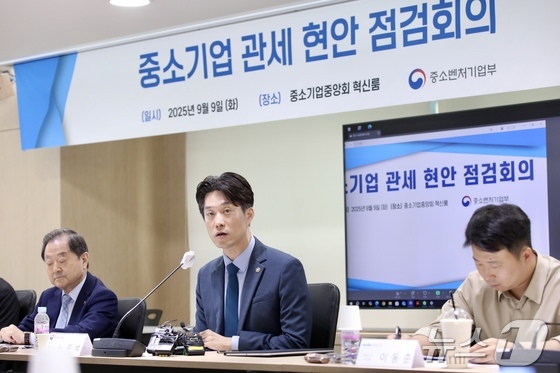
Tariffs remain a major burden for SME exports. A survey last year by the Ministry, Korea SMEs and Startups Agency, and Korea Federation of SMEs found that 63.1% of 609 U.S.-exporting SMEs reported negative impacts from mutual tariffs.
In response, the Ministry is implementing Three Major Tariff Support Programs, including additional funding to mitigate tariff impacts, new K-export logistics vouchers, and expanded export vouchers.
This year, 686.7 billion KRW (about 480 million USD) will be invested in SME export support programs, with export vouchers operating at around 150 billion KRW (about 105 million USD).
The Ministry also plans to establish an Overseas Export Regulation Response Team to address business challenges continuously and create a global export regulation map for easy access to regulatory information. While addressing U.S. market risks, they aim to diversify export markets by exploring emerging markets.
Additionally, the export voucher program will offer packaged support for overseas marketing, customs and legal consulting, trade show participation, and entry into global online platforms. The Ministry will strengthen liquidity support by linking policy financing and special guarantees for export companies, while also providing emergency management stabilization funds.
Leveraging overseas hubs like Global Business Centers (GBCs), they will provide local market information and networks, actively supporting SMEs in developing U.S. market access through initiatives such as K-Brand Joint Pavilions.
A Ministry official stated that the regulatory and tariff environment in key markets like the U.S. is rapidly evolving. It will continue to enhance our support to ensure SMEs can export stably.