

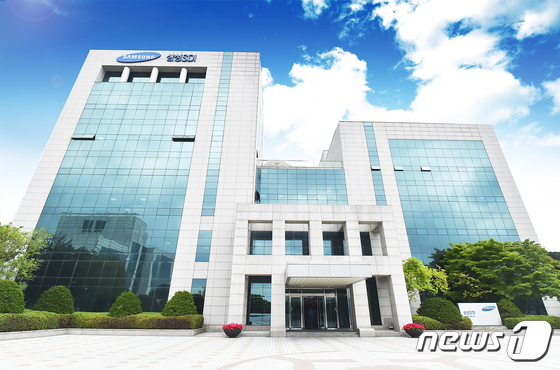
Daol Investment & Securities has raised its target price for Samsung SDI by 52.63% to 580,000 KRW (about 406 USD), anticipating benefits from potential U.S. import restrictions on Chinese energy storage systems (ESS). The firm maintains its Buy recommendation.
On Thursday, Daol Investment & Securities analyst Yoo Ji-woong stated that the Republican Party’s proposed ban on Chinese ESS battery imports is expected to accelerate orders for Korean cell manufacturers, including Samsung SDI.
Yoo elaborated that as power demand surges in U.S. artificial intelligence (AI) data centers, the need for ESS installations is growing. This could boost the utilization of Samsung SDI’s supply capacity, which is projected to reach up to 30 GWh by 2027.
The analyst noted that profits have begun to show signs of bottoming out from the fourth quarter, with additional momentum coming from the push to sell Samsung Display (SDC).
He further explained that the 15.2% stake has a book value of approximately 11 trillion KRW (about 7.7 billion USD). Operating losses in the electric vehicle (EV) business are likely until ESS supply stabilizes by 2027. It views this as necessary for securing working capital and project a turnaround to profitability starting in Q4 2025, when ESS profits are expected to significantly increase.