

The Trump administration’s search for new justifications to impose tariffs has put our government’s key digital policy, the institutionalization of network usage fees, in the spotlight as a potential trade variable.
As the U.S. announces plans to investigate potential discrimination against domestic companies under Section 301 of its trade law, discussions about charging global content providers for network usage could come under scrutiny.
According to telecommunications industry sources on Friday, the network usage fee system requires content providers generating substantial traffic to pay Internet Service Providers (ISPs) for the data they transmit. This legislation aims to distribute the costs associated with using telecommunications networks.
The debate intensified after 2018, as South Korea’s traffic from global content platforms (CPs) surged.The rapid growth of video streaming services increased data transmission volumes from content providers, while telecom companies bore most network investment costs, highlighting the need for cost-sharing.
Currently, major Korean content providers pay about 2% of their revenue as network usage fees under contracts with telecom companies. In 2016, Naver paid 73.4 billion KRW (approximately $51.38 million), or 1.8% of its revenue, while Kakao paid 30 billion KRW (about $21 million), or 2% of its revenue. The two companies combined have paid around 100 billion KRW (about $70 million) annually in network usage fees.
However, global content providers argue that paying additional fees would constitute double-billing since they already pay ISPs for internet access. They stress that imposing separate charges for traffic generation could violate net neutrality principles.
The Korean telecommunications industry counters that global content providers generate revenue through domestic telecom networks without bearing corresponding costs.
According to South Korea’s Ministry of Science and ICT, global platforms will account for 42% of domestic internet traffic by 2024. An analysis by Representative Choi Soo Jin of the People Power Party, based on data from the Korea Information Society Development Institute, estimates that Google’s network usage fees could reach about $150.29 million in revenue, or about $243.53 million based on traffic share, by 2024.
They argue that free-riding by global platforms could reduce investment capacity and increase user costs, potentially disrupting the ecosystem’s positive cycle. A decline in investment capacity would inevitably lead to deteriorating service quality.
The South Korean National Assembly has been working to clarify the cost-sharing responsibilities of global platforms. Several bills have been proposed to amend the Telecommunications Business Act, mandating that content providers pay fair prices for network usage. These amendments include provisions requiring negotiations with providers generating significant traffic.
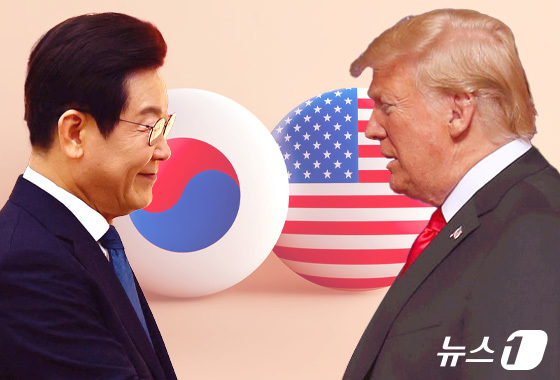
President Lee Jae Myung has also pledged to institutionalize network usage fees, reinvigorating discussions about anti-free-riding legislation.
Recent international precedents have bolstered the telecommunications industry’s argument for fair network contributions. Industry sources report that a German court ruled on February 12 that Meta must pay Deutsche Telekom approximately 30 million EUR (about $35,361,300) for using its network.
The push to institutionalize network usage fees appears to have hit a roadblock due to trade pressure from the Trump administration.
Last year, the U.S. Trade Representative (USTR) released the 2025 National Trade Barrier Report ahead of President Donald Trump’s announcement of reciprocal tariffs. The report claimed that South Korea’s imposition of network usage fees on global content providers (CPs) unfairly benefits Korean competitors at the expense of U.S. CPs. The USTR warned that such policies could justify imposing reciprocal tariffs on Korea.
Although discussions about network usage fees seemed to settle after last year’s summit between Presidents Lee Jae Myung and Trump, the U.S. administration later raised concerns about Korean digital regulations while urging compliance with the tariff agreement.
Recently, after the U.S. Supreme Court ruled Trump’s reciprocal tariffs unlawful, Trump announced plans to impose new tariffs based on Section 301 of the trade law.
In response, USTR representative Jamieson Greer issued an official statement on February 20 announcing an investigation into unreasonable and discriminatory practices by major trading partners under Section 301.
Greer said the Section 301 investigation is expected to address concerns about discrimination against U.S. tech companies and digital goods and services, including digital service taxes. He added that if unfair trade practices are found and tariffs are deemed necessary, the United States could impose them.
The industry is concerned that the U.S. might officially place this issue on the trade negotiation table, given that many global platforms subject to network usage fees are American companies.
A telecommunications industry insider commented that domestic telecom companies are currently struggling to secure fair network usage fees, noting that the issue directly affects investment, not just revenue. The insider added that given how tightly the matter is intertwined with trade issues, policy decisions are likely to be challenging.