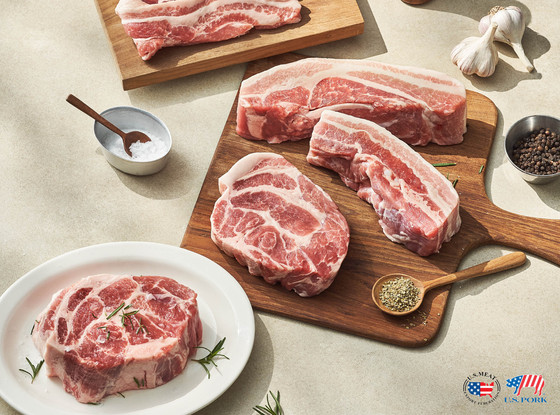
American pork is rapidly becoming a staple in consumers’ everyday lives, building on the trust it has earned in the business-to-business (B2B) market, particularly in the restaurant and processed food sectors. With its consistent quality and competitive pricing, it’s expanding its presence across various distribution channels.
Pork Import Market Booming; American Pork Leads the Pack
Industry reports from Thursday indicate that pork has secured its place as a key protein on Korean tables. The Korea Rural Economic Institute (KREI) projects that by 2025, per capita pork consumption will hit 29.2 kg (about 64.3 lbs), accounting for nearly half of the total meat consumption (59.9 kg or about 132 lbs), cementing its status as the nation’s go-to meat.
Riding the wave of strong pork demand, the imported meat market is also on the rise. Last year’s pork imports tipped the scales at 551,495 tons (about 1.1 lbs), a whopping 52% jump from 2014’s 362,927 tons (about 726 million lbs). American pork, in particular, has been the market leader for years, commanding about 34% of the share.
A significant chunk of the American pork that makes its way to Korea ends up in the B2B market, fueling restaurant chains, home meal replacement (HMR) products, and sausage brands. Quarantine data shows that of the 165,000 tons of American pork imported last year, about 87% consisted of front legs (Picnic) and Boston butt, cuts that are B2B favourites.
The Boston butt, which includes both neck and front leg meat, offers a tender bite and just the right amount of fat. It’s a versatile cut that stars in a variety of dishes, from marinated ribs and stir-fries to bulgogi, rice cakes, kimchi stew, curry, and hearty soups. Meanwhile, loin cuts shine in sweet and sour pork, Gua Bao, and pork cutlets, while pork intestines are a grilling sensation. This wide-ranging application showcases the versatility of American pork in the B2B market.
In the imported processed meat arena, American products truly dominate. Customs data reveals that U.S. products account for over 95% of key items like ham, sausage, and bacon. Speaking of bacon, this cured and smoked pork belly delight isn’t just for burgers and omelets anymore – it’s making waves in pasta dishes and even popping up in bakery desserts. Ham and sausage are equally versatile, finding their way into sandwiches, kimbap, army stew, pizzas, and classic American breakfasts.
American Pork’s Stellar Reputation in the B2B Market
American pork’s stellar reputation in the B2B market stems from its systematic production and management approach. The process involves corn-based grain feeding, a state-of-the-art cold chain system with rigorous temperature control and vacuum packaging, the comprehensive Pork Quality Assurance (PQA Plus 5.0) program that prioritizes both food safety and animal welfare, and the introduction of specially bred pigs that strike the perfect balance between meat quality and fat content. This meticulous approach ensures consistently high-quality pork.
Beyond taste and quality, the ability to maintain a stable supply is another key factor in its popularity. Customs data on export and import performance shows that American pork had the most stable pricing among major countries last year. This stability is a game-changer for the B2B sector, reducing concerns about quality inconsistencies and price fluctuations, and helping businesses maintain a consistent taste profile.
American Pork: From Restaurant Kitchens to Your Shopping Cart
Building on its B2B success, American pork is now making its way into consumers’ everyday lives. This trend is particularly evident in the booming food delivery market, which is creating more opportunities for consumers to experience American pork firsthand.
This shift was on full display during last October’s 2025 Delivery Week Pork Edition. The promotion featured eight brands and over 480 stores, showcasing a mouthwatering array of American pork dishes. From fresh salads and trendy tacos to hearty pork rice bowls and classic grilled and fried options, the event was a hit with foodies.
Consumers now have more ways than ever to get their hands on American pork. Beyond traditional brick-and-mortar stores like Costco Wholesale Corporation, major online retailers such as Coupang and Kurly are now offering chilled American pork belly and neck cuts through their early morning delivery services. What sets American chilled pork apart is that it’s never frozen after slaughter. Instead, it’s kept fresh through careful temperature control and vacuum packaging. By the time it reaches Korea, it’s perfectly aged for optimal flavor, allowing consumers to savor its rich, delicious taste.
As American pork continues to make its mark across various channels – from restaurants and delivery services to convenient meals – it’s becoming an increasingly familiar sight for consumers. The trust built in the B2B market is now paving the way for wider use in restaurant menus, ready-to-eat meals, and home cooking, promising even more delicious connections with consumers in the future.