The defense minister said he received positive signals from U.S. lawmakers on the country’s nuclear-powered submarine program, a project that took shape following agreements reached at last October’s bilateral summit. The Defense Ministry confirmed that the first formal working-level talks with U.S. officials are expected to take place this month.
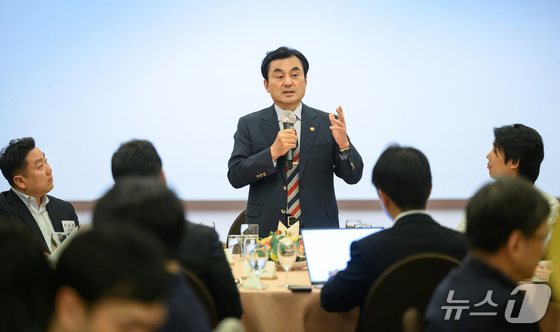
“The U.S. appears eager to move the nuclear submarine project forward,” the minister said at a press briefing on April 7. “Our situation is unique — we only need the nuclear fuel, which allows us to advance faster than other countries pursuing similar programs.”
The minister met with a delegation of U.S. lawmakers on April 2 to build congressional support for the program. He told reporters that both senators and representatives expressed agreement on the matter, noting that the program differs from arrangements like the AUKUS deal, as the submarines would be built domestically with only the nuclear fuel sourced externally.
“We anticipate the first bilateral meeting on the nuclear submarine project to happen this month,” a Defense Ministry official said.
Both countries agreed on the nuclear-powered submarine construction and a revision to their nuclear cooperation agreement through a joint fact sheet issued at last October’s summit. An interagency task force — drawing from the foreign affairs and defense ministries — has since been established to manage the program.
Talks originally scheduled for January were pushed back after U.S. attention shifted to the Middle East following airstrikes on Iran. To restart momentum, a senior government envoy recently held meetings with officials from the U.S. State Department, Energy Department, and nuclear security offices.
The Defense Ministry is also building out the regulatory framework needed to support the acquisition. In February, it commissioned a legislative study to draft special legislation for the program. The study covers relevant domestic and international law, budget projections, economic impact assessments, and public acceptance of nuclear waste management.
The ministry is separately examining how to comply with International Atomic Energy Agency safeguards for military nuclear fuel. As a non-nuclear signatory to the Nuclear Non-Proliferation Treaty with a full-scope IAEA safeguards agreement in place, the country must secure exemptions before it can handle nuclear materials for military use.
The Navy plans to stand up a dedicated nuclear submarine task force of roughly 30 personnel, to be led by a flag officer.