

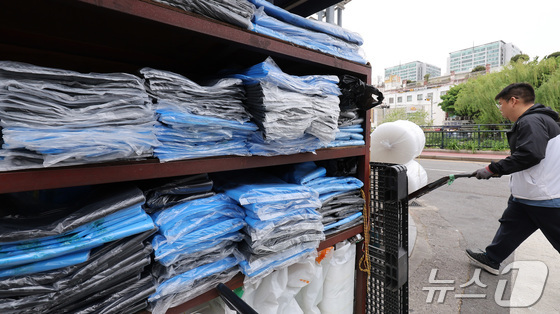
The ongoing Middle East conflict has led to a decline in imports of crude oil and other key petroleum products. A trend towards diversifying import sources for raw materials heavily dependent on the Middle East, such as naphtha and helium, has also been observed.
Data from the Korea International Trade Association’s statistics service (K-stat) on April 26 revealed that South Korea’s crude oil imports, which constitute the largest share of energy imports, totaled 5.95 billion USD last month, marking a 5.3% decrease year-over-year.
The proportion of Middle Eastern crude oil in South Korea’s total imports fell to 63% last month, down 10 percentage points from 73% a year earlier.
Breaking down imports by country, South Korea’s top crude oil supplier, Saudi Arabia, accounted for 1.98 billion USD, followed by the United Arab Emirates (UAE) at 890 million USD and Iraq at 490 million USD. These figures represent decreases of 13.4%, 7.7%, and 19.0% respectively, compared to the previous year.
Imports of naphtha, a crucial raw material for the petrochemical industry, amounted to 1.99 billion USD last month, down 23.8% from the same period last year.
By country, imports from Qatar (180 million USD), the UAE (170 million USD), and Kuwait (100 million USD) decreased by 7.5%, 57.5%, and 48.1% respectively.
Helium imports, used as a coolant in manufacturing processes such as semiconductors and displays, fell to 12.98 million USD, a 23.5% decrease from the previous year.
Imports from Qatar, South Korea’s primary helium supplier, totaled 6.54 million USD, down 30.1% year-over-year. Reports indicate that Qatar’s largest helium industrial complex has halted operations due to drone attacks from Iran.
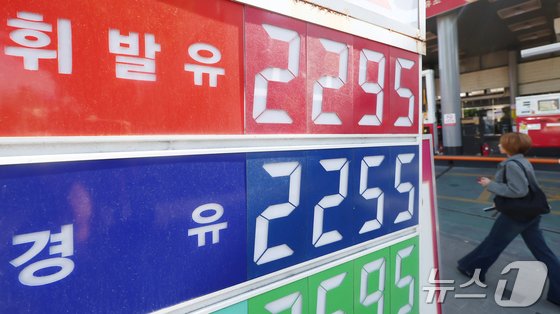
Diversification of Import Sources: U.S., Australian, and Greek Crude Oil Gain Ground
To offset the decrease in Middle Eastern oil, imports of U.S. crude oil surged to 1.38 billion USD, a 75.8% increase and the highest level in 20 months.
South Korean refiners likely increased imports of U.S. light crude to blend with heavier Middle Eastern crude, optimizing their refining processes.
Additionally, imports from Australia reached 150 million USD and from Malaysia 90 million USD, reflecting increases of 44.7% and 140.5% respectively, indicating a broadening of supply sources.
Naphtha imports also saw increases from Oman (170 million USD, up 28.5%), Greece (130 million USD, up 193.5%), and the U.S. (60 million USD, up 5652.8%), further illustrating the shift in supply sources.
However, helium production remains concentrated in a few countries, with South Korea relying on Qatar for 64% of its imports. This dependence poses challenges for diversifying supply sources amid the ongoing Middle East crisis.
The Ministry of Trade, Industry and Energy has stated that it can secure alternative sources for helium, including from the U.S., to ensure a stable domestic supply.
A ministry spokesperson commented that they’re closely monitoring the situation through joint supply chain support centers with relevant departments to address concerns about disruptions in the petrochemical supply chain. The government is prepared to respond swiftly to ensure a steady supply of petrochemical raw materials critical for healthcare and key industries.