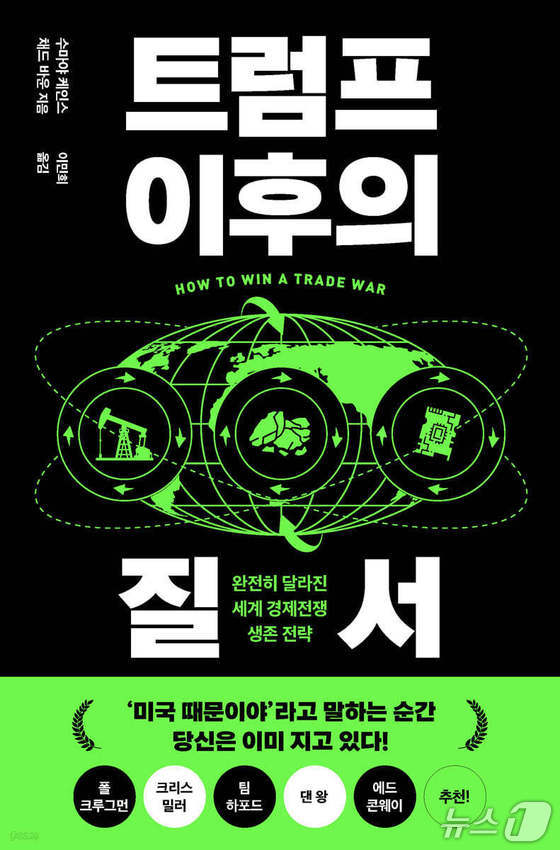
“How to Win a Trade War: An Optimistic Guide to an Anxious Global Economy” examines a trade landscape where tariffs, subsidies, and export controls have become commonplace, while also assessing vulnerabilities in supply chains. Authors Soumaya Keynes and Chad P. Bown emphasize the need to focus on costs and weaknesses rather than simply hoping for a return to the previous free trade system.
In today’s climate, where a mere mention of tariff hikes can rattle markets and control over rare earth elements can bring production to a standstill, trade no longer operates solely on established rules. “How to Win a Trade War: An Optimistic Guide to an Anxious Global Economy” explores how nations leverage tariffs, export controls, and subsidies as strategic tools in the wake of a weakened norm-based free trade system.
The authors view Donald Trump not as the sole instigator of the trade war, but rather as a symptom of a transformed global order. They argue that instead of expecting the U.S. to resume its role as the guardian of free trade, we must first examine the conditions that perpetuate protectionism.
The book outlines the costs associated with the trade war and peace issues, analyzing the differing calculations of governments, corporations, and the public. It expands the discussion to include the causes of rule breakdown, vulnerability assessments, defensive measures like stockpiling, and responses to import barriers and export controls.
In the aftermath of norm collapse, the authors discuss the calculations of self-preservation. They assert that the norm-based system that once constrained government actions has already been significantly undermined. The trade war is treated not as an anomaly but as part of a new reality where a return to the old order is unfeasible.
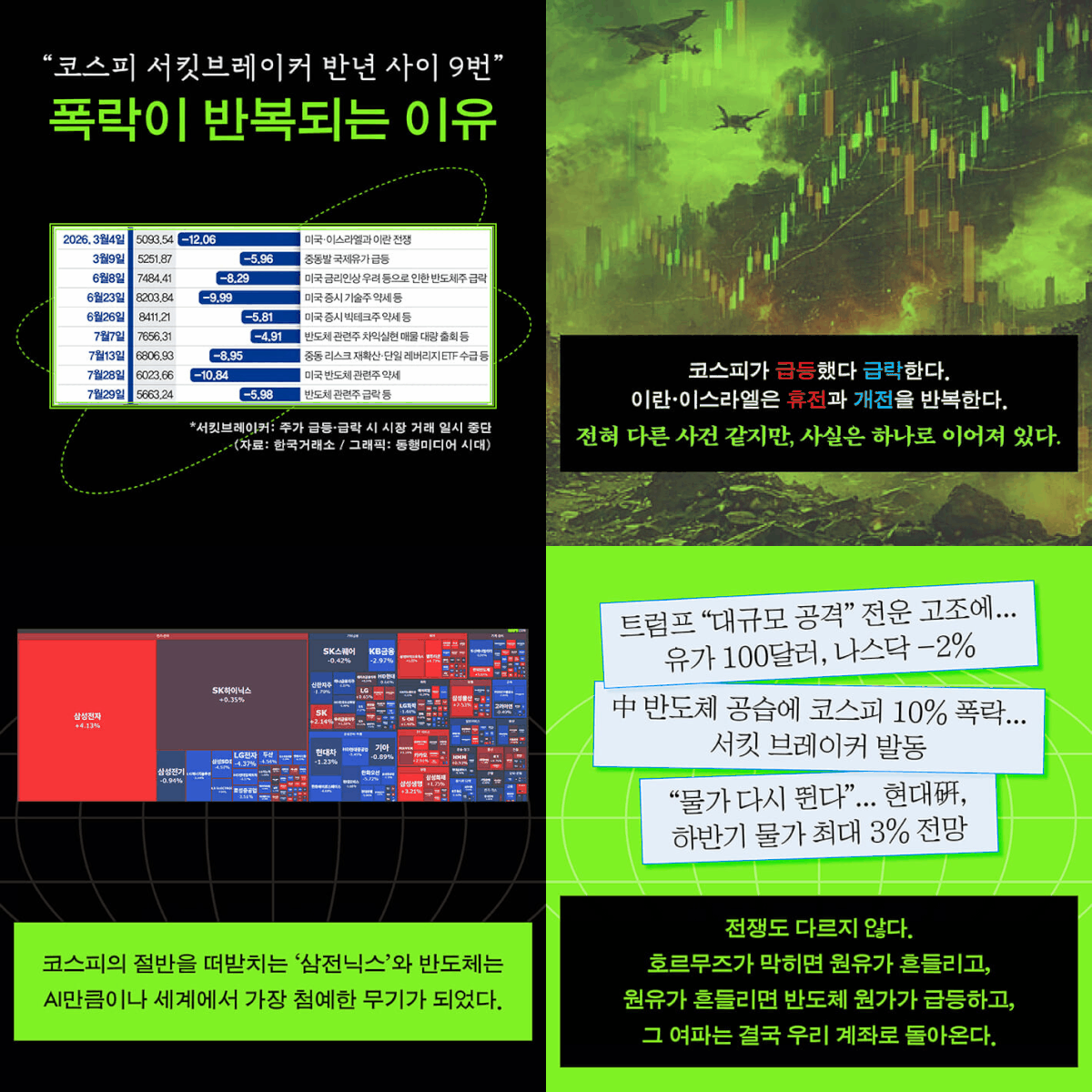
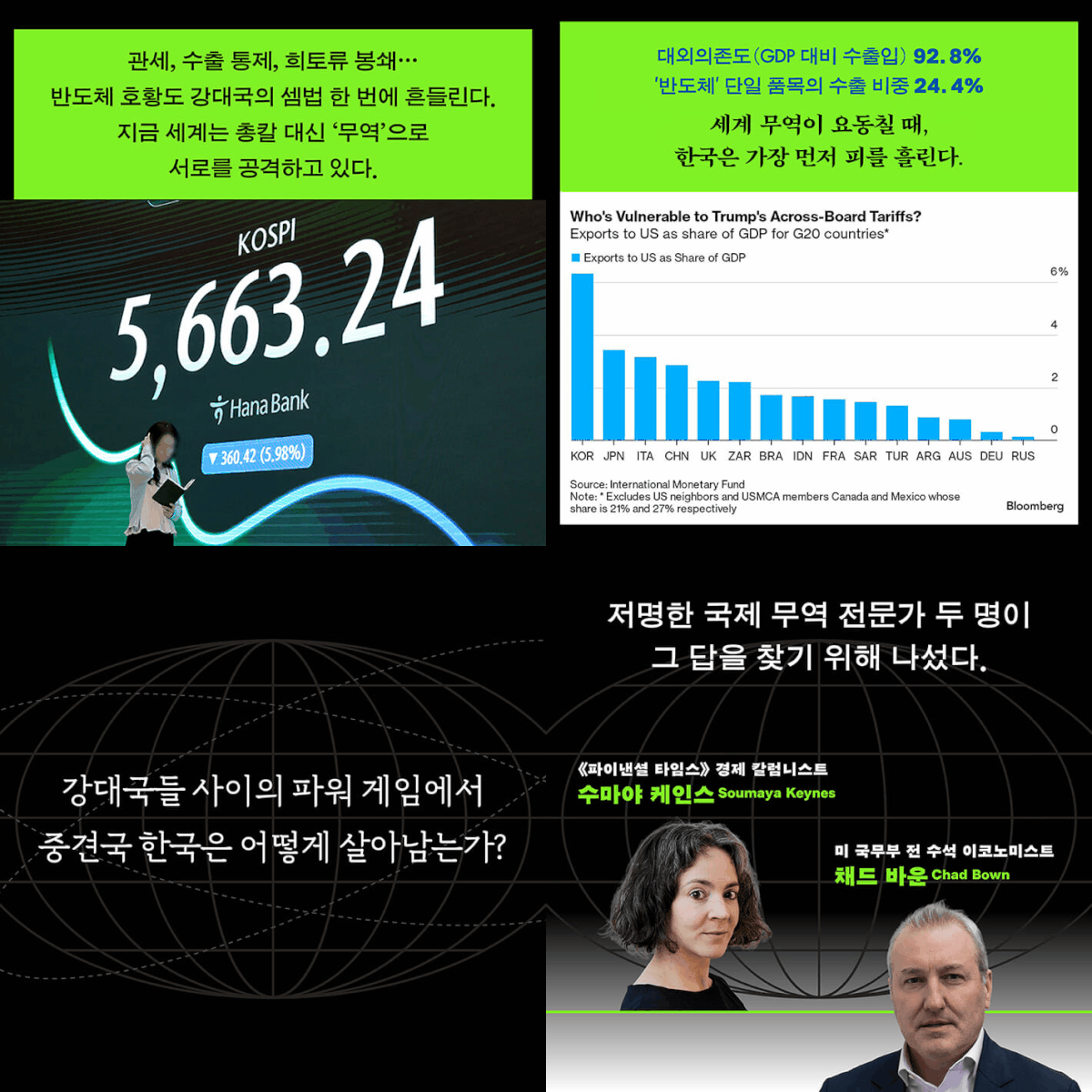
While open trade can foster prosperity, it can also be a source of vulnerability. Economies heavily dependent on imports and exports face greater risks when trading partners use supply disruptions or market closures as leverage.
The authors also highlight how open trade may trap some countries in industries that don’t contribute to productivity gains. They address concerns about premature deindustrialization, where countries might lose opportunities for development after Asian nations dominate manufacturing.
Tariffs aren’t just about economic gains and losses. For voters hurt by open trade, tariffs can signal that politicians are fighting for their interests, adding a layer of public opinion to trade conflicts.
Vulnerabilities and ㅇefenses in the Supply Chain
A country’s vulnerability depends not only on its capacity to sell critical goods but also on how quickly its trading partners can find alternative sources. The authors suggest that a trading partner’s history of weaponizing markets is another crucial factor to consider.
The U.S. continued importing Russian uranium for nuclear power plants even after Russia’s 2022 invasion of Ukraine, illustrating the lack of alternative suppliers. China’s selective blocking of Australian coal, wine, and lobster imports, while sparing iron ore, demonstrates the complex dynamics of supply chain dependence.
China’s consumer spending patterns offer insights into demand and supply imbalances. In 2024, the average Chinese consumer spent only about 10% of what the average American spent, a disparity that can’t be explained solely by the gross domestic product (GDP) per capita gap between the two nations.
The fourth part of the book addresses vulnerability assessments, subsidies, and stockpiling as key defensive strategies. The fifth part examines the unintended consequences of import barriers while exploring responses to export controls, emphasizing that simply raising trade barriers isn’t a panacea.
Trade War Implications for Korean Readers
Throughout the book, the authors maintain that the U.S. is unlikely to resume its role as the world’s policeman or guarantor of free trade, even post-Trump. They cite the Biden administration’s lack of initiative in pursuing new trade agreements or restoring norm-based dispute resolution systems as evidence.
The Korean edition features a special preface by the authors and a foreword by Professor Ahn Deok-geun of Seoul National University’s Graduate School of International Studies. It explores the strategic choices South Korea faces as a middle power amid U.S.-China competition and analyzes South Korea’s responses to these challenges.
Keynes is an economic columnist for the Financial Times and has previously worked for the UK Treasury and the Institute for Fiscal Studies. Bown is a senior fellow at the Peterson Institute for International Economics and a former chief economist at the U.S. State Department, specializing in international trade policy.
The authors interviewed over 100 sources, including policymakers, multinational corporate executives, and trade negotiation experts. They unravel the complex reasons why governments, corporations, and the public view the same trade conflicts through different lenses, based on these diverse perspectives.
△ “How to Win a Trade War: An Optimistic Guide to an Anxious Global Economy” / Soumaya Keynes & Chad P. Bown / Translated by Lee Min-hee / 392 pages