In veterinary hospitals across Korea and Japan, it’s still common for a single vet to juggle multiple roles, from consultations to ultrasounds and computed tomography (CT) scans. But in Korea, larger animal hospitals are starting to specialize and collaborate more.
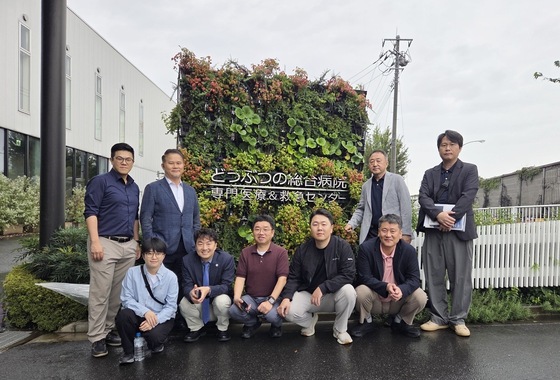
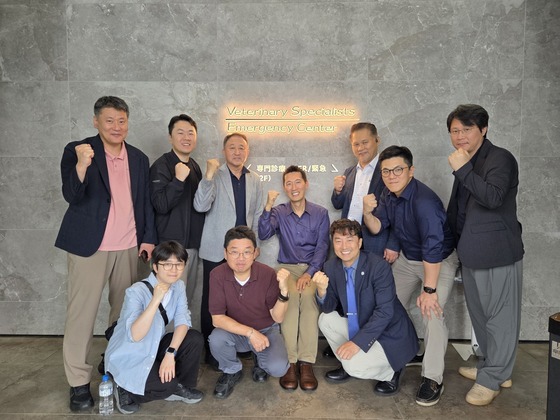
The Royal Animal Medical Group is no exception, with its own specialized treatment and collaboration system. Recently, their vets took a field trip to the Veterinary Specialty & Emergency Center (VSEC) in Kawaguchi, Saitama Prefecture, Japan, on September 28 and 29, to see how the pros do it stateside-style.
On Friday, according to the Japanese veterinary hospital, this hospital has set up a system like an American university vet hospital, with U.S. specialists each rocking their own area of expertise.
The Korean squad included Directors Jeong In-sung, Park Cheol, Kim Young-hwan, Yoo Do-hyun, Oh Seung-hyun, Lee Sang-woo, Choi Hoon, intern veterinarian Kim Hye-bin, and Chief Executive Officer (CEO) Lee Seung-hwan.
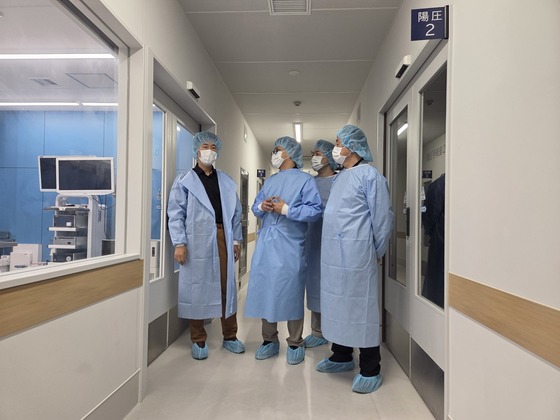
They got front-row seats to surgeries and radiation treatments for tumor patients (dogs and cats), seeing firsthand how specialists, interns, and residents work together in real-time.
More than ten U.S. specialists, each a master of their domain, team up like superheroes.
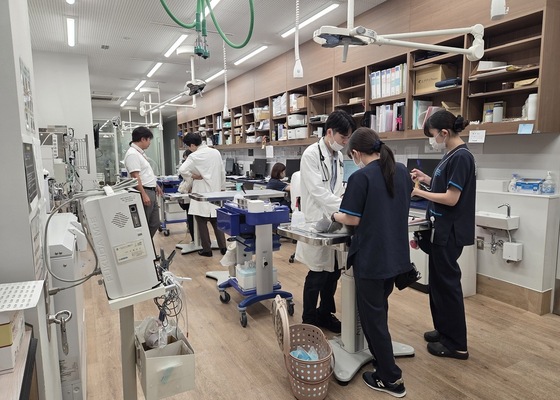
VSEC is all about that international standard medical care life.
They’ve got specialized care down to a science, covering everything from internal medicine to neurology and even sports medicine for pets (yes, that’s a thing). With over ten U.S.-certified specialists, including Japan’s first pet sports doc, they’re not messing around.
Director Kanazono Shin-ichi bragged about their secret sauce: specialization, teamwork, and collaboration.
He spilled the tea, saying that they’re basically bringing American university-level care to Japan. Vets coming back from the States can jump right in without missing a beat.
While everyone’s got their specialty, they’re not working in silos. These docs share space and constantly chat about patients, keeping it collaborative while staying in their lanes.
Curious how this tag-team approach works IRL? The Korean crew got to see it firsthand.
At VSEC, you can’t just walk in off the street for specialized care – you need a referral from your regular vet. But their emergency room (ER) is always open, drawing in furry patients from all over Saitama, as well as Gunma, Tochigi, and Ibaraki prefectures.
They handle a whopping 4,000+ emergencies a year, with a 24/7 intensive care unit (ICU) that’s always ready for the worst-case scenarios.
The visitors didn’t just get a tour – they saw the real deal in action.
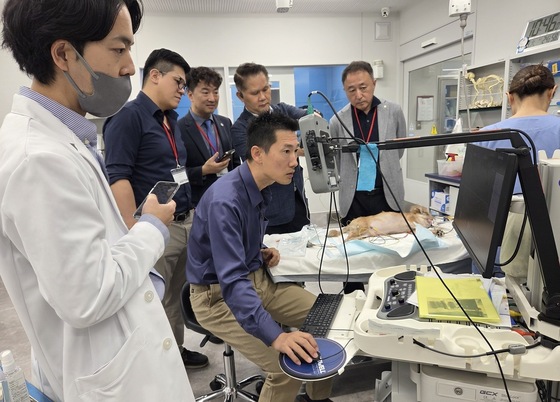
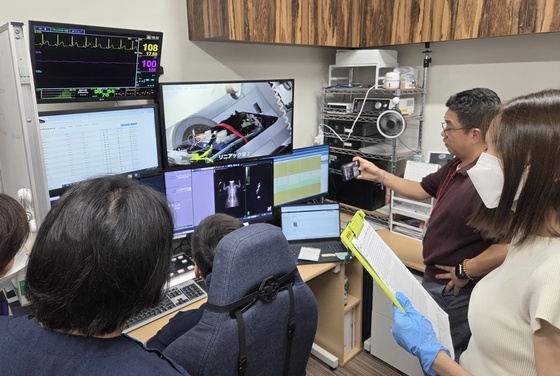
Dr. Kanazono, the brain guru, showed off his skills by running tests on a pup with a bum leg.
This wasn’t just any dog – it had recently had Tibial Plateau Leveling Osteotomy (TPLO) surgery. The dream team of surgeons, neurologists, and radiologists put their heads together to figure out if the surgery might have messed with the pup’s nerves or if a sneaky tumor was causing trouble.
After some serious detective work with scans and tests, they cracked the case: sciatic neuritis.
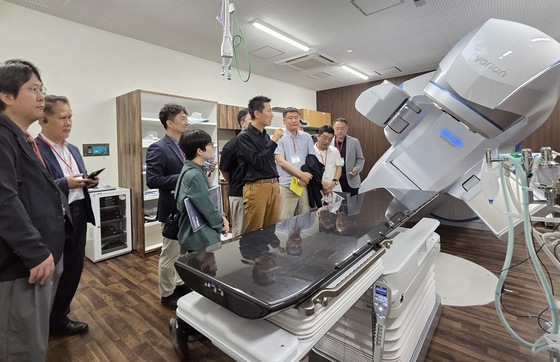
The Korean vets also got to see some high-tech cancer-fighting action with VSEC’s top-of-the-line radiation machine, the Varian TrueBeam Edge.
Five years of intense training churns out U.S.-level specialists.
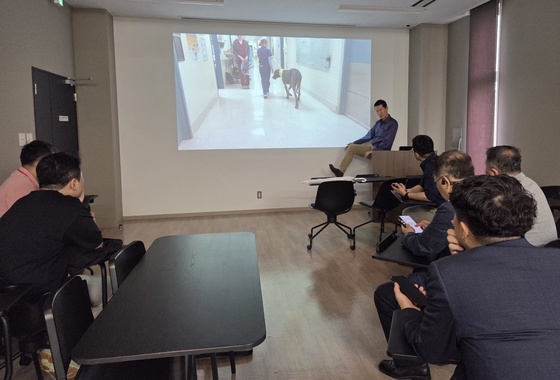
The visitors were just as impressed with VSEC’s vet school vibes as they were with the fancy equipment.
VSEC runs a tight ship with a two-year internship followed by a three-year residency. Interns get to try everything, while residents dive deep into their chosen field.
By year three of residency, these vets have five years of solid experience under their belts. They’re mostly flying solo but still check in with the big dogs for the tough cases.
But VSEC isn’t just about keeping talent in-house. They’re proud to see their grads go on to fancy U.S. programs at places like UC Davis, Purdue, and Colorado State University.
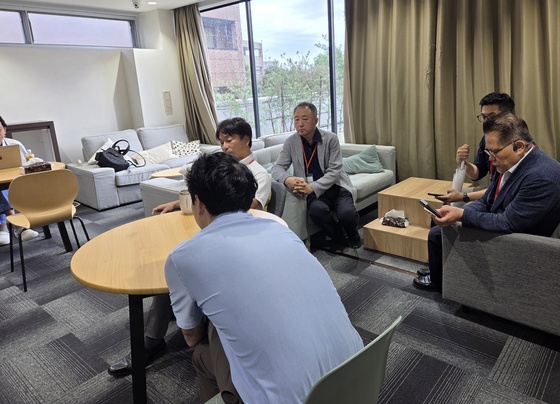
Dr. Asakawa Makoto, the pain management wizard, dropped some wisdom: Sure, it stings when its star pupils leave, but in the long run, they’re out there spreading the VSEC gospel. That’s a win.
Director Jeong admitted that running a hospital and teaching is no walk in the park. But VSEC’s commitment to education is seriously inspiring.
Director Choi chimed in that he’s blown away by how much they value learning here. They’re not just talking the talk – they’re investing serious time and cash.
The learning goes both ways: Japanese vets are heading to Korea next, with talks of an official partnership brewing.
This vet exchange program is just getting started. The VSEC crew is packing their bags for Korea this month, ready to check out how the Royal Animal Medical Group does things and share some knowledge.
Both teams are excited to swap notes on their unique approaches and maybe even make it official with an memorandum of understanding (MOU).
Director Jeong wrapped it up nicely: It’s all about learning from each other’s strengths and finding real ways to level up the game in specialized care and vet education. [Happy Pet]