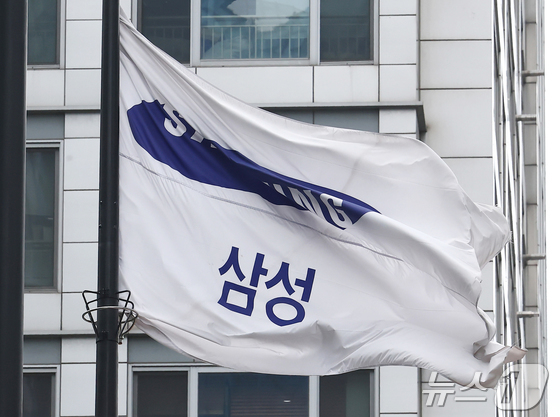
Samsung Electronics has reported a preliminary operating profit of 107.4 trillion KRW (about 80 billion USD) for the third quarter of this year. The memory division is expected to have surpassed 110 trillion KRW (about 81.9 billion USD) in operating profit. Meanwhile, the System LSI, Foundry, Mobile (MX·NW), Video Display (VD), and Home Appliances (DA) divisions collectively incurred about 4 trillion KRW (about 3 billion USD) in operating losses.
The global memory shortage, which has driven up memory semiconductor prices, continues to bolster Samsung’s performance. If these underperforming divisions improve their results, Samsung’s overall performance could see further gains.
Samsung Electronics Ushers in Era of Quarterly Operating Profits Exceeding 100 Trillion Won; Four Consecutive Quarters of Record-Breaking Results
On Thursday, Samsung announced its consolidated operating profit for the third quarter reached 107.4 trillion KRW (about 80 billion USD), a staggering 782.5% increase from the same period last year. Revenue soared to 195 trillion KRW (about 145 billion USD), up 86.1% year-on-year. The operating profit margin stands at an impressive 55.1%.
Compared to the previous record-setting second quarter, revenue increased by 13.7% and operating profit by 20%.
Samsung has been setting new records for revenue and operating profit for four consecutive quarters since Q4 of last year. The company posted revenue of 93.8374 trillion KRW (about 70 billion USD) and operating profit of 20.737 trillion KRW (about 15.4 billion USD) in Q4 2025, followed by revenue of 133.8734 trillion KRW (about 99.7 billion USD) and operating profit of 57.2328 trillion KRW (about 42.6 billion USD) in Q1 2026, and revenue of 171.5 trillion KRW (about 127.6 billion USD) and operating profit of 89.5 trillion KRW (about 66.6 billion USD) in Q2 2026 Notably, this quarter’s operating profit alone surpasses the company’s entire annual operating profit of 43.6 trillion KRW (about 32.4 billion USD) for last year.
Memory Shortage Drives Q3 Performance; Offsets Losses in Non-Memory, Mobile, and Home Appliance Divisions
The semiconductor (DS) division’s memory business appears to be the main driver of this quarter’s stellar performance. Meritz Securities estimates Samsung’s Q3 operating profit for the DS division at 110 trillion KRW (about 81.9 billion USD). While the memory segment is projected to generate 111.9 trillion KRW (about 83.3 billion USD) in operating profit, the LSI and Foundry divisions are expected to post an operating loss of 1.9 trillion KRW (about 1.4 billion USD).
Additionally, Samsung Display is forecast to contribute an operating profit of 1.1 trillion KRW (about 818 million USD), while the Mobile (MX·NW) division may face an operating loss of 1.8 trillion KRW (about 1.3 billion USD). The Video Display (VD) and Home Appliances (DA) divisions are expected to report operating losses of 400 billion KRW (about 297 million USD). Harman and other divisions are anticipated to add an operating profit of 400 billion KRW (about 297 million USD).
The DS division’s operating profit margin is expected to remain in the 70% range for Q3, continuing its strong performance from Q2. Analysts predict that the dynamic random access memory (DRAM) sector, including both high-bandwidth memory (HBM) and general products, will see operating profit margins exceed 80%.
The global memory supply shortage has continued to drive up prices for DRAM and NAND flash throughout Q3.
Market research firm DRAM Exchange reports that the average price of general DRAM products (DDR4 8Gb) for PCs doubled from 13 USD in March to 26 USD in September, reaching an all-time high. The average price of NAND 128Gb also rose from 17.73 USD to 30.61 USD during the same period. While the rate of increase has slowed due to already significant price hikes, memory prices continue to set new records.
Samsung Leads Memory Pricing Amid Shortage; HBM4 Revenues Begin to Impact Results
The ongoing supply shortage in general memory has worked in Samsung’s favor, allowing the company to exert greater control over product pricing as competition for memory procurement intensifies.
Kim Sun-woo, an analyst at Meritz Securities, noted that as an industry leader, Samsung has leveraged its pricing power, developed through multiple market cycles, to maintain its edge in DRAM and NAND pricing over competitors. While the company’s memory competitiveness has improved, boosting foundry utilization rates, ongoing costs associated with the Taylor fab are likely to persist.
Analysts also point out that Samsung’s sixth-generation high-bandwidth memory (HBM4), which the company pioneered in mass production, has begun to significantly impact its financial results.
According to Kyobo Securities, Samsung’s HBM4 sales in Q3 are projected to triple compared to the previous quarter. HBM4 is expected to account for over 60% of HBM sales in the second half of the year.
Choi Bo-young, an analyst at Kyobo Securities, stated that the expansion of HBM4 sales is gaining momentum. Given the product roadmap leading to HBM4E, HBM5, and zHBM, along with improvements in foundry yields, it anticipates continued growth in HBM competitiveness.
Park Jun-young, an analyst at Hanwha Investment & Securities, commented that Samsung’s HBM4 technology has already positioned the company among industry leaders. The ramp-up in HBM4 shipments will not only boost HBM market share but also reshape market perceptions of Samsung’s technological prowess. It expects the memory industry’s growth driver to shift from general memory back to HBM next year.