

Samsung Electro-Mechanics and LG Innotek are projected to report divergent results for the third quarter of this year. Samsung Electro-Mechanics, with its significant focus on AI server components, is expected to see its operating profit more than double compared to the same period last year, riding the wave of the artificial intelligence (AI) boom.
On the other hand, LG Innotek, heavily reliant on smartphone camera modules, anticipates increased sales due to new smartphone launches. However, the company faces challenges from the declining USD-KRW exchange rate. As costs rise, its operating profit is likely to see a slight decrease.
Samsung Electro-Mechanics Fuels Growth with MLCCs and Substrates for AI Servers
Financial data provider FnGuide reports that Samsung Electro-Mechanics’ third-quarter revenue consensus (average forecast from securities firms) is 3.8264 trillion KRW (about 2.9 billion USD). This represents a 32.4% increase from the same period last year (2.889 trillion KRW or about 2.2 billion USD). Operating profit is projected to surge from 260.3 billion KRW (about 196.6 million USD) to 645.3 billion KRW (about 487 million USD), an impressive 147.9% increase.
The key drivers of this performance boost are high-value multilayer ceramic capacitors (MLCCs) and semiconductor package substrates for AI servers.
MLCCs are crucial components that store and supply electricity to maintain stable voltage in electronic circuits. As AI accelerators become more powerful and energy-hungry, the demand for MLCCs to provide stable power has grown significantly.
AI servers require more power handling capability than standard electronic devices, necessitating high-capacity and high-reliability products. Industry experts note that Samsung Electro-Mechanics is ramping up sales of high-value MLCCs for servers and enhancing its product portfolio to boost profitability.
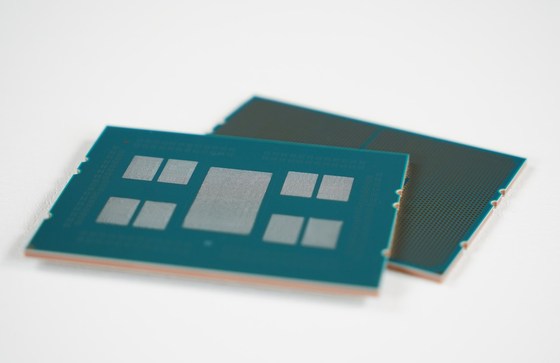
The semiconductor package substrate business is also contributing to this growth trend. Demand for package substrates that connect high-performance semiconductors continues to rise.
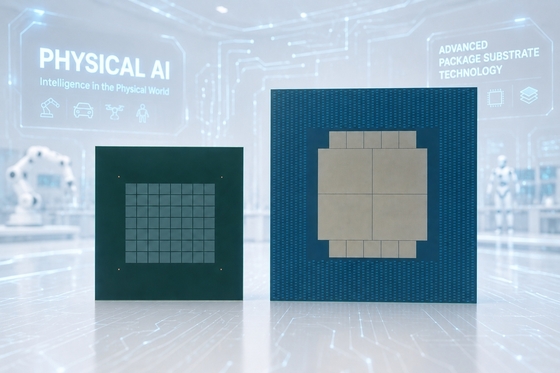
As AI accelerators and server central processing units (CPUs) become more powerful, the area of flip-chip ball grid array (FC-BGA) substrates is expanding, along with the number of circuit layers. With substrates becoming larger and more complex, demand is shifting towards companies like Samsung Electro-Mechanics that can deliver high-spec products.
In the long term, NVIDIA’s supply chain expansion presents significant growth opportunities. NVIDIA recently announced plans to increase its package substrate production capacity for its products by 2.5 times over the next three years, specifically naming Samsung Electro-Mechanics as a key supply partner.
Samsung Electro-Mechanics plans to increase supply from existing production lines while investing in new facilities to bolster its AI semiconductor substrate business. Kim Min-kyung, an analyst at Hana Securities, noted that Samsung Electro-Mechanics is rapidly climbing the ranks in the package substrate market.
Kim added that as new production capacities come online at the Sejong and Busan facilities and NVIDIA’s supply share increases, it expects Samsung Electro-Mechanics’ FC-BGA business to level up not only in terms of growth but also in product mix and profitability.
LG Innotek Grapples with High Exchange Rate Costs Despite New Smartphone Boost; Recovery Expected in Q4
LG Innotek’s third-quarter revenue consensus stands at 6.697 trillion KRW (about 5.06 billion USD), a 13.6% increase from the same period last year (5.3694 trillion KRW or about 4.06 billion USD). However, its operating profit is forecast to dip from 203.7 billion KRW (about 153 million USD) to 197.3 billion KRW (about 149 million USD), a 3.1% decrease.
While the launch of new smartphones by major North American clients is expected to drive sales growth, profitability may take a slight hit. Industry analysts predict that the optical solutions business, which accounts for a significant portion of sales, will face cost pressures due to the weakening dollar-won exchange rate.
LG Innotek purchased raw materials during the first half of the year when exchange rates were high to prepare for new product production. The challenge arose when the exchange rate dropped in the third quarter, reducing the won equivalent of dollar-denominated payments while the costs of previously purchased raw materials remained fixed.
As a result, even with increased camera module sales, profit margins are shrinking. This explains the projected slight decline in operating profit despite higher new smartphone supply.
However, starting in the fourth quarter, the incorporation of raw materials purchased at lower exchange rates may help alleviate some of the financial pressure. If strong sales of new smartphones persist, profitability in the camera module business could also improve.
The growing demand for high-performance package substrates, driven by the expanding AI server market, is another positive factor. LG Innotek is in talks with global clients for long-term supply agreements and is considering expanding its production capacity. As the package substrate business grows, the company can reduce its dependence on the smartphone market and mitigate performance fluctuations due to exchange rate volatility.
An industry insider commented that in the third quarter, while new product supplies increased, profitability improvement was limited due to cost pressures from the declining exchange rate. It expects the cost burden to gradually decrease in the fourth quarter as raw materials purchased at lower exchange rates are incorporated into production.