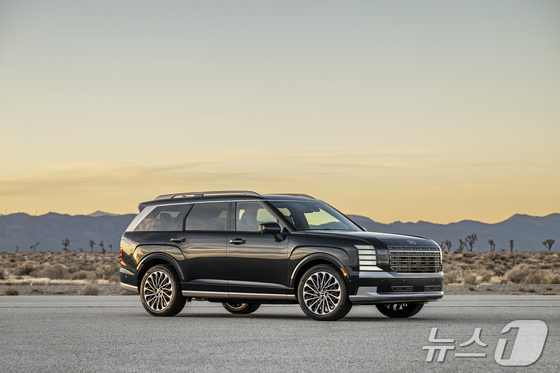
General Motors, having previously focused on electric vehicles (EVs), is now investing in the production of hybrid sports utility vehicles (SUVs). This strategic shift comes as consumers increasingly turn to hybrids amid rising gas prices and a slowdown in EV demand.
For Hyundai Motor Company and Kia, which have maintained profitability in the U.S. market with their hybrid vehicles, this introduces a new competitor. General Motors is reportedly planning to launch a popular three-row large SUV for American consumers, likely to compete directly with Hyundai’s Palisade and Kia’s Telluride hybrid models.
GM Expected to Launch Hybrid Versions of the Traverse, Enclave and Acadia
On October 27, General Motors announced plans to invest in hybrid vehicle production at its Lansing Delta Township plant in Michigan. The company will disclose specific models and production timelines as the launch date approaches.
This plant currently manufactures three-row large SUVs: the Chevrolet Traverse, Buick Enclave, and GMC Acadia. Last year, it achieved a record production of over 291,000 units. General Motors plans to reallocate funds from the U.S. Department of Energy’s facility conversion support to hybrid production.
Reuters, citing insider sources, reported that General Motors is developing hybrid versions of these three vehicles. Chief Executive Officer (CEO) Mary Barra also confirmed plans to introduce hybrids across various vehicle classes during a recent earnings call.
This isn’t General Motors’ first foray into hybrids. The company previously offered hybrid versions of large SUVs like the Chevrolet Tahoe and GMC Yukon, discontinued after 2013, and the mid-sized Malibu sedan, discontinued after 2019. While they still offer a hybrid Corvette, this new investment marks a return to the mainstream hybrid market.
General Motors had prioritized EVs due to the costs and complexities of hybrid development. However, the expiration of federal EV tax credits in September 2025 and rising fuel prices following Middle East conflicts in February 2026 have shifted consumer preferences. As hybrids gained popularity for their fuel efficiency, GM dealerships reportedly pushed for expanded hybrid offerings.
Meanwhile, Ford has already pivoted its strategy. In August 2024, Ford scrapped plans for a three-row all-electric SUV, opting instead to develop a next-generation SUV with hybrid technology. Last December, Ford decided to transform its F-150 Lightning electric pickup into a range-extended electric vehicle (EREV) to improve driving range.
Hyundai and Kia Expand Hybrid Lineup into Popular Large SUVs in the US, Seeking to Cement Market Position Ahead of GM and Ford’s Entry
Hyundai and Kia are already reaping the benefits of the hybrid trend. Their U.S. hybrid sales (including plug-in hybrids) have grown from 124,191 units in 2022 to 331,023 units last year, with an average annual growth rate of 38.7% over three years.
This year’s growth has been even more dramatic. January to September sales reached 363,433 units, a 60.6% increase from the same period last year, already surpassing last year’s total by 9.8%. Both companies cited expanded hybrid sales in the U.S. as a key factor in improving their sales mix and defending profits in recent earnings reports.
Hyundai and Kia are also gaining ground in the U.S. hybrid SUV market. According to Experian, Hyundai’s Santa Fe ranked third in new hybrid SUV sales in Q2 2023, behind only Honda’s CR-V and Toyota’s RAV4.
Kia’s Sportage and Hyundai’s Tucson secured fifth and sixth places, while the Hyundai Palisade and Kia Telluride ranked ninth and tenth. This means Hyundai and Kia models accounted for half of the top ten hybrid SUVs sold in the U.S.
The success of the Palisade and Telluride indicates that Hyundai and Kia’s hybrid competitiveness now extends to large SUVs. This sets the stage for intense competition with General Motors’ upcoming hybrid versions of the Traverse, Enclave, and Acadia in the family SUV market.
The critical factor will be how quickly General Motors and Ford enter the market. With release dates still unannounced, Hyundai and Kia have time to solidify their position in the three-row hybrid SUV segment. However, once General Motors leverages its established U.S. production base and existing SUV customer loyalty, competition in product quality and pricing will likely intensify. This could lead to increased incentive spending, potentially eroding the higher profit margins hybrids currently enjoy compared to conventional and EVs.