

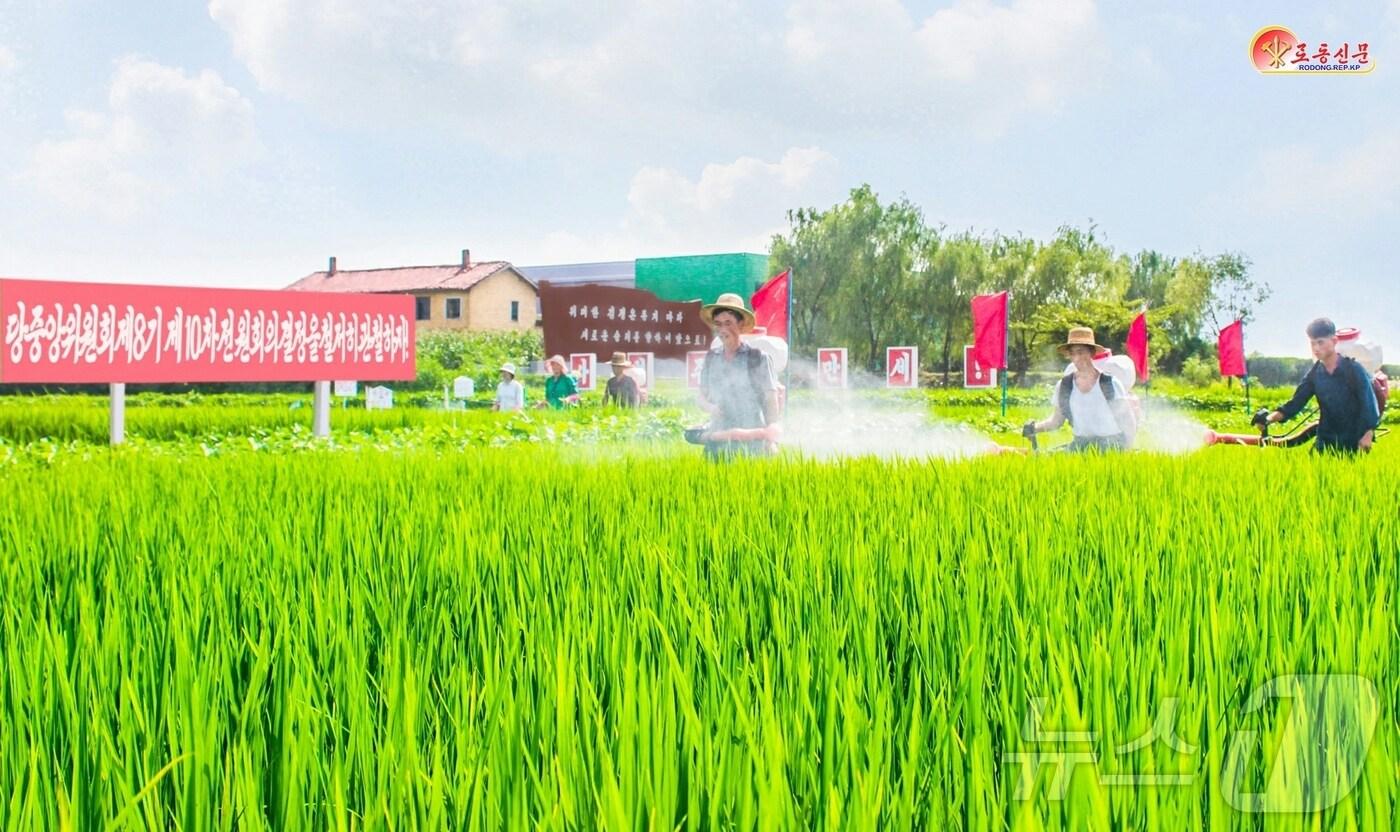
Voice of America (VOA) reported that North Korea’s rice imports from China in the first half of this year have decreased to one-tenth of the previous year’s.
According to the General Administration of Customs of the People’s Republic of China, from January to June this year, North Korea imported $5,713,000 worth of rice from China. This is about one-tenth of the $53,392,000 imported during the same period last year.
The import value of flour also fell to $4,145,000, which is only a quarter of last year’s $18,009,000.
Also, compared to last year, imports of corn and nitrogen fertilizers decreased by 1.3% and 0.32%, respectively.
This reduction is presumed to be due to North Korea lowering its dependency on China as its relations with Russia improve and become closer.
In May, NK News, a U.S. media outlet specializing in North Korea, reported, citing Russian customs data, that more than 1,270 tons of flour and at least 1,000 tons of corn were exported from at least five regions in Russia to North Korea over a few months from January this year.
During the same period, the trade volume of contraband involving prohibited items between North Korea and China also significantly decreased.
China exported 33 Harmonized System (HS) code products, totaling $38,864, to North Korea, despite UN Security Council prohibitions on such exports.
This amount represents just 10.9% of the $355,355 in prohibited item exports between the two countries during the first half of last year, and it is only about 2% of the $2,237,362 from the second half of last year.
In response, VOA suggested that China might have deleted some details from the General Administration of Customs data to hide violations of sanctions against North Korea or that it has strengthened crackdowns on the trade of sanctioned items. Alternatively, it is also speculated that North Korea might be importing sanctioned items from Russia instead of China due to its closer ties with Russia.
Previously, in 2017, the UN Security Council adopted Resolution 2397, which specified HS codes for items banned from trading with North Korea.
As a result, UN member states can no longer sell North Korean items classified under HS codes 72 and 73 for steel and steel products, as well as non-metal tools and various products under codes 82 and 83, machinery under code 84, electronic devices under code 85, and vehicles and their parts under code 87, other than railway vehicles.