We plan to approach drug development by focusing on two pillars: open innovation through external collaboration and the introduction of artificial intelligence (AI) to shorten development timelines. This is very important from a market positioning perspective.
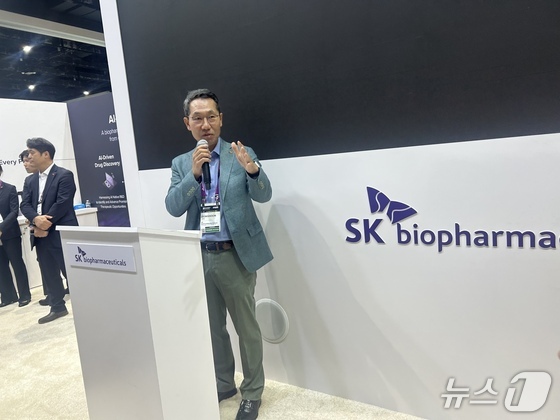
That was the message from SK Biopharmaceuticals CEO Lee Dong-hoon. He also expressed his determination to secure drug pipelines by leveraging his experience of bringing internally discovered drugs through U.S. Food and Drug Administration (FDA) approval and building direct commercialization channels in the U.S. market.
At the BIO International Convention 2026 (BIO 2026), held on the 22nd at the San Diego Convention Center in California, USA, Lee emphasized that the company will focus its strategy on open innovation and AI.
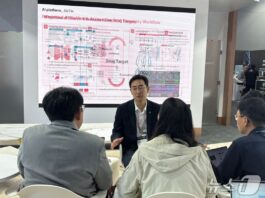
The previous day, SK Biopharmaceuticals announced that it would collaborate with generative AI-based drug discovery company Insilico Medicine to develop therapies for central nervous system (CNS) diseases. The partnership aims to discover innovative drug candidates in the neuroimmune field, where unmet medical needs remain high.
Based on its expertise in epilepsy and CNS developed through its drug cenobamate (U.S. brand name Xcopri), the company aims to expand into neuroimmune research, thereby diversifying its CNS portfolio both qualitatively and quantitatively.
The company explained that this move is significant as it seeks to identify high-quality external compounds and increase the value of drug assets from the early discovery stage through a multi-dimensional open innovation framework.
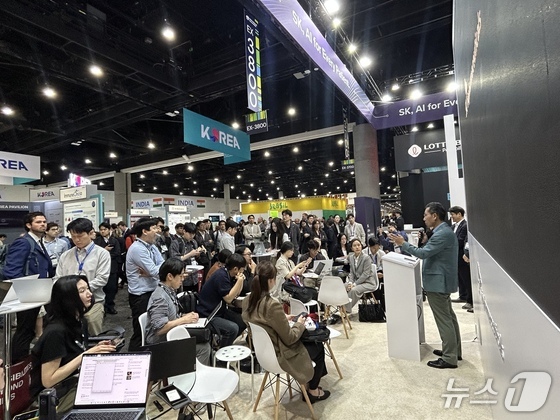
The executive vice president said, “We need to apply our experience and know-how to create a model that successfully brings Asian biotech companies into Western markets over the next 5 to 10 years. That is our purpose.”
He added, “Xcopri currently holds the No. 1 market share in the CNS market and is expected to maintain that position for the next 5 to 10 years. Based on that cash flow, we will develop second products and expand beyond CNS into new modalities.”
SK Biopharmaceuticals plans to fully adopt an “Extended R&D Lab” model, in which external technological capabilities are integrated as if they were part of its own research infrastructure.
The total deal value is up to $2.57 billion, with an upfront payment of approximately $4.5 million. SK Biopharmaceuticals will handle clinical development, manufacturing, and commercialization after the early research stage, while securing full ownership and global exclusive development and commercialization rights for any resulting drug candidates.
Through this structure, the company aims to accelerate drug candidate discovery in the short term while building a long-term data asset base to strengthen its AI- and digital technology-based drug design capabilities.
SK Biopharm’s Chief Technology Officer, Hwang Seon-kwan, said, “The industry average for identifying preclinical candidates is 4.5 years, but through this collaboration we aim to reduce it to 2 years.” He added that cutting development time by more than 50% effectively extends the drug’s exclusivity period by two years, which is highly meaningful for market positioning.
Lee said, “SK Biopharmaceuticals will serve as an East–West bridge connecting Asia’s rapidly growing AI-driven drug discovery ecosystem with the U.S. clinical and commercialization infrastructure established through Xcopri.”
He added, “The synergy between Insilico’s AI platform and SK Biopharmaceuticals’ U.S. infrastructure will evolve into a scalable growth platform that can be repeatedly applied to future target discovery, rather than remaining a single-asset model.”
The company also reiterated its plan to establish a sustainable model over the next 5 to 10 years that connects high-quality early-stage Asian compounds with U.S. direct commercialization infrastructure.
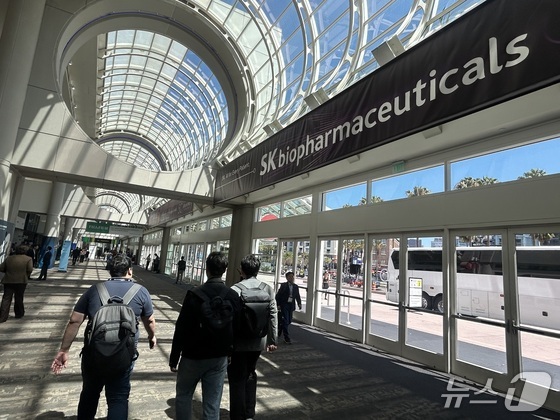
Meanwhile, SK Biopharmaceuticals is also expanding into new modalities. Key areas include radiopharmaceuticals (RPT) and targeted protein degradation (TPD). In particular, RPT is strategically significant as it can leverage SK Group’s infrastructure and raw material sourcing capabilities.
A company official said, “RPT is a rapidly growing field in oncology, and we expect to create synergies by leveraging SK Group’s strengths. While expansion into RPT and TPD is important, our main stream remains CNS. Becoming a best-in-class company in what we already do well is our most important goal.”