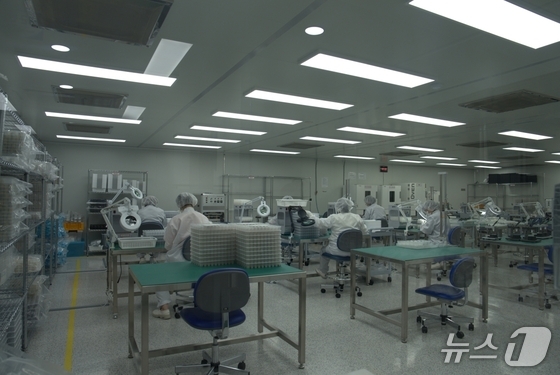
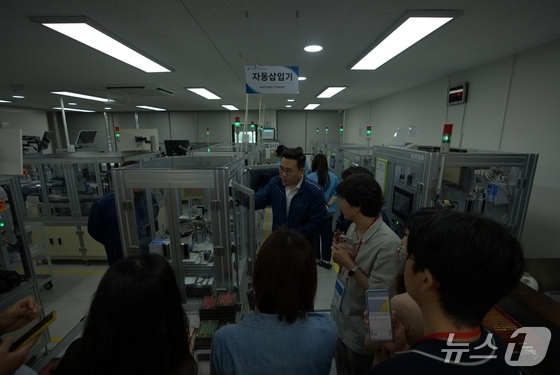
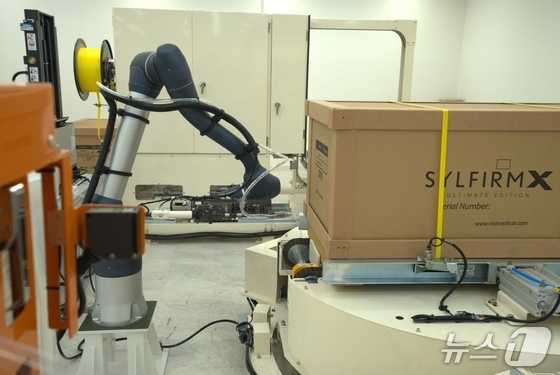
That slogan greets visitors at the entrance to the cleanroom at Viol Medical’s manufacturing headquarters in Seongnam, South Korea. Inside, workers dressed in full cleanroom suits operate high-precision equipment in a facility that resembles a semiconductor fabrication plant. Founded in 2009, Viol Medical, a manufacturer of energy-based aesthetic medical devices (EBD), recently completed a major expansion of its production facility to meet surging global demand for K-beauty products. The company doubled its manufacturing space for devices and consumables while increasing automation across seven core production processes, from needle insertion to final packaging. According to the company, the number of automated needle insertion machines increased from 13 to 19, while the soldering process—previously performed manually—has now been fully automated. The renovation was completed last month in response to growing overseas demand for its products. Viol Medical’s revenue grew from $123 million in 2021 to $401 million in 2025. Operating profit increased from $38 million to $202 million over the same period, more than fivefold. Its flagship products include the Sylfirm X radiofrequency (RF) microneedling system, the CellinU skin-tightening device, and the DuoTite high-intensity focused ultrasound (HIFU) platform. While Sylfirm X continues to generate stable sales, the launches of CellinU and DuoTite have broadened the company’s growth portfolio. Viol Medical plans to produce 6,500 systems and 3.5 million disposable consumables annually by 2029 following the manufacturing expansion. The company also plans to significantly increase annual shipments after delivering approximately 1,890 systems last year. Its target for this year is approximately 2,750 systems, representing a 45% year-over-year increase.
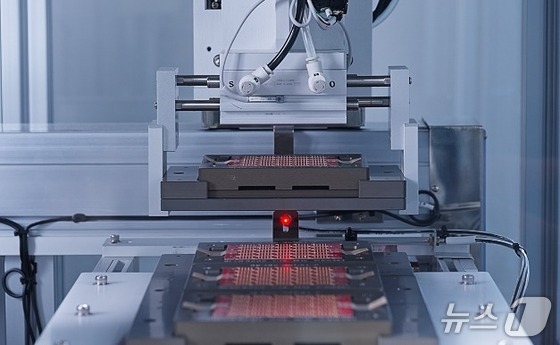
Defect detection is also expected to improve substantially. By introducing automated inspection equipment capable of identifying microscopic defects that were previously difficult to detect through visual inspection, the company says it has strengthened quality control before products leave the factory. A company official said the defect detection rate has risen from 1% to 3% following the renovation—not because product quality declined, but because automated inspection systems can now identify much smaller defects that previously went unnoticed. Viol Medical aims to reduce the final defect rate to below 2% for finished devices and below 0.05% for disposable products by the end of this year.
Approximately 90% of the company’s revenue comes from exports. Its products are sold in 71 countries, with its top overseas markets including China, the United States, Japan, Thailand, Australia, Russia, Singapore, Hong Kong, Taiwan, and Indonesia. While the United States was the company’s largest export market through last year, China has become its biggest overseas market this year, accounting for 20% of exports. The U.S. continues to represent 13% of overseas sales. Viol Medical has focused on building stable relationships with overseas partners, but now plans to expand more aggressively in the domestic market. As part of that effort, the company recently selected actress Shin Hye-sun as the brand ambassador for DuoTite and launched a new advertising campaign.
CEO Lee Eun-chan told reporters that Viol Medical has undergone significant changes over the past year, including a leadership transition and organizational restructuring. “Since then, we have worked to rebuild relationships with our partners across 71 countries, which account for more than 90% of our revenue, while strengthening our new product roadmap,” Lee said. Describing the manufacturing overhaul as laying the foundation for future growth, he said the company aims to increase its corporate value by three to five times over the next five years. “Although our domestic business has yet to gain significant traction, we plan to leverage the brand recognition and success we have built globally to become a leading aesthetic medical technology company in Korea,” he added. Viol Medical signed a memorandum of understanding (MOU) with Amorepacific in March to explore joint business opportunities in the beauty and medical device sectors. The two companies plan to collaborate across product development and marketing. The company is also in discussions with domestic hospitals and various solution providers as it seeks to accelerate growth in the Korean market.