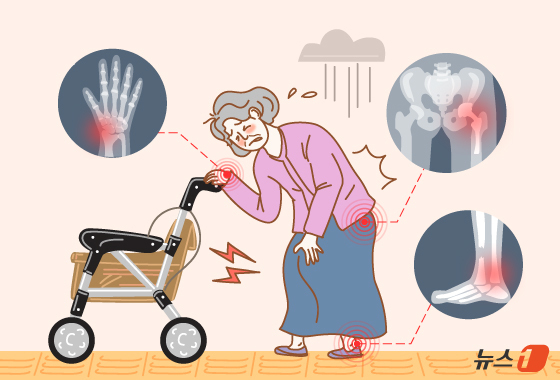
Women who have experienced multiple pregnancies may face a higher risk of fractures after menopause, highlighting the importance of preventive bone health management, a study has found.
Seoul St. Mary’s Hospital of the Catholic University of Korea announced on July 15 that resident physician Sung Kyung-heon from the Department of Internal Medicine, under the guidance of Professor Ha Jung-hoon of the Division of Endocrinology, received an Outstanding Oral Presentation Award at the 2026 Seoul Symposium on Bone Health hosted by the Korean Society for Bone and Mineral Research.
Using data from the Korea Disease Control and Prevention Agency’s 2024 Korea National Health and Nutrition Examination Survey, the research team analyzed 1,420 postmenopausal women and found that women who had been pregnant three or more times had about a 36% higher risk of experiencing fractures after menopause compared with women who had never been pregnant.
The medical community has previously suggested that multiple pregnancies may affect bone health, but research findings have not been consistent. The research team said the study is significant because it statistically confirmed the association between multiple pregnancies and postmenopausal fracture risk using nationally representative big data.
Osteoporosis often has no noticeable symptoms and is frequently discovered only after fractures occur from minor impacts. Experts noted that fractures of the hip and spine, in particular, are associated with long-term mobility limitations, reduced quality of life and increased mortality risk, making regular bone density screenings and preventive care important after menopause.
The research team analyzed that reduced cumulative exposure to estrogen may have contributed to the increased fracture risk. During pregnancy and breastfeeding, menstruation stops, potentially shortening the period of estrogen exposure, a hormone that helps suppress bone loss and maintain bone density.
Accordingly, the team emphasized the importance of adequate calcium and vitamin D intake from pregnancy and childbirth periods, and recommended that women with multiple children receive regular preventive care, including bone density screenings, after menopause.
However, the researchers stressed that the findings should not be interpreted as meaning that having multiple children negatively affects women’s health. Previous studies have shown that childbirth may lower the risk of hormone receptor-positive breast cancer and ovarian cancer, indicating that pregnancy and childbirth can have both health benefits and risks depending on the condition.
Sung said, “By considering the number of pregnancies and childbirths throughout a woman’s life together with her history of hormone exposure, fracture risk can be assessed more accurately. Preventive management is possible through adequate calcium and vitamin D intake during pregnancy and regular bone density screenings.”
Professor Ha said, “This study is meaningful because a resident physician led research on an important clinical question in the field of bone metabolism using national health data. We will continue supporting active research into osteoporosis and bone metabolic diseases.”