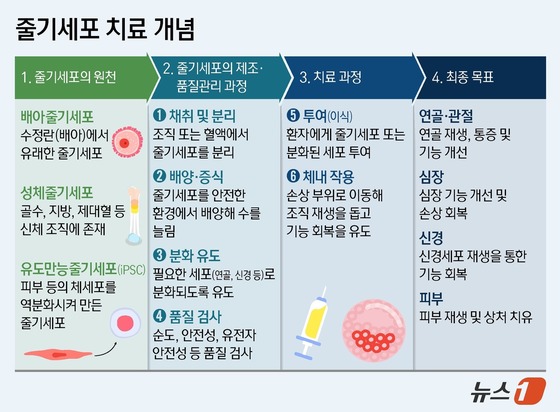
The Korean government’s decision to ease regulations governing advanced regenerative medicine has raised expectations across the biotech industry. With government-led clinical research set to expand, companies developing stem cell and immune cell therapies—as well as those focused on orthopedics and hematologic oncology—could benefit from the policy shift.
The Ministry of Health and Welfare held a meeting of the Advanced Regenerative Medicine and Advanced Biopharmaceuticals Policy Committee at the Koreana Hotel in Seoul on July 20 (EST), where it approved the Second Master Plan for Advanced Regenerative Medicine and Advanced Biopharmaceuticals (2026–2030). The committee also discussed measures to strengthen post-management of regenerative medicine institutions and rationalize related regulations.
The central goal is to transition advanced regenerative medicine from a research-focused field into one that supports patient treatment and commercialization.
Specifically, the government will launch government-led, multicenter clinical studies targeting four conditions: knee osteoarthritis, refractory chronic pain, blood cancers, and recurrent glioblastoma.
The initiative could allow patients who previously traveled overseas and spent tens of thousands to hundreds of thousands of dollars on stem cell treatments to instead receive scientifically validated therapies within Korea’s national regulatory framework.
“Many patients traveled abroad for expensive stem cell treatments without knowing whether those therapies had sufficient scientific evidence or proper safety oversight,” said Lee Jun-mi, director of the Ministry’s Regenerative Medicine Policy Division. “Going forward, patients will be able to receive treatments that have been scientifically validated through domestic clinical research under the country’s safety management system, significantly expanding treatment opportunities.”
Government Support Expected to Strengthen Hospital-Industry Collaboration
Medical experts believe the policy could serve as a catalyst for Korea’s regenerative medicine market.
Orthopedics is widely viewed as one of the biggest beneficiaries, as knee osteoarthritis, refractory chronic pain, blood cancers, and recurrent glioblastoma have been designated as priority conditions for government support, potentially leading to expanded clinical research and treatment programs.
Major tertiary hospitals operating regenerative medicine and cell therapy centers are also expected to play a larger role. These include Seoul National University Hospital, Seoul St. Mary’s Hospital, Samsung Medical Center, Severance Hospital, Asan Medical Center, Seoul National University Bundang Hospital, and Korea University Guro Hospital, all of which already conduct regenerative medicine clinical research or have been designated as certified regenerative medicine institutions.
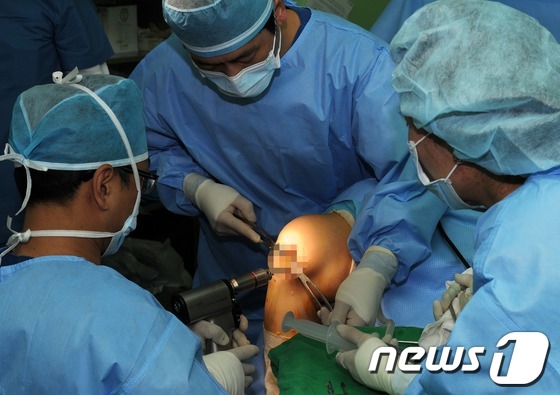
“Currently, cultured adipose-derived stem cell injections for joint treatment are not approved in Korea, so some patients travel to Japan or Taiwan for treatment,” said Jung Se-han, professor of orthopedic surgery at Severance Hospital. “The significance of this policy is that government-supported research can generate domestic clinical data to establish scientific evidence for these therapies. We also expect research to progress more quickly.”
The biotech industry also expects to benefit.
The government plans to support development of advanced biopharmaceuticals—including cell therapies, gene therapies, and CAR-T therapies—while expanding shared access to cell-processing facilities and raw cell supply systems. Industry observers say these measures could accelerate both research and commercialization.
Companies viewed as potential beneficiaries include Medipost, which markets the stem cell therapy Cartistem for cartilage defects; Kangstem Biotech, which is developing a stem cell therapy for osteoarthritis; and CHA Biotech, which is expanding its regenerative medicine business based on stem cell and immune cell platforms.
In hematologic oncology, companies developing CAR-T therapies—including Curocell, GC Cell, and AbClon—could also benefit over the longer term as the government broadens eligible treatment indications.
The policy is also expected to have a positive impact on contract development and manufacturing organizations (CDMOs) with manufacturing capabilities for cell and gene therapies (CGTs).
Insurance Coverage Remains a Key Challenge
Despite the policy momentum, experts caution that significant hurdles remain before regenerative medicine becomes widely available in clinical practice.
They agree that health insurance reimbursement and cost-effectiveness will be critical factors in determining market adoption. Because regenerative therapies are inherently expensive, establishing reimbursement systems alongside demonstrating clinical effectiveness will be essential for improving patient access.
“The cost of culturing and managing stem cells is extremely high,” Jung said. “Without discussions on health insurance coverage and appropriate reimbursement rates, even approved therapies may remain accessible only to a limited number of patients.”
Lee Soo-chan, chief director of Himchan Hospital and an orthopedic surgeon, also welcomed the government’s efforts to establish scientific evidence but emphasized that stem cell therapy should not be viewed as a universal solution for every arthritis patient.
“Insurance coverage and cost-effectiveness must be evaluated together before patients can truly benefit from these treatments,” he said.
An industry official echoed that view.
“Regenerative medicine research in Korea has progressed relatively slowly because regulations have prioritized safety,” the official said. “While this policy is likely to accelerate clinical research, widespread adoption in clinical practice will ultimately depend on robust evidence of treatment efficacy and measures to reduce patients’ financial burden, including health insurance coverage.”