

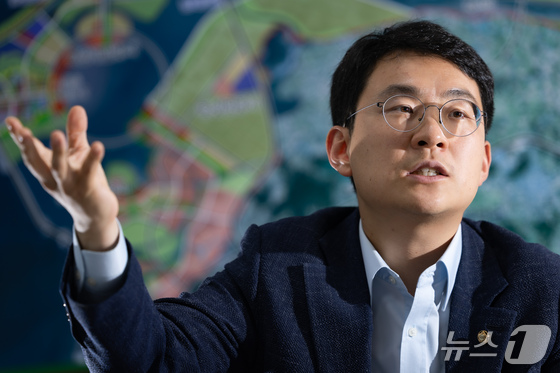
Rep. Park Ji-won of the Democratic Party of Korea addressed the budget cuts for health and medical research and development (R&D) projects, including the Korean version of ARPA-H. He emphasized the need to reassess the rationale behind budget reductions and the viability of projects that have had their funding decreased while maintaining research objectives and timelines.
Park, a member of the National Assembly’s Health and Welfare Committee and the Special Committee on Budget and Accounts, shared his views during a News1 interview at the National Assembly on Wednesday. He stated his intention to restore appropriate funding for projects requiring research continuity, while adjusting goals and schedules for projects where budget cuts are justified.
While acknowledging the significant budget reductions, Park expressed concern about cutting funds without modifying ongoing research goals and timelines.
He noted that it can adjust budgets if research outcomes are inadequate or project priorities have shifted. However, simply reducing funding while maintaining research goals and timelines forces research institutions to scale back personnel, experiments, or clinical trials.
Park added that this could lead to extended research periods or obsolete results. Mid-project funding cuts risk losing not only invested costs but also accumulated data and research staff.
This year’s government audit revealed that the Ministry of Health and Welfare cut the budget for 35 ongoing health and medical R&D projects by 106.3 billion KRW (about 79.5 million USD) compared to initial plans. Major cuts included 41.3 billion KRW (about 30.9 million USD) for the Korean ARPA-H project, 13.1 billion KRW (about 9.8 million USD) for global physician-scientist training, and 10.4 billion KRW (about 7.8 million USD) for infectious disease prevention and treatment research.
Park highlighted that many affected projects weren’t notified in advance and research goals and timelines remained unchanged. He stated that it must thoroughly examine the rationale and procedures behind these budget cut decisions.
During the budget review, he plans to prioritize scrutiny of large-scale projects like ARPA-H, global physician-scientist training, and infectious disease research.
However, Park cautioned that it shouldn’t increase budgets solely based on the size of cuts. It’ll evaluate each project’s results, detailed execution plans, and stage-specific budget needs before making adjustments.
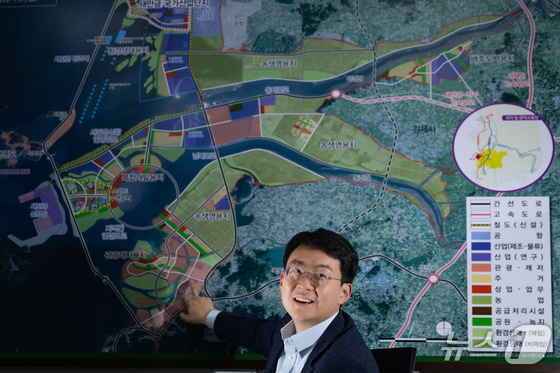
From Papers to Patients: Four Key Criteria for R&D Budget Review
Park outlined four evaluation criteria: scientific and medical necessity, research continuity and investment efficiency, objectivity in performance evaluation and cut procedures, and potential public benefit of research outcomes.
He aims to assess research impact on public health, particularly for rare diseases, infectious disease responses, and essential healthcare, while considering past investments, current research stages, and funding needed for completion.
Park stated that while underperforming projects need adjustment, there must be a logical connection between evaluation results and budget cuts. It can’t let research institutions be blindsided by cuts, leaving them no chance to revise their plans.
He added that if cuts are unavoidable, it must consult with institutions to adjust research goals, timelines, and scope together. For projects in critical clinical trials or proof-of-concept phases, it needs to weigh potential losses from interruptions.
Park emphasized that research evaluation should look beyond papers and patents to consider practical impacts like new treatments, drug development, healthcare cost reduction, and improved patient access.
He also expressed interest in linking the government’s future response fund with R&D investments, noting that R&D is crucial for future preparedness. Park plans to explore potential synergies between the fund and research initiatives.
However, he acknowledged that government support alone can’t solve all research and commercialization challenges, stressing the need for long-term private sector investments.
Park emphasized that this budget review isn’t just about increasing funding. It’s about using limited national resources efficiently.
He concluded that if it aims to develop new drugs as a national strategic industry, it must responsibly manage both new project announcements and ensure ongoing research reaches successful completion.
Profile of Representative Park Ji-won
△Iksan, North Jeolla Province △Sangsang High School, Jeonju △Department of Law, Seoul National University △Passed the 51st bar exam △41st class of the Judicial Research and Training Institute △Representative lawyer at Daewon Law Firm △Legal advisor for Gimje City △President of Jeonju Sports Council △Vice Chairman of the Legal Committee of the Democratic Party of Korea △Supreme Member of the Democratic Party of Korea △22nd National Assembly member (Jeonbuk Gunsan, Gimje, Buan) △Member of the National Assembly’s Health and Welfare Committee and Special Committee on Budget and Accounts.