A groundbreaking study focusing on the hormone-producing role of stromal cells in the ovaries, alongside oocytes and follicles during ovarian aging, has received international recognition.
This research is expected to provide crucial insights into ovarian dysfunction mechanisms and pave the way for innovative treatment strategies.
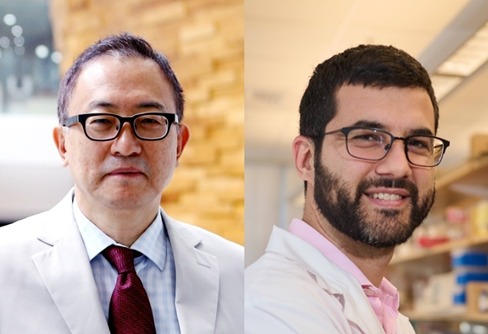
At the 82nd Annual Meeting of the American Society for Reproductive Medicine (ASRM) in Baltimore, Maryland, Cha Hospital announced that Harvard Medical School’s Professor David Pépin was awarded the prestigious 13th KY Cha Award in Reproductive Medicine.
Professor Pépin’s award-winning research, titled, Extrafollicular Ovarian Steroidogenesis: Stromal Hormone Production as a Therapeutic Target in Ovarian Aging, has garnered significant attention in the field.
This study sheds light on the hormone-producing functions of ovarian stromal cells, which are distinct from follicles. The ovaries not only manage oocyte maturation and ovulation but also produce crucial hormones like estrogen. Age-related decline in ovarian function can impact both fertility and overall women’s health.
Professor Pépin’s work goes beyond traditional follicle and oocyte research, examining the diverse cellular components of ovaries and proposing stromal hormone production as a novel therapeutic target for ovarian aging. This approach is expected to enhance our understanding of ovarian aging’s biological mechanisms and inform new strategies to combat functional decline.
As an associate professor of surgery at Harvard Medical School and deputy director of the Pediatric Surgery Research Laboratory at Massachusetts General Hospital (MGH), Professor Pépin specializes in ovarian biology and women’s reproductive health. His Ph.D. from the University of Ottawa, Canada, laid the foundation for his translational research, bridging basic science in female reproductive development, ovarian physiology, and ovarian cancer with clinical applications.
A key focus of his research is the impact of anti-Müllerian hormone (AMH) on follicular development and ovarian function, with potential applications in contraception, infertility treatments, and fertility preservation for cancer patients. In 2021, Pépin co-founded Oviva Therapeutics, a biotech firm dedicated to enhancing ovarian function and extending women’s health span through innovative drug development.
His groundbreaking work has earned him the Early Investigator Award from the Society for the Study of Reproduction (SSR) in 2022 and the Innovative Medicine Lecture Award from the ASRM in 2023.
The KY Cha Award, established by the ASRM in 2011, honors Dr. Cha Kwang-ryul’s contributions to infertility treatment and advancements in stem cell and regenerative medicine. As director of the Global Comprehensive Research Institute at Cha Hospital and Cha Bio Group, Dr. Cha’s legacy continues to inspire innovative research in reproductive medicine.
This year marks a significant expansion of the award’s scope, now encompassing ovarian aging research alongside stem cell technology. The ASRM will provide 40,000 USD in research funding over two years to support cutting-edge studies in this field.
Dr. Cha’s pioneering work includes the world’s first successful in vitro culture of immature oocytes in 1988, development of a rapid oocyte freezing method in 1998, and establishment of an oocyte bank in 1999. His innovations gained widespread recognition in 2014 when the ASRM endorsed oocyte banking as a standard approach in infertility treatment.
The KY Cha Award holds the distinction of being the only ASRM award named after an Asian scientist. Since its inception, 14 esteemed physicians and scientists from world-renowned institutions, including Harvard, Cornell, and the National Institutes of Health (NIH), have received this honor.
Dr. Cha continues to broaden his research scope from reproductive medicine to stem cell and regenerative medicine, fostering research infrastructure, talent development, and researcher support. His influence extends beyond the ASRM, with awards bearing his name established by the Korean Society for Stem Cell Research, the Korean Society for Reproductive Medicine, and the Asian Cell Therapy Organization (ACTO), which recognizes outstanding researchers through the Cha Kwang-ryul Excellent Presentation Award.