

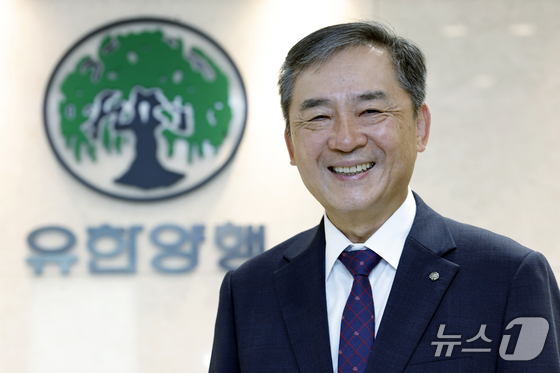
“We expect to see results from follow-up drug candidates by the end of the year. However, because drug development takes a long time, it is important to continuously secure follow-up pipelines rather than relying on one or two candidates.”
Kim Yeol-hong, head of R&D at Yoo Han Corp., made the remarks in an interview with News1 at the company’s headquarters in Seoul’s Dongjak district on Sept. 9, discussing potential follow-up drug development achievements that could be considered a “second Lexraza.” He said expectations for results this year remain unchanged, but the company cannot disclose specific candidates or potential partners.
Yoo Han Corp. has expanded its position as a global drug developer since licensing out Lexraza (ingredient: lazertinib), a treatment for non-small cell lung cancer, to Janssen in 2018.
Lexraza is a drug candidate that Yoo Han Corp. acquired from Genosco, a subsidiary of Oscotec (039200), and subsequently developed. It received approval as South Korea’s 31st new drug in 2021 as a monotherapy and expanded its indication to first-line treatment in June 2023. In 2024, it received U.S. Food and Drug Administration (FDA) approval in combination with J&J’s Rybrevant, demonstrating the global development potential of a South Korean cancer drug.
On Sept. 10, Lexraza received the Best Pharmaceutical Product award at the inaugural Prix Galien Korea ceremony held at The Shilla Seoul. The Prix Galien, established in France in 1970, is an award in the life sciences field and was held in South Korea this year for the first time in Asia.
External Acquisitions Are Also Part of R&D Strategy: “We Need to Grow Both Seeds and Sprouts”
Kim emphasized that acquiring drug candidates from outside the company does not diminish a pharmaceutical company’s R&D capabilities. He explained that because early-stage drug development carries a high risk of failure, securing candidates that have undergone a certain level of validation can reduce development risks and shorten timelines.
“It is important for us to conduct our own research and create seeds, but if there is already a candidate outside the company that has sprouted and begun growing branches, bringing it in and helping it grow further is also an option,” he said. “Yoo Han Corp. is pursuing a strategy that combines the discovery of new candidates through internal research with the acquisition of competitive candidates from outside the company.”
Yoo Han Corp. currently has about eight clinical-stage pipeline candidates. Six candidates are undergoing clinical trials, while others are expected to enter clinical development after the company files an Investigational New Drug (IND) application this year or early next year.
Among them, the company is pursuing direct development of a treatment for Gaucher disease through global Phase 3 trials. Because the patient population is relatively small, the company believes clinical trial scale can be managed more easily, allowing it to build its own global development capabilities and ultimately commercialize the treatment.
Because it is not realistic to develop every drug through commercialization entirely in-house, Yoo Han Corp. also plans to pursue a strategy of first seeking approval and market entry in South Korea and then working with overseas pharmaceutical companies on global clinical development.
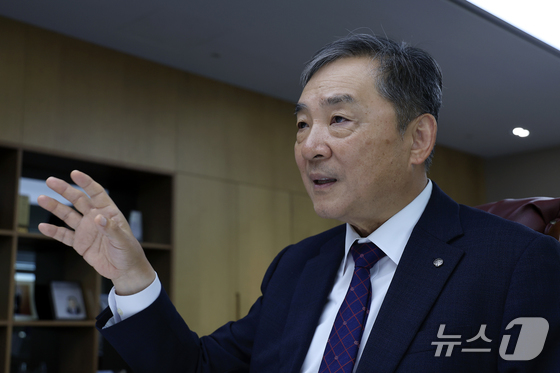
Below is the full Q&A with Kim.
Is the expectation of results this year for a second Lexraza still valid?
▶Yes. We expect results by the end of the year. However, because drug development takes a long time, it is important to continuously secure and develop follow-up candidates rather than relying on a single candidate.
Drug business development approaches have recently become more diverse. What are you seeing?
▶In the past, it was common to license out candidates after developing them, but there are now various approaches. Global companies may invest at an early stage and later secure rights, while companies can also use options or pursue co-development. The approach can be selected based on the characteristics and development stage of each candidate.
Doesn’t acquiring external candidates conflict with your own R&D capabilities?
▶No. Global pharmaceutical companies also do not develop every drug internally. There are advantages both to directly developing candidates with a high probability of failure at an early stage and to acquiring externally developed candidates that have undergone a certain level of validation. It is important to create our own seeds, but it is also important to bring in candidates that have already sprouted externally.
Do you have a set ratio between internal research and external acquisitions?
▶There is no fixed ratio. What matters is whether a candidate fits Yoo Han Corp.’s strategy. If we develop a good candidate internally, we develop it, and if there is a good candidate externally, we actively consider it.
How large is the current clinical-stage pipeline?
▶We currently have about six candidates in clinical trials. Including candidates expected to enter clinical development this year and those expected to enter in early next year, the pipeline is about eight candidates. For the Gaucher disease treatment, our goal is to conduct the global Phase 3 trial ourselves and commercialize it. Because it is a rare disease with a relatively small patient population, there are aspects of the clinical scale that are easier to manage than for larger diseases.
How long does it typically take for a new drug to establish itself in the market?
▶Development typically takes about 10 years. Even after approval, doctors need time to gain prescribing experience and patients need time to develop confidence in the drug. From development through market establishment, the process can take about 15 years.
What does Yoo Han Corp. consider most important after Lexraza?
▶Continuing to create the next new drug. We cannot stop with the success of Lexraza; we need to continuously discover and develop follow-up candidates. We need to continue strengthening our drug development capabilities by appropriately combining internal research with external acquisitions.
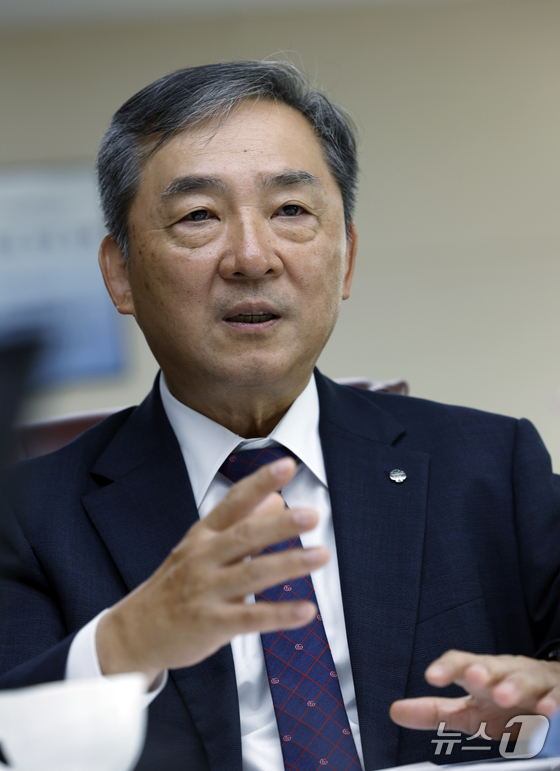
Born in 1959, Kim Yeol-hong is a researcher and medical oncologist who graduated from Korea University College of Medicine. After graduating from Korea University College of Medicine in 1983, he earned a master’s degree in medicine in 1987 and a doctorate in hematology and oncology in 1994. He served as a professor of oncology and hematology at Korea University College of Medicine from 1995, working in cancer research and clinical medicine. He became president and head of Yoo Han Corp.’s R&D division in March 2023 and was appointed president overseeing R&D in May of the same year. He currently oversees the company’s overall drug research and development strategy and pipeline.