

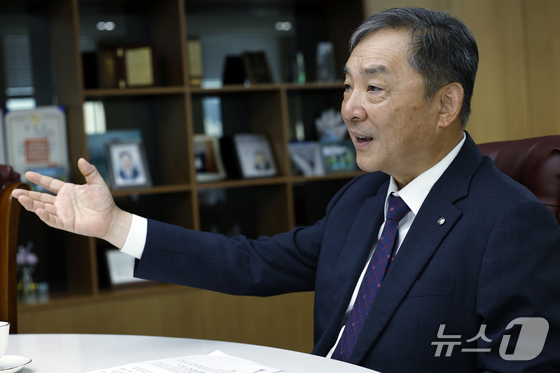
Yoo Han Corp. celebrates its 100th anniversary this year. After growing into a leading company in South Korea’s pharmaceutical industry over the past century, its next challenge is to become a global pharmaceutical company.
For Kim Yeol-hong, head of R&D at Yoo Han Corp., the company’s next 100 years are less about achieving “one success” and more about becoming “a company that continuously creates new drugs.”
He believes Yoo Han Corp. can become a global pharmaceutical company by building a virtuous cycle in which it accumulates R&D capabilities in specific fields and uses that expertise to discover the next drug candidates. To achieve this, he emphasized the need to secure new drug development technologies, attract global talent and establish a long-term investment environment through government and industry support.
Kim told News1 on Sept. 9, “Rather than stopping after creating another success like Lexraza, we want to build a structure in which the success of the first new drug leads to the second and third new drugs.”
Beyond TPD to “New Modalities”: Securing New Weapons for Drug Development
Yoo Han Corp. has spent about three years building its research capabilities in targeted protein degradation (TPD), a new approach to drug development.
One area Yoo Han Corp. has recently focused on is targeted protein degradation. Rather than simply inhibiting a specific protein that causes disease, TPD uses the cell’s own degradation system to eliminate the target protein itself.
Yoo Han Corp. determined that there were limits to developing these capabilities through internal research alone, so it has collaborated with external research institutions and recruited experts with relevant experience. Earlier this year, it established a separate organization dedicated to researching new modalities and began exploring early-stage compounds and drug candidates.
Kim, however, does not define TPD as the company’s single core technology. Drug development technologies continue to evolve. Rather than concentrating all its capabilities on a specific platform, the strategy is to explore various new modalities, including TPD, and secure technologies that can be applied to Yoo Han Corp.’s drug development.
“Doing a Little of Everything Means No Expertise”: Go Deep in What We Do Well
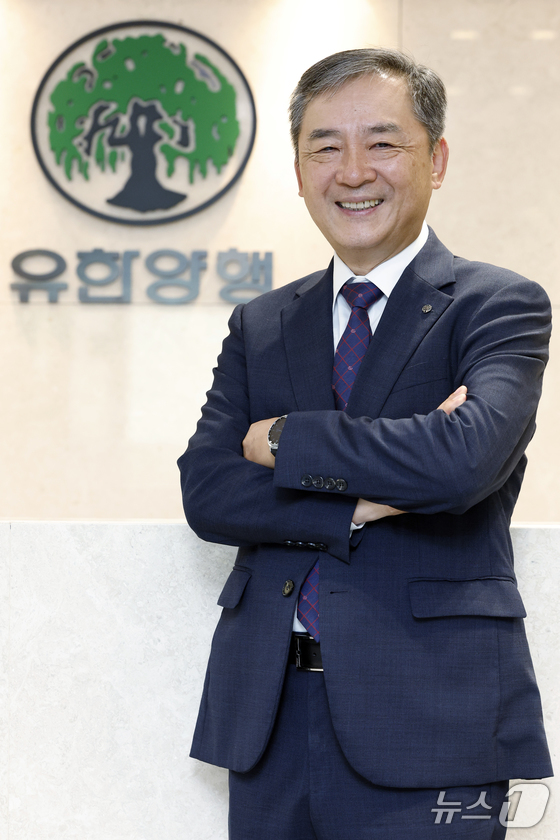
Another keyword Kim emphasizes is “specialization.” Rather than pursuing every area of drug development, he believes the company should choose specific fields and establish a system that can repeatedly produce successful drugs in those areas.
The goal is not simply to focus on a broad category such as “cancer drugs,” but to select specific cancer types, targets or therapeutic areas and continuously develop new drugs in those fields.
Concentrating on one field allows experience gained during research to be applied to developing the next drug candidate. Conversely, if research areas are constantly changed, new experimental methods, animal models, clinical trial networks, advisory groups and market strategies must be established each time.
Kim explained that “the accumulation of this experience ultimately becomes an important factor distinguishing global pharmaceutical companies from South Korean pharmaceutical companies.”
China Shows the “Power of Talent”: Global Researchers Need to Return
Kim believes that long-term government support and industry investment are both necessary for South Korea’s pharmaceutical and biotechnology industry to remain competitive globally. He particularly highlighted the importance of securing talent and building an industry ecosystem, citing China as an example.
Since the 1990s, China has sent many science, engineering and life sciences students and researchers overseas, including to the U.S., where they gained education and research experience. Many later returned to China, founded biotechnology companies or became key researchers at universities and research institutions.
In the process, they brought back not only technology but also networks with global pharmaceutical companies, working methods and expectations for research and development.
Kim believes South Korea also has sufficient competitiveness in terms of talent. Many Korean researchers have studied in the U.S. and Europe and gained experience at global pharmaceutical companies. He said South Korea could regain competitiveness by creating the compensation and research environment needed to encourage them to return.
“Ultimately, the key to global competition is how much talent we can secure and whether we can create an environment where they can demonstrate their capabilities,” he said. He added, “Support for the biotechnology industry should not lose continuity every time a government or policy direction changes. The government also needs to take risks and invest from a long-term perspective.”
Yoo Han Corp.’s Next 100 Years: Becoming a “Global Pharmaceutical Company”
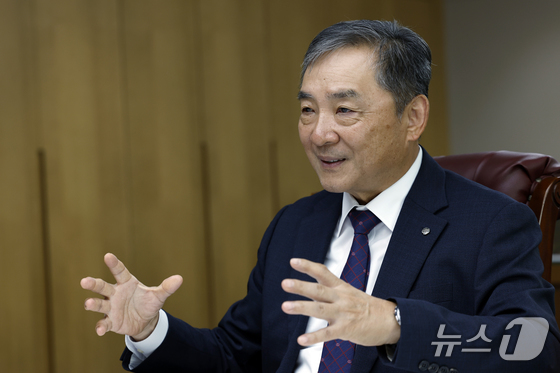
Kim envisions Yoo Han Corp.’s next 100 years as a period of expansion into a global pharmaceutical company. He believes the company needs to grow beyond its current revenue scale, increase its capacity for R&D investment and create a virtuous cycle in which those resources are reinvested in new drug development.
“For a pharmaceutical company to continue for another 100 years, it must continuously create innovative new drugs,” Kim said. “It cannot succeed just once; it needs to be capable of creating the next new drug and the one after that.”
He added, “We need to secure new technologies and attract global talent while accumulating R&D experience in specific fields and connecting that experience to the next new drug. To achieve this, we need to identify areas where we can excel, delve deeply into them and build a long-term growth structure that carries the R&D capabilities accumulated through that process into the next drug candidate.”